Travel days are where careful home habits go to die. The routines that keep waste low at home rely on a kitchen sink, a compost bin, and the fridge you already know; drop yourself into an unfamiliar airport at 5 a.m. and most of that collapses. We wrote this for the reader who wants low waste habits travel tested against real friction, not photographed against a linen bedspread.
What actually breaks on travel days
Three things collapse first: hydration, hunger, and hygiene. You get thirsty in a security queue where the fountains sit past the checkpoint. You get hungry two hours after a rushed 6 a.m. breakfast, and the only options are wrapped. You reach a hotel bathroom with no shampoo you brought and three plastic bottles you did not ask for. Each collapse produces trash, and each is predictable enough to plan around.
The pattern is not moral failure. It happens when you swap your default environment for one built around disposable convenience. The United Nations Environment Programme has documented how single-use packaging dominates household plastic use, and airports and highway stops are where consumers meet that supply chain most directly. (The United Nations Environment Programme)
The pre-trip audit
The bag you pack decides most of your outcomes. Fifteen minutes the night before a trip prevents about 80 percent of the waste you would otherwise generate on the road. We think of this step as an audit rather than a shopping list, because nearly every item is already in your kitchen or bathroom.
What earns its space
A collapsible 500 ml water bottle, a 350 ml insulated cup with a screw lid, a cotton napkin, a bamboo or steel spork, and two flat silicone bags. That is roughly 180 g of gear that absorbs 90 percent of the disposable pressure a two-day trip throws at you. Everything else, like a small cloth for spills or a paper bag flattened for scraps, is negotiable.
What quietly fails
Bar soaps turn to sludge in a wet tin. Bamboo cutlery snaps at the neck after two washes. Glass containers break in checked luggage. The gear industry sells travel versions of everything; most of it exists because someone realised earnest customers will pay $24 for a titanium spork. You do not need a titanium spork.
Airports, stations, and the water problem
Water is the single biggest source of avoidable travel waste for most people. A traveller who buys three 500 ml bottles across a long-haul day contributes roughly 45 g of plastic packaging, and that number scales fast across a family of four.
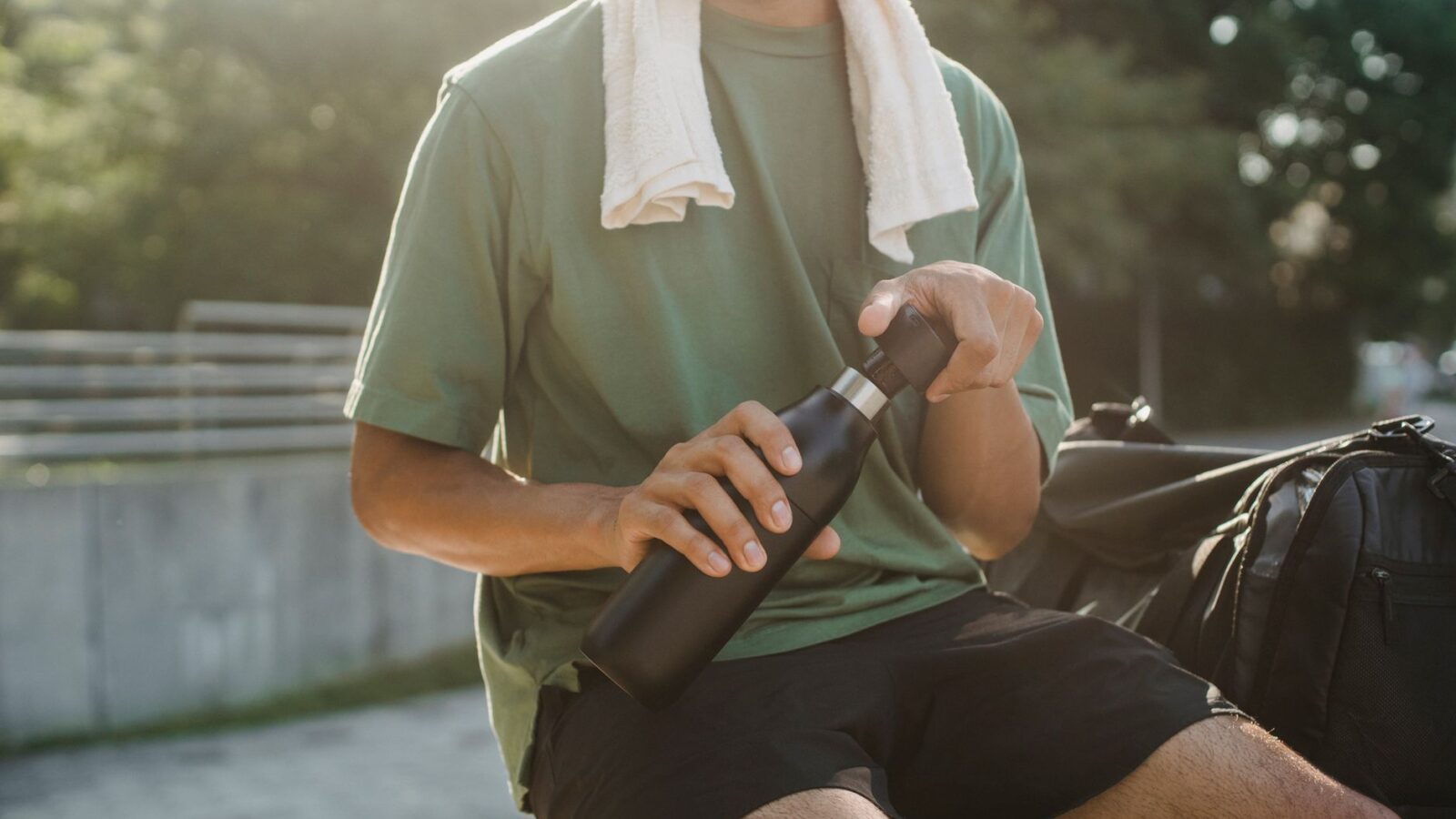
The rule that survives real conditions: fill the bottle after security, again at the gate, and once more on arrival before leaving the terminal. Most major airports now provide filtered fountains past the checkpoint. In the United States, the EPA publishes guidance on public drinking water safety that applies to airport fountains as much as to municipal taps, and the water is almost always safer than the bottled brand next to the newsstand. (the EPA publishes guidance on public drinking water safety)
Coffee, tea, and the cup problem
A screw-lid insulated cup covers coffee, tea, and hotel-room water without transferring flavour. Many airline lounges and a good number of chain cafes will fill a personal cup; a small number refuse for policy reasons. Ask before you queue; if refused, decline the drink rather than accept the cup. That is not martyrdom, it is a small tax on the vendor’s decision. WRAP’s UK Plastics Pact has tracked a steady rise in cafes accepting personal cups since 2020, particularly among chains with published sustainability targets. (WRAP’s UK Plastics Pact)
Food on the move
Hunger is the second reliable failure. Travellers who eat well in five-hour windows fall apart in ten-hour ones, and the airport food court is engineered for that collapse.
Pack density, not variety. A 200 g bag of unsalted almonds, three oat bars, and one hard piece of fruit like an apple will hold most adults through a full travel day. Bring a cotton napkin for crumbs, and a flat silicone bag for the apple core and any peel; both wash clean in a hotel sink in about 90 seconds.
For sit-down meals, silicone bags double as leftover containers. Ask the server to portion at the table rather than bring a fresh disposable box; roughly two-thirds of restaurants will do this without a second thought.
When it all goes sideways
Some days the water bottle leaks into the laptop bag at 30,000 feet. Some days a flight is delayed and the almonds run out at hour eleven. Recognise the shift early: irritability, a dry mouth, a decision to buy the first wrapped thing at the gate. Those are signals to reset, not to abandon the plan.
The recovery moves
If you must buy disposable, choose the option with the least packaging by weight. A cardboard sandwich box, about 15 g, is a better failure than a plastic bento with four compartments, often 45 g of mixed plastic. If you receive an unwanted hotel toiletry set, take it home unopened and donate to a local shelter that accepts sealed items; most shelters publish accepted-item lists on their websites.
Should your reusable bottle go missing, replace it once at the destination with a $6 metal bottle from a hardware store rather than accepting a week of plastic. A single replacement over a five-day trip still cuts your waste by around 85 percent compared with buying bottled water throughout.
The travel-day kit
The list below is what we take on trips of two to seven days. Total added weight is roughly 220 g, less than a paperback, and everything nests inside a small drawstring pouch.
- Empty 500 ml collapsible water bottle
- 350 ml insulated cup with a screw lid
- Cotton napkin, 30 by 30 cm
- One bamboo or stainless spork
- Two flat silicone bags, one 500 ml and one 1 L
- Small bar of soap in a vented tin
- Refillable 60 ml bottle of shampoo, below the 100 ml carry-on limit
- One paper bag, flattened, for compostable scraps
- Small microfiber cloth for spills
- Written copy of this list, taped inside the suitcase lid for the return trip
Coming home without a garbage bag
The end of a trip is where discipline slips. You want to be home. You do not want to sort a bag of receipts, chargers, and half-eaten snacks.
Do the airport bin sort at the destination, not at your kitchen. Empty the silicone bags into airport compost or landfill (label dependent), rinse them in the terminal bathroom, and stack them flat in an outer pocket. This one habit shortens post-trip cleanup from 20 minutes to about 3.
Then, at home, refill the kit in the order you packed it. The next trip’s success is decided the night you unpack this one.
Frequently asked questions
Is a reusable coffee cup worth the hassle on flights?
Yes for airport and hotel use, marginal on the plane itself. Cabin crew fill personal cups less often than cafes do, and the sealed screw lid matters less at seat 24C. A single trip through security with a filled 350 ml cup and two refills at the gate usually saves 2-3 disposable cups per person per travel day.
How do we handle hotel toiletries without waste?
Call ahead when possible; many mid-range hotels will hold their bathroom amenities on request, and roughly 40 percent of large chain properties in the U.S. and U.K. have switched to bulk dispensers since 2020. If small bottles arrive anyway, use what you can and take unopened items home for donation to a local shelter.
Can we bring our own containers for airport food?
Almost always yes for pre-security shops and cafeteria-style vendors. Sit-down restaurants inside the terminal are more variable; ask before ordering. A flat silicone bag with a zip closure is the least awkward option, since it stores flat and does not clatter in a bag.
What about drinking water in countries where the tap is not safe?
A collapsible bottle plus a UV pen or a straw filter certified to NSF/ANSI 53 standard covers most short trips. For longer travel, boil water for at least 1 minute (3 minutes above 2,000 metres) and store in the insulated cup while it cools.
Is any of this actually cheaper than buying disposables?
Over a single five-day trip, yes, by roughly $18 to $35 per adult depending on the destination. The kit itself pays back inside two trips, and after that every trip runs at a small net saving on top of the waste reduction.