“No receipt, thank you.” Five words. Maybe a hundred times a year for an average shopper. That is the entire habit, and it removes a small but stubborn category of waste from your life without any change to what you actually buy.
I started saying it about three years ago, after reading that most paper till receipts are not actually recyclable due to the chemical coating that makes the print appear. They look like paper. They feel like paper. They are not, in any useful sense, paper. They are a thin coated material that goes straight to landfill or incineration in most local authorities, despite the recycling bin being right there next to your kitchen table.
The receipt that nobody wanted
If you stop and watch what happens to till receipts in your own house, you notice something strange. Almost none of them are kept. They go from the till, into a hand, into a pocket or bag, then into the bin within twenty-four hours. Occasionally one ends up in a drawer with the words “I might need this” attached. The vast majority do not.
This means almost the entire receipt economy is paper produced to be discarded almost immediately. The only ones with real downstream use are receipts for warranty items, expense claims and tax records, and most of those are issued at moments where you actively want one. BJ Fogg’s Tiny Habits primer The default, for everything else, is “discard within a day”.
The thermal paper bit
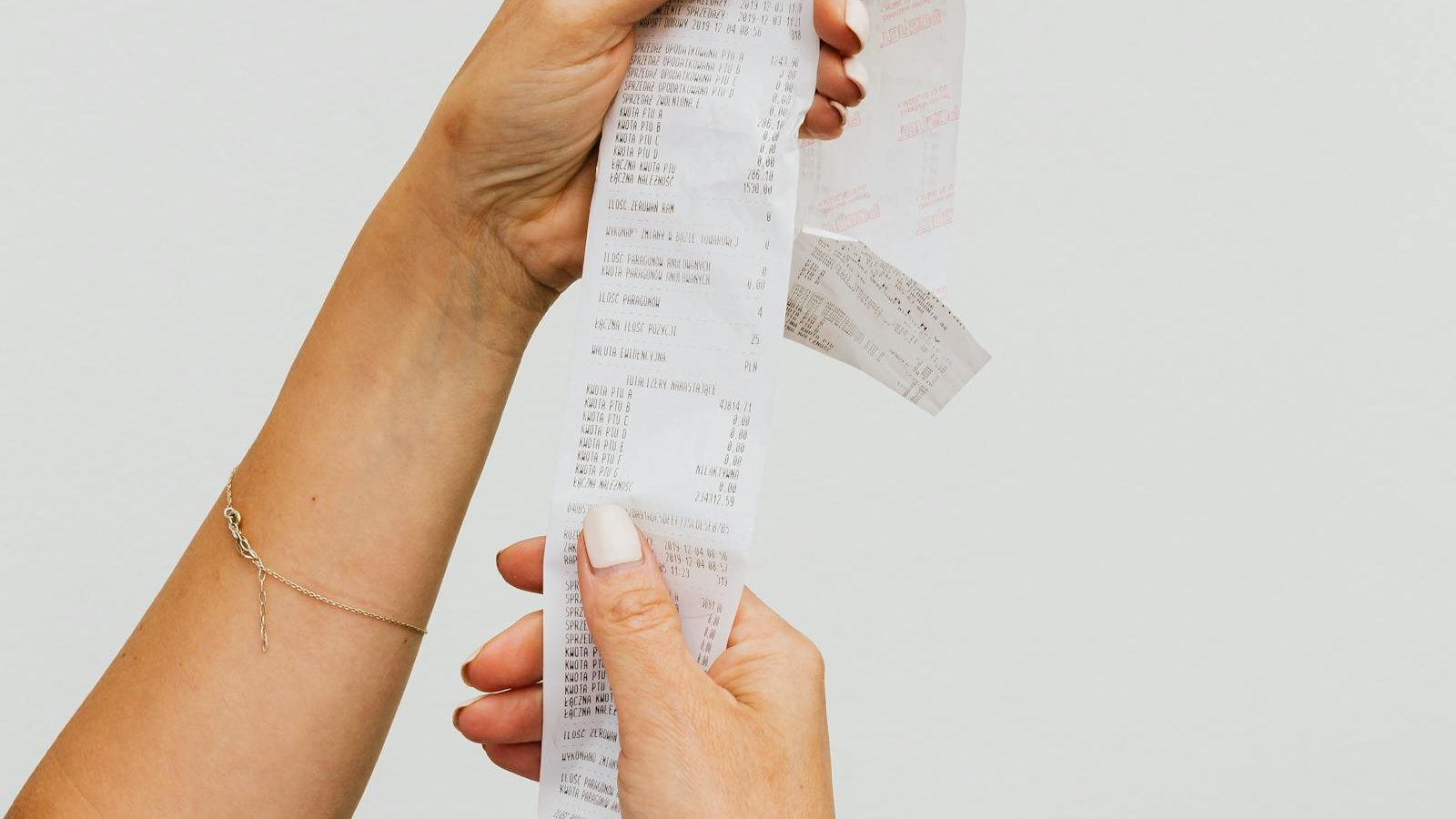
Most till receipts are printed on thermal paper, which uses heat rather than ink to produce the text. The coating typically contains BPA or BPS, both of which raise health and environmental concerns. The coating is also why these receipts cannot be safely recycled in most paper streams. Even if they could, the carbon and water cost of producing the paper for something destined for the bin within a day is hard to justify.
Why “no receipt, thank you” works
The phrase works because it is short, friendly and clearly understood. It does not require an explanation. Most cashiers process it in less than half a second. About one in twenty asks “are you sure?”, which is fine, and a quick “yes, thank you” handles it. I have never had anyone refuse to honour the request.
Where you do want one, simply say so. “Yes please, just this time.” Cashiers are entirely used to the variation. There is no consistency cost for occasionally wanting one.
- At the supermarket self-checkout, look for the “no receipt” button on the final screen
- At a manned till, say “no receipt, thank you” as you tap your card
- For larger purchases or warranties, take the receipt and photograph it on your phone, then either keep it or recycle the paper depending on your local stream
The numbers behind a small habit
A back-of-the-envelope estimate, based on a typical shopper who buys something somewhere most days of the week, is roughly two to four hundred till transactions a year. If you refuse the paper on most of them, you have removed two to four hundred slips of thermal paper from your life. Multiply by a hundred million shoppers and the total starts to look meaningful, even though no individual contribution is large.
The reason this habit is worth talking about, despite being small per person, is that it is essentially free. There is no kit to buy. No skill to learn. No habit anchor to set up. The decision happens at the till in the moment, and the cost of the decision is one short sentence.
What about digital receipts
Some shops now offer digital receipts via email or app. These are a partial improvement but come with their own trade-offs. Email receipts add to inbox bulk and often spam, and the data is held by the retailer for marketing purposes. App-based receipts are tidier but tie you to specific retailer apps, with their own data implications.
My own rule is this. If I need a record, I either take the paper receipt and recycle or destroy it within a few days, or I take a photograph at the till and decline the paper entirely. The photograph lives in my phone’s receipts folder, which is sorted by month, and it is far easier to search than the shoebox method.
Records for warranties and returns
For warranties, big-ticket items and anything that might need returning within a return window, a digital photograph of the paper receipt is almost always better than the paper itself, which fades within months. The photograph does not fade. It is searchable. It can be emailed if needed. The paper receipt is the worst format for the use case that supposedly justifies it.
The case for taking one anyway
There are situations where the paper is genuinely useful. If you suspect a pricing error, the paper in your hand is the easiest immediate evidence. If you are expensing something and need to submit physical paper for an old-fashioned accounts system, the paper might be required. If you are tracking your spending closely and your method involves a shoebox at the end of the week, the paper has a job to do.
None of these are arguments against the default. They are arguments for the situational exception. The habit is not “always refuse”. The habit is “default to refuse, ask when needed”.
What happens to the receipts you do take
If you take a receipt, it needs to go somewhere sensible. The two reasonable destinations are general waste, because thermal receipts genuinely should not go in the paper recycling bin in most areas, or, where your local authority offers it, a specific thermal paper or BPA-treated waste stream. The third destination, which is the back of a drawer or the bottom of a handbag, is not actually a destination, it is a delay.
A small “receipt cup” by the front door, emptied once a fortnight into the bin, is a low-friction way of dealing with the few that come into the house. It also makes obvious how few you actually need to keep, which reinforces the habit of declining them in the first place.
One reader’s small revelation
A reader called Nina described her version. “I started saying ‘no receipt, thank you’ about a year ago. I had assumed it was a tiny gesture. Then I looked at my old purse and realised I had been carrying around fifty-something old receipts at a time. The change is not just environmental, my bag is also lighter and tidier.” Several readers have echoed this. The habit comes with a quiet practical bonus that has nothing to do with the planet.
The habit fits inside a sentence
That is the whole article, in five words. “No receipt, thank you” at every transaction where you do not actively want one. Said with a smile. Repeated until it is the default. Nothing else changes. The shopping stays the same. The till queue moves at the same pace. The household waste pile loses a tiny daily addition that almost no one would notice individually but that adds up over a lifetime.
This is, in many ways, the model for the kind of low-waste habit worth bothering with. Small, almost invisible, requiring no equipment, no apology and no fuss. The kind of thing you can do this afternoon without preparing for it, and that will quietly compound over decades.
Frequently Asked Questions
Why can't thermal paper receipts be recycled?
They are coated with chemicals like BPA or BPS that contaminate the paper recycling stream. Even when they look like ordinary paper, they typically belong in general waste rather than paper recycling.
What should I do with old receipts in my purse?
Sort them into ones you genuinely need for warranties or expenses, and the rest. Photograph anything you might need, then bin the paper. Aim to keep no more than a small handful of active receipts at a time.
Are digital receipts always better?
Usually yes, but they come with data and marketing trade-offs. The cleanest option is to photograph paper receipts when needed and decline both the paper and the digital version where you have the choice.
Will the cashier mind if I refuse?
Almost never. Most cashiers process the refusal in seconds. Many tills now have a default "no receipt" button precisely because so many customers prefer it.
What about return windows, will I get caught out?
If you might need to return something, take the receipt and photograph it that day. The photograph is more durable than the paper, which often fades within a few months.
Is this a meaningful environmental action?
Per person, the impact is small. Across millions of shoppers it is significant. More importantly, it is an almost cost-free habit that costs you nothing to adopt, so the ratio of impact to effort is unusually high.