Bread stales faster than most kitchens plan for, and the loaf you meant to finish by Wednesday is often too dry by Friday. We wrote this guide to move stale bread from bin to plate, with times, temperatures, and specific stale bread uses that hold up in a home kitchen. Nothing here requires special equipment or a shopping trip.
What Stale Actually Means (and Why It Isn’t Spoiled)
Staling is not the same as spoiling. It’s a physical change called starch retrogradation, in which starch molecules that gelatinized during baking recrystallize as the loaf cools and dries. The bread hardens, loses aroma, and feels less pleasant to chew, but it remains perfectly safe to eat. According to WRAP, the UK charity that studies household food waste, bread ranks among the most-thrown-away foods in British homes, with roughly 20 million slices discarded every day. (WRAP)
That figure matters here, because home cooking is where the largest share of bread waste happens. Small kitchen habits, applied every week, add up faster than any policy fix.
The staleness clock
A crusty sourdough loaf stored cut-side down on a wooden board typically holds for 2-3 days before it turns brittle. A sliced sandwich loaf in a plastic bag stales more slowly, but softens and molds sooner. Refrigeration is the fastest way to stale bread and the slowest way to preserve it, because cold temperatures accelerate retrogradation. Room temperature or the freezer are your two real options.
A cotton or linen bread bag holds a loaf better than plastic for the first 48 hours, because it lets moisture escape from the crust while slowing evaporation from the crumb. A wooden bread box, kept out of direct sunlight, does the same job with slightly more longevity.
When bread is genuinely spoiled
If you see fuzzy mold, blue-green spots, or smell anything sour or ammonia-like, the loaf is finished. Do not scrape off the mold and eat the rest, as the invisible hyphae reach further into soft bread than the visible patch suggests.
Fast Rescues for a Loaf That’s Still Edible
Before you think about croutons, ask whether the bread just needs a small reset. Two techniques take under 10 minutes, and for most household loaves this is the first thing to try before assuming the bread is finished.
The oven revive
Run the loaf briefly under the tap so the crust is damp but not soaked, wrap it loosely in foil, and place it in a 300°F (150°C) oven for 5-7 minutes. The trapped steam softens the crumb, and the crust re-crisps in the last 2 minutes if you open the foil. This works best on loaves less than 4 days old and can be done once per loaf. Do it twice, and you have a hockey puck.
The toaster method
For sliced bread that’s dry rather than rock-hard, dampen each slice with a light spray of water and toast on medium. The extra moisture rehydrates the crumb during the first pass of heat. It won’t restore fresh-baked texture, but it makes toast that spreads butter without shattering. A rack toaster works best; a pop-up toaster tends to under-crisp the damp side.
Recipes That Actually Need Stale Bread
Some dishes work better with stale bread than with fresh, because the drier crumb absorbs liquid without turning to paste. This is where stale bread rescue pays back the most in a home kitchen.
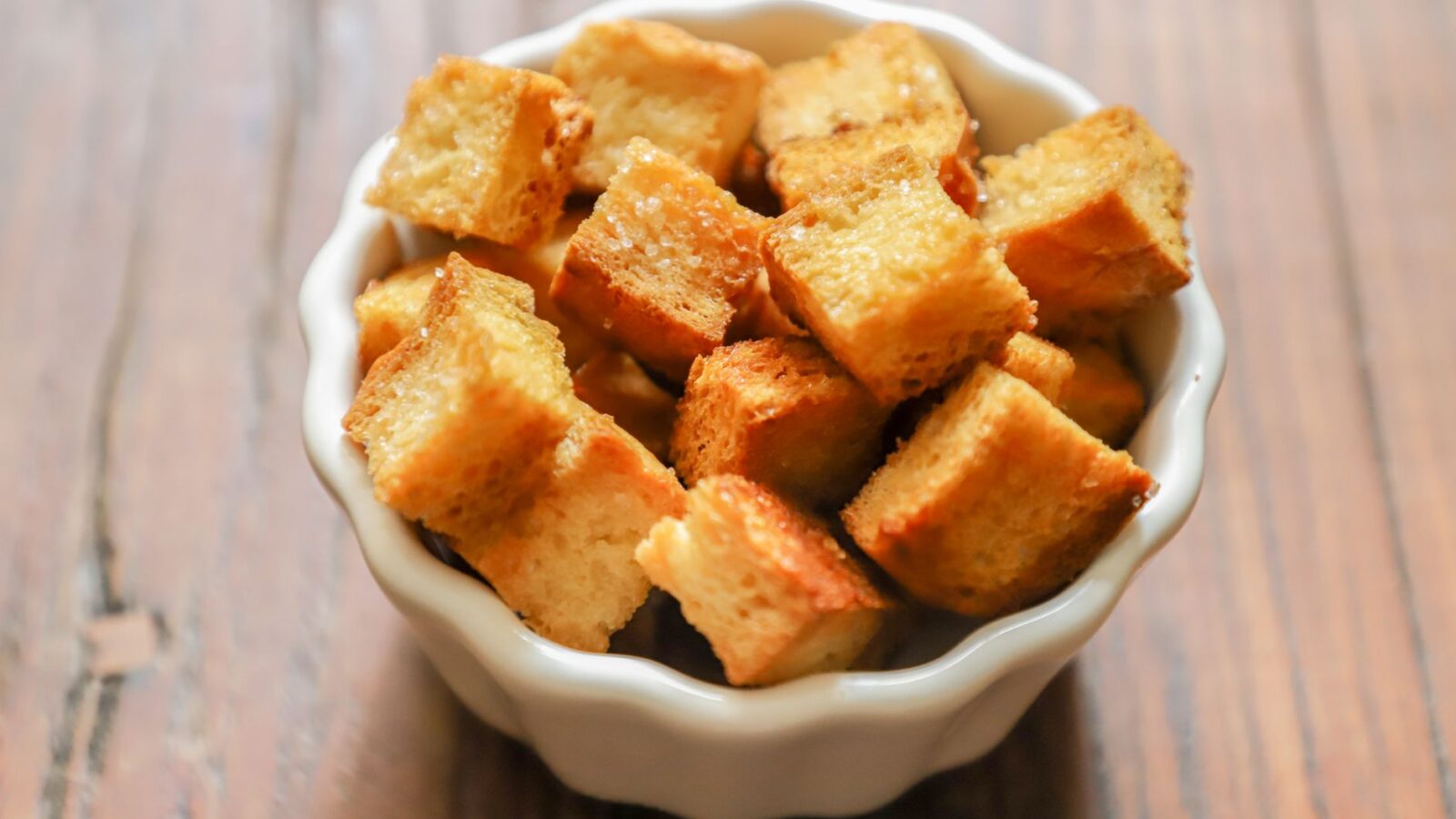
Croutons that keep
Cut the bread into 1/2-inch cubes, toss with 2 tablespoons of olive oil and a pinch of salt per two cups of cubes, and bake at 400°F (200°C) for 10-12 minutes, turning once. Cooled and stored in a jar, they hold for 2 weeks and rescue thin soups instantly.
Breadcrumbs, dry and fresh
Blitz stale bread in a food processor for coarse fresh crumbs, or dry it in a 250°F oven for 20-25 minutes first for shelf-stable dry crumbs. A single stale baguette yields roughly 3 cups of dry crumbs, which replaces store-bought panko for meatballs, gratins, and coatings for weeks.
Bread pudding and panade
Savory panade layers stale bread with sautéed onions, broth, and cheese, then bakes at 375°F until the top browns. Sweet bread pudding uses 4 cups of cubed bread, 2 cups of milk, 3 eggs, and 1/3 cup of sugar, baked at 350°F for 40-45 minutes. Both dishes need stale bread; fresh bread turns to mush.
French toast and bruschetta
Two more everyday recipes rely on slightly dry bread. French toast holds its shape better when the slices are 1-2 days old, because fresh bread collapses in the egg custard. Bruschetta needs bread firm enough to hold a topping without buckling, which a fresh loaf rarely does. Rub the toasted slice with a raw garlic clove, drizzle olive oil, and top with chopped tomato and basil.
Ribollita, panzanella, and gazpacho
Three classic Mediterranean recipes were invented specifically to use hard bread. Panzanella soaks torn crusts in tomato juice and vinegar. Ribollita, a Tuscan bean soup, thickens with bread that dissolves during the second cooking. Andalusian gazpacho traditionally uses bread as a body-builder, not a garnish. The common thread is soaking: stale bread that would be inedible torn dry becomes tender when it takes on broth, tomato water, or a light vinaigrette for 15-20 minutes before serving.
What Goes Wrong (and How to Fix It)
Most bread rescues fail for one of four reasons. Here is how to spot each and what to do.
The revived loaf turns leathery. You used too much water or reheated for too long. Next time, mist rather than douse, and pull the loaf at 5 minutes to check.
Croutons burn before crisping. Your oven runs hot, or the cubes were uneven. Cut to a uniform size and drop the temperature to 375°F if your oven has a history of overshooting.
Bread pudding stays soggy in the middle. The bread wasn’t dry enough to absorb the custard. Toast the cubes for 8 minutes at 300°F first, then assemble.
The frozen slices toast unevenly. They were frozen in a thick stack. Freeze slices flat on a tray for 20 minutes, then bag them, so each one separates cleanly.
If mold appears in a bag of breadcrumbs, the crumbs weren’t fully dry when stored. Dry breadcrumbs should feel completely sandy, not slightly cool or soft. Store in a jar with a screw lid rather than a plastic bag, which traps residual moisture.
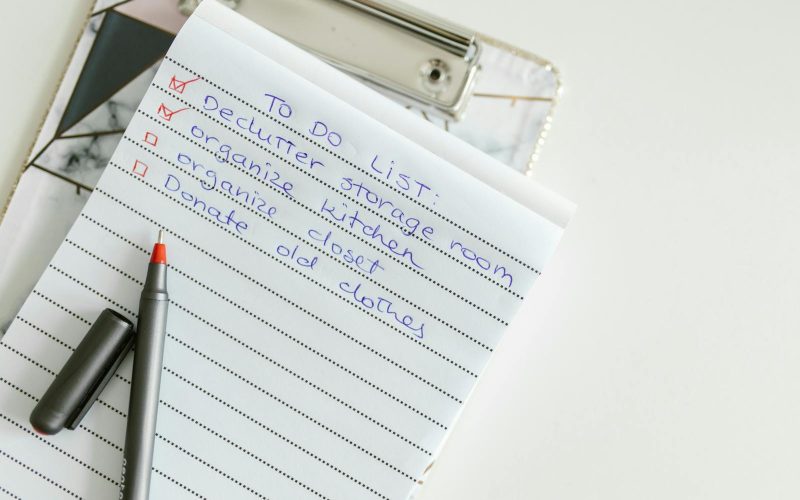
Your Weekly Bread Rescue Checklist
Use this at the end of each week to keep bread out of the compost bin, or worse, the general waste. The EPA reports that food waste accounts for around 24% of what enters US municipal landfills, and bread is a routine contributor. (EPA)
- Check every loaf, roll, and heel in the kitchen on the same day each week (Saturday works for most households).
- If the bread is still soft, slice it, freeze it flat on a tray for 20 minutes, then bag it. Frozen bread keeps 2-3 months.
- If the bread is dry but not moldy, cube half for croutons and blitz half for breadcrumbs the same afternoon.
- If you have a whole hard loaf, plan panzanella, ribollita, or bread pudding for the next two dinners.
- Compost or feed to garden birds only when the bread is beyond kitchen use, and never if it shows mold, which can harm wildlife.
Frequently Asked Questions
Can you use stale bread if it was refrigerated for a week?
Yes, as long as there is no mold. Refrigerated bread stales quickly but stays safe for at least 7-10 days. It’s ideal for croutons and breadcrumbs, less good for eating fresh even after reviving.
Does freezing bread actually preserve texture?
Yes, if you freeze it before it goes stale. Freezing stops retrogradation almost entirely. Slice first, freeze flat, then bag; a slice takes 60-90 seconds to toast straight from the freezer.
Is it safe to eat bread with a small mold spot?
No. Bread is porous, and mold filaments extend beyond what you can see. Discard the entire loaf and wash the bread bin or board with hot soapy water before reuse.
What’s the best long-term storage for a home baker?
Cool it fully, slice it, freeze it flat, and bag it within 4 hours of coming out of the oven. This preserves the just-baked texture for 2-3 months and lets you toast one slice at a time.
Can dogs or chickens eat stale bread?
Sparingly. Plain, mold-free bread is fine as an occasional treat, but it adds empty calories and lacks nutrition. Never feed moldy bread to any animal.