“Shop local” has become one of those phrases people repeat without quite examining. It sounds obviously good, supporting your neighbours, keeping money in the community, reducing food miles. The honest picture is more complicated. Local is sometimes meaningfully better than the supermarket alternative. Sometimes it’s the same. Sometimes, and this is the bit nobody likes to say, it’s actually worse.
The reason this matters is that “local” gets used as a shortcut for “ethical,” and the shortcut isn’t reliable. A local farmer using a diesel generator to heat a greenhouse for unseasonal tomatoes is using more energy than a supermarket tomato from Spain. A small bakery driving a van two hours each way to deliver a single loaf is not a low-carbon option. The label “local” tells you about geography, not about ecology, and it’s worth being clear about that.
What “local” actually means
There’s no legal definition of “local” food in the UK. Some retailers use “within 30 miles.” Some use “within the region.” Some use “British” as a synonym for “local,” which it isn’t. When you see “local” on a label or sign, ask yourself: from where, specifically? If you can’t get a clear answer, the word is doing less work than it appears. the Ellen MacArthur Foundation’s circular economy overview
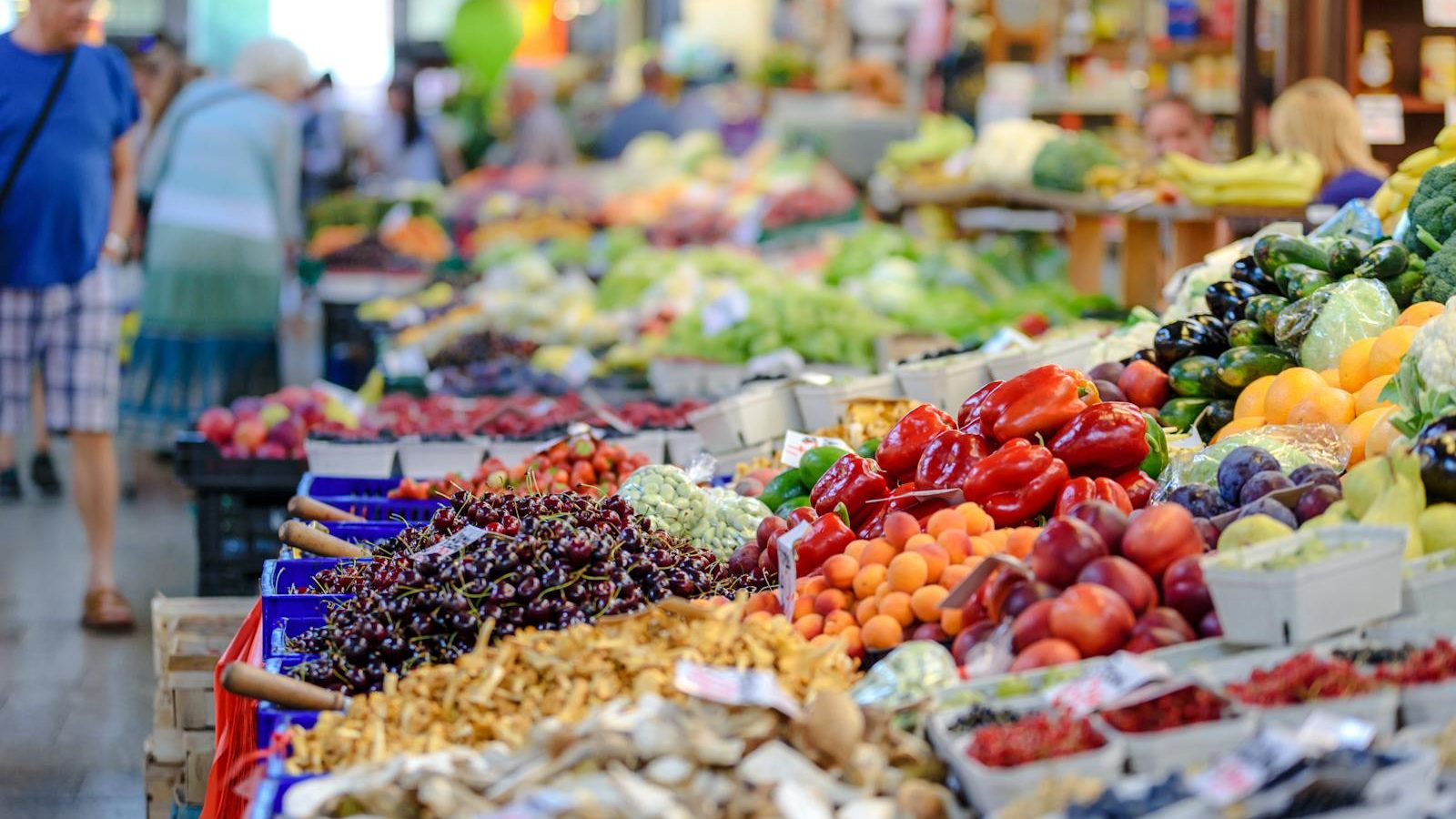
Most genuinely local food is sold through:
- Farmer’s markets.
- Farm shops attached to working farms.
- Box schemes and CSAs (community-supported agriculture). ReFED’s consumer-education action area
- Independent greengrocers and butchers.
- Some supermarket sections that source from named regional suppliers.
If you can name the farm or the producer, the food is meaningfully local. If you can’t, the word is decoration.
When local is genuinely better
Seasonal, low-input produce
Apples in October from a local orchard travel 20 miles, sit in storage for days rather than weeks, and arrive fresher than imported fruit. Same applies to seasonal vegetables, soft fruit, eggs, and herbs. The food miles savings here are real, especially when compared to airfreighted produce.
Eggs from local farms
The supply chain is genuinely shorter. The hens are typically free range or pasture raised in ways that supermarket eggs often aren’t. The carbon footprint per egg is comparable, but the welfare difference is significant.
Meat from small farms
The environmental case is mixed (more on this in a moment), but the welfare case is usually strong. Animals are typically slaughtered closer to where they were raised, reducing transport stress.
Bread from a local bakery
The carbon footprint is similar to industrial bread, but the bread keeps longer, contains fewer preservatives, and supports a local skilled trade.
When local is not better
Out-of-season produce grown locally in heated greenhouses
This is the classic example. A heated UK greenhouse using gas to grow tomatoes in February has a higher carbon footprint per kilo than tomatoes grown in Spanish sunlight and shipped on a refrigerated lorry. The “local” tomato is the higher-impact one. Seasonality matters more than geography in this case.
Industrial farming dressed as local
Not every local producer is small or low-impact. A large-scale industrial farm 20 miles from you using the same inputs as a similar farm 200 miles away has the same environmental footprint. The locality is incidental.
Highly processed local goods
A local jam made from imported fruit, or local biscuits made from imported flour and sugar, is local in the sense that the final mixing happened nearby. The supply chain behind it isn’t local at all.
Inefficient distribution
A box scheme driving a van around villages with a few boxes per stop can have a higher per-item carbon footprint than a supermarket delivery van doing the same area with dozens of boxes. Scale, in distribution, often beats geography.
The food miles myth, partially
“Food miles”, the distance food travels from producer to consumer, was a popular eco metric for years. It still has some validity, but research has shown it’s a less significant factor than people assumed.
For most foods, transport accounts for around 10-20% of the total carbon footprint. The remaining 80-90% is in production, how it’s grown, what feed the animals ate, how much energy went into heating greenhouses, how much fertiliser was used. A food that’s grown efficiently far away can have a lower footprint than the same food grown inefficiently close by.
The exception is air-freighted produce. A bean flown from Kenya to the UK has a much higher carbon footprint per kilo than the same bean shipped from Spain by lorry. Avoiding air-freighted food is a clearer win than avoiding all imports.
The community case
Even when the carbon footprint is similar, shopping local has effects that don’t show up in a life-cycle assessment.
Money circulating in the community
Roughly speaking, money spent at independent local businesses tends to circulate two to four times more within the local economy than money spent at large chains. This is the “local multiplier effect,” and it shows up in jobs, in services, in the kind of place a high street becomes.
Resilience and knowledge
A community with a butcher, a baker, a greengrocer and a fishmonger has knowledge, supply chains, and skills that a community without them doesn’t. When supply chains wobble, as they did in 2020 and 2021, local producers can sometimes respond more flexibly.
Direct relationships
You can talk to the person who grew the apple. You can ask which day the bread was baked. You can give feedback that actually reaches a decision-maker. This is not the case in a supermarket.
The honest decision framework
When you’re deciding whether to buy local:
- Is the product in season locally? If yes, local has a real edge. If no, local is probably worse.
- Is the producer transparent about how they grow or make it? If yes, local supports a known supply chain. If no, you’re trusting a label.
- Is the price difference reasonable for your budget? If yes, the community benefit is real. If no, don’t bankrupt yourself for principle.
- Are you also reducing food waste, packaging, or air-freighted goods elsewhere? These often matter more than local versus distant.
The practical pattern
Most people who shop well end up with a mixed approach. Seasonal produce, eggs, bread and some meat from local sources. Pantry staples from a supermarket. Specialty items where the quality or price difference is meaningful. No purist commitment to one source over the other.
This isn’t a compromise. It’s a recognition that “local” is one factor in the decision, not the only one. Local food in season is often a clear win. Local food out of season is sometimes a clear loss. The skill is in knowing which is which.
Shopping local matters most when it’s a real choice rather than a slogan. The local apple in October, the eggs from the farm down the road, the bread from the baker who knows your face, these are worth seeking out. The local-branded jam made from imported strawberries is, in environmental terms, much the same as any other jam.
Frequently Asked Questions
Is local food always better for the environment?
No. Seasonal local food usually is. Out-of-season local food grown in heated greenhouses often has a higher carbon footprint than imported equivalents. Air-freighted imports are the worst case.
How much of food's carbon footprint is transport?
For most foods, around 10-20%. Production methods (how it's grown, what animals are fed, how much energy is used) account for most of the rest.
What does "local" actually mean on a label?
There's no legal definition. Some retailers use "within 30 miles," some use "within the region," some use "British." Ask where, specifically. If you can't get a clear answer, treat the label as marketing.
Should I avoid all imported food?
No, just the air-freighted ones (often marked with a plane symbol). Shipped and trucked imports have much lower transport footprints, and for out-of-season produce they often beat local greenhouse-grown alternatives.
Why does shopping local matter beyond environment?
Money spent at independent local businesses tends to circulate in the community two to four times more than money spent at chains, supporting jobs, services and high street resilience.
What's the best way to find genuinely local food?
Farmer's markets, farm shops, box schemes (CSAs), and independent greengrocers. If the producer is named and you can ask about their methods, the food is meaningfully local.