Every autumn, households bag up one of the most useful compost ingredients they will ever own and set it at the curb. Fallen leaves are free, plentiful, and slower to break down than almost anything else in the garden, which makes them the missing piece in a compost pile that keeps stalling. We will show you how to collect them, store them, and use them well enough that next spring’s compost is the best batch you have ever made.
Why fallen leaves are the piece most compost piles are missing
Composting autumn fall leaves solves the single biggest problem in most home compost bins. Kitchen scraps, coffee grounds, and grass clippings are all nitrogen-rich, and without a matching supply of dry, brown, carbon-rich material to soak up moisture and let air move through, a pile collapses into a sour, airless mat.
Leaves are the answer sitting on your lawn. The US Environmental Protection Agency reports that yard trimmings made up roughly 12 percent of municipal solid waste generated in the most recent reporting year, and a large share of that stream is leaves that could have stayed on the property. (US Environmental Protection Agency reports that yard trimmings)
The carbon-to-nitrogen number that actually matters
A working compost pile needs a carbon-to-nitrogen ratio near 30:1. Fresh grass clippings run about 15 to 25:1. Kitchen scraps sit in a similar range. Dry autumn leaves come in anywhere from 40:1 for maple to 80:1 for oak, so a single generous layer of leaves balances several buckets of wet green waste. Once you start thinking in ratios, the annual leaf drop stops looking like a chore and starts looking like a year’s supply of an ingredient you would otherwise have to buy in bags.
How much you need, and how to prepare it
A useful working target is roughly two parts leaves to one part green material by volume in a hot pile, or three parts to one in a slower cold pile. A standard 3 foot by 3 foot by 3 foot bin (about 27 cubic feet) will comfortably absorb the leaves from a small suburban lawn plus the kitchen scraps and grass clippings from a family of four for a whole winter.
Shredding cuts the timeline in half
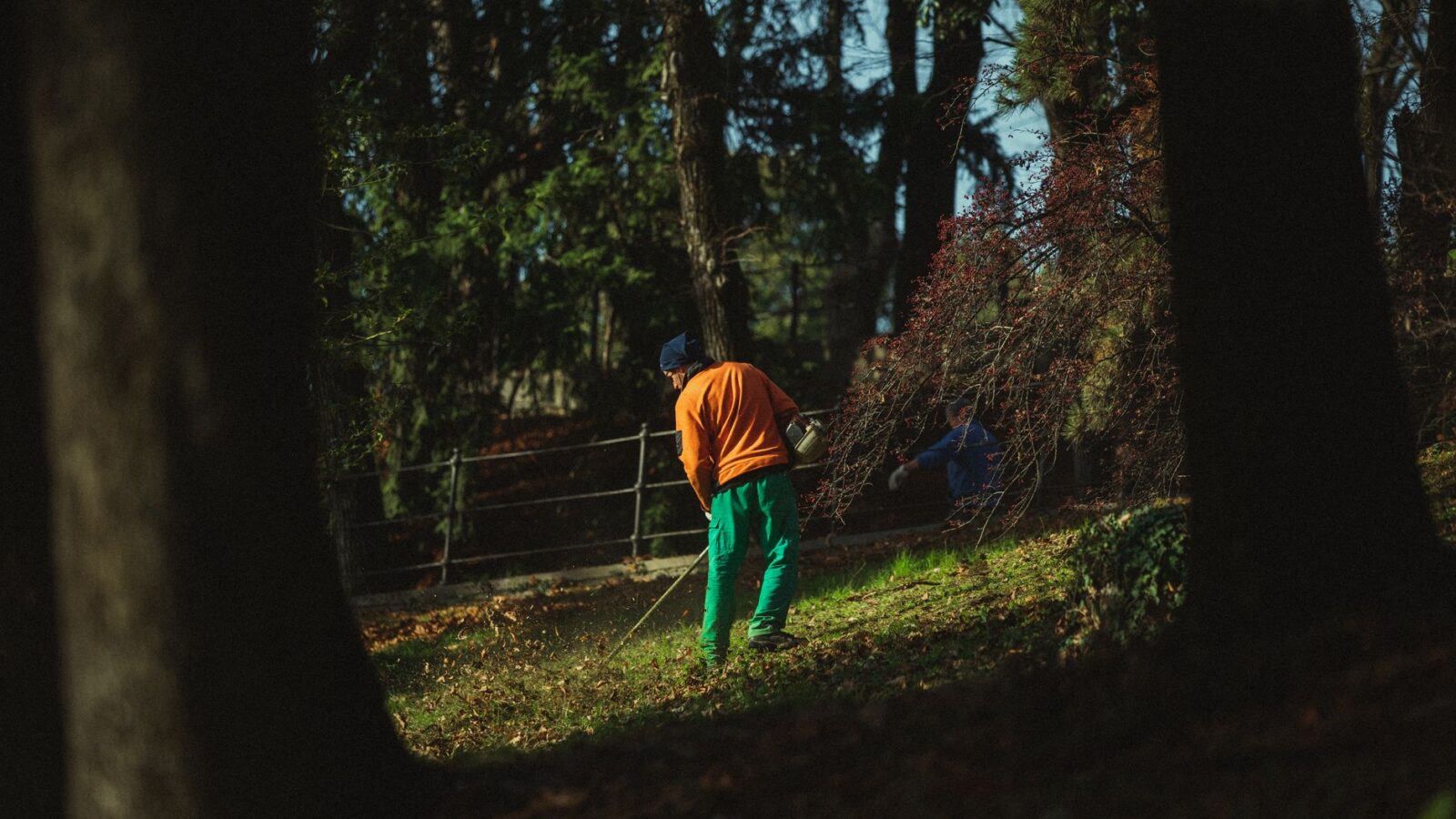
Whole leaves mat together. Shredded leaves have roughly 20 times more surface area for microbes to work on and let air move through the pile. The simplest tool is one you already own. Set the mower to its highest cutting height, run it over a dry pile of leaves on the lawn, and rake up the confetti. In one pass you can turn a wheelbarrow of whole leaves into a chopped mix that composts in about 6 to 8 months rather than 18 to 24. If you have a lot to process, a dedicated leaf shredder, or a string trimmer used inside a tall bin, will do the same job. A basic corded leaf shredder costs around 100 dollars and handles roughly 10 large bags per hour.
Three ways to store or use leaves through winter
You do not have to add every leaf to the compost bin the day you rake it. In most gardens, storing leaves separately gives you more control over what goes where. Autumn drops far more carbon than you can absorb into a hot pile in one weekend, and the following summer’s flood of grass and vegetable scraps will need every bin of dry, brown material you can bank now.
Leaf mould (slow, tidy, no maintenance)
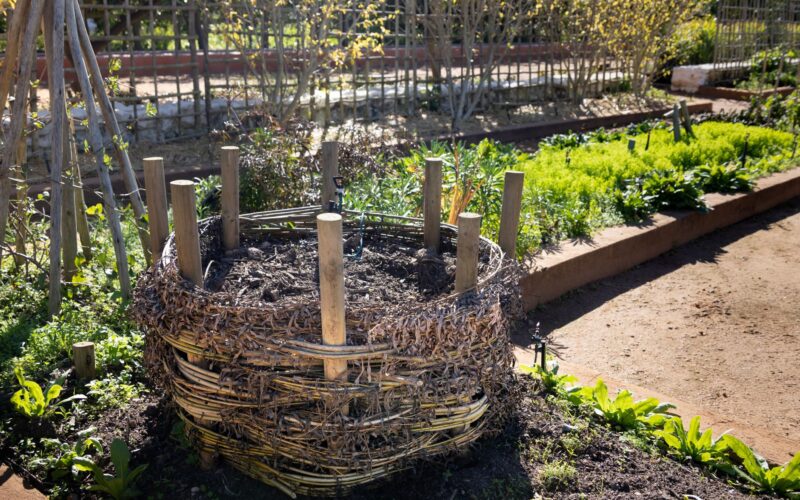
Pile shredded leaves inside a simple wire cylinder about 4 feet across and 4 feet high. Wet the pile thoroughly, cover with a tarp if your climate is dry, and walk away. In roughly 12 months you will have a crumbly, dark leaf mould that is one of the best soil conditioners you can add to a vegetable bed. Unshredded leaves take about 18 to 24 months to reach the same state.
Hot compost booster
Keep two garbage bins next to your compost pile through October and November, and fill them with dry, shredded leaves. Every time you add a bucket of kitchen scraps or a fresh mow of grass through winter and spring, top it with two buckets of leaves. This is the quickest way we know to keep a home pile between 55 and 65 degrees Celsius (about 130 to 150 Fahrenheit) through the cooler months, which is the range where weed seeds and most pathogens die off.
Sheet mulch on empty beds
Spread 3 to 4 inches of shredded leaves directly over empty vegetable beds in autumn. Worms and soil microbes pull the material down through winter, and by planting time in spring the bed is soft, dark, and weed-suppressed with no digging required.
What goes wrong, and how to fix it
Most leaf composting failures show up in the first few weeks and are easy to correct if you catch them early. Three problems account for almost everything we see: no heat, a slimy mat, or a bone-dry pile.
The pile that will not heat up
If your pile is sitting cold a week after building, it almost always needs more nitrogen, more water, or both. Water it until it feels as wet as a wrung-out sponge, then mix in a bucket of coffee grounds or fresh grass clippings. A pile below about 40 percent moisture will not heat regardless of the ratio.
The slimy, matted layer
Whole leaves left in a thick layer pack down into an anaerobic sheet that smells sour and stays cold. Break it up with a garden fork, mix in dry, coarse material such as straw or wood chips, and shred any future leaf additions before they go in.
The pile that dried out
Dry piles stop working. If a handful squeezed hard produces no water at all, the pile needs a thorough soak. Water in stages, turning as you go, until the whole pile is evenly damp. In hot, dry regions a tarp keeps moisture in without cutting off airflow at the sides.
A weekend checklist for banking a year’s supply
Use this on the next dry Saturday and you will have most of the winter’s carbon supply in place by Sunday evening. It assumes a household with a small garden and roughly 8 to 10 large bags’ worth of leaves to move; scale up or down to your situation.
- Rake leaves into a long, thin windrow along the lawn edge, no deeper than 6 inches.
- Set the mower to its highest blade setting and pass over the windrow twice.
- Fill two lidded garbage bins with the shredded material and store them next to the compost bin as your winter carbon stockpile.
- Build the base of a fresh compost pile with a 4 inch layer of shredded leaves, then alternate 2 to 3 inch layers of leaves with 1 inch layers of kitchen scraps.
- Water each layer as you build so the finished pile feels evenly damp all the way through.
- Spread any remaining leaves 3 to 4 inches deep across empty vegetable beds as a winter mulch.
- Save one bin of untouched shredded leaves for the following summer, when green material floods in and dry brown material is impossible to find.
Frequently asked questions
Can I compost pine needles and other evergreen leaves the same way?
Yes, but slowly. Pine needles have a waxy coating that resists decomposition and can take 2 to 3 years to break down on their own. Mix them in at no more than 10 percent of the total pile, or use them separately as a long-lasting mulch around acid-loving plants such as blueberries.
Are walnut, eucalyptus, or oak leaves safe to compost?
All three are fine in a working compost pile. Black walnut leaves contain juglone, which breaks down within 4 to 6 weeks of hot composting. Eucalyptus and oak are simply high in carbon and slow to decompose, so shred them first and mix well with nitrogen-rich material.
How many bags of leaves does one household compost bin actually need?
For a standard 3 foot cube bin serving a family of four, plan on 30 to 40 large lawn bags of shredded leaves to cover a full year of kitchen scraps and clippings. Most suburban lots produce that much from a single mature tree.
Is a compost activator or accelerator worth buying?
Rarely. A shovel of finished compost or garden soil supplies the same microbes at no cost, and coffee grounds or grass clippings deliver the nitrogen boost most piles actually need. Save the money for a good garden fork.
Can I skip composting and just leave the leaves on the lawn?
For a thin layer, yes. Mulch-mowing leaves back into the lawn feeds grass roots and reduces fertilizer needs. If leaves cover more than half the grass blades, though, they will smother the lawn over winter and are better raked and composted or spread on garden beds.