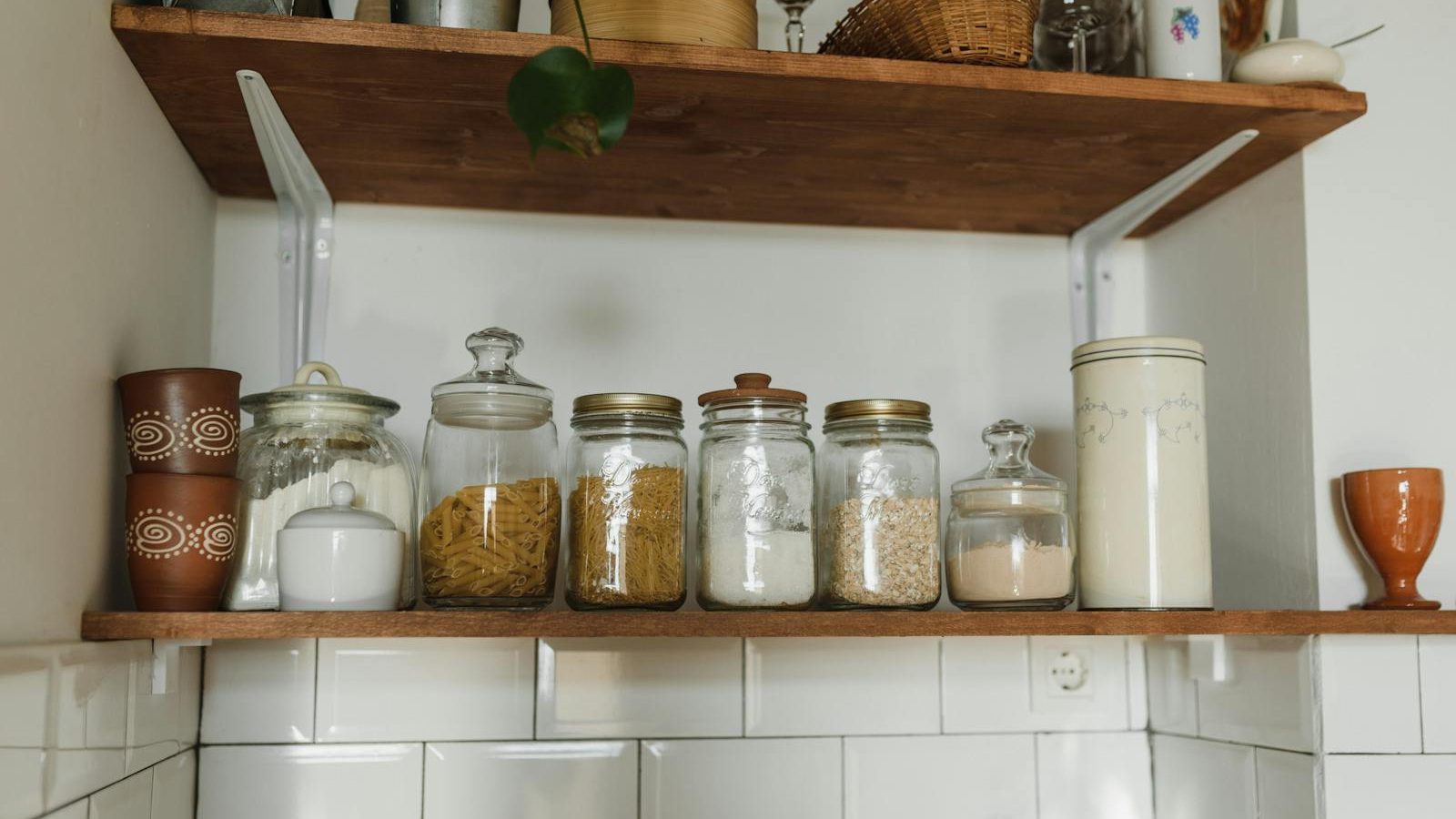
The aspirational pantry, in every magazine spread of the last ten years, has rows of identical clear glass canisters with elegant labels. Beside each canister, an artful wooden scoop. The whole thing costs around three hundred pounds before you put anything in it. Almost none of the people who post these images shop in bulk regularly. The canisters are decoration.
The actual bulk-shopping pantry, the one used by people who buy lentils from a refill shop or rice in five-kilo bags, looks different. It is mismatched. The containers came from many places. Some have labels written in marker. Nothing matches. It works far better than the magazine version, because the containers fit the contents, not a colour scheme.
The categories of bulk storage
Different ingredients want different containers. The honest categories:
- Loose-flowing dry goods (rice, lentils, beans, oats, pasta, sugar)
- Powdery dry goods (flour, ground spices, cocoa, cornflour)
- Items that need to stay dry but cool (nuts, seeds, dried fruit)
- Items that need air circulation (potatoes, onions, garlic)
- Liquids and oils (vinegar, soy sauce, oil)
Each category benefits from a slightly different container. the EPA’s reducing and reusing basics The trick is not to have a single style; it is to have the right tool for each job.
The containers worth saving
Large pickle and gherkin jars
These are the workhorses. Most are around 1.5 to 2.5 litres, which is the right size for a kilogram of rice, half a kilogram of pasta, or a substantial amount of porridge oats. The lids are usually metal and seal properly. Easy to wash, see-through, sturdy.
The smell of the original contents is the issue. A long soak in warm soapy water with a tablespoon of bicarbonate of soda usually clears most pickle smell. A few sit in sunlight for a day. Stubborn ones become storage for non-food items (cleaning supplies, garden seeds).
Coffee tins
Metal coffee tins, particularly the larger sizes, are excellent for items that need to be light-protected. Flour, cocoa, sugar, and any nuts that go rancid in light all benefit from an opaque container. Coffee tins seal well and stack neatly.
The disadvantage: you cannot see what is inside. A label is essential.
Biscuit and tea tins
The decorative kind that get given as Christmas presents and live in a cupboard for years. These are perfect for tea, herbs, smaller spice quantities, and dried fruit. The seal is rarely airtight enough for items that absorb moisture quickly, so reserve them for short-term storage.
Pasta sauce jars
The smaller version of the pickle jar. Right size for spices, dried herbs, or a small amount of seeds. The flat shape of some sauce jars (the squat ones) stacks better than the tall variety.
Tubs from olive oil or large yoghurt
Useful for items that get used quickly and do not need to be air-tight long-term. Lentils in active use, flour being used down. The plastic is light and they survive being dropped, which jars do not.
Mesh bags or cotton bags
For potatoes, onions, garlic, and other items that want air. The string bag from a pack of supermarket oranges, if intact, becomes free vegetable storage for a year. Cotton bags that came with linen products or yoga clothes do the same job.
Labelling without becoming twee
Mismatched jars need labels. The label question is where most people overthink. Several approaches that work:
- Masking tape with marker pen (peels off cleanly, lasts six months)
- Chalkboard sticker labels (need to be relabelled when contents change, but look tidy)
- Permanent marker directly on the jar (wipes off with rubbing alcohol when needed)
- Standard sticker labels printed at home or hand-written
The label needs to include the contents and, if you can manage it, the date it went in. The date matters for nuts, seeds, and flours, which have realistic expiry timeframes even in good storage.
Where to find more if you need them
If your current saved-jar collection is not enough, the second-hand routes are quick:
- Charity shops always have boxes of jars, often at 50p each
- Buy Nothing groups frequently list spare jars
- Friends who have run out of patience with their own pantry collection
- Restaurants and cafes sometimes save large jars from their commercial supplies for anyone who asks
- Local refill shops sometimes sell or give away unused containers
Buying new should be the last resort. A new set of glass canisters, however nice, comes wrapped in plastic and shipped from somewhere. The carbon and money cost of one new set is roughly equal to ten years of refilling the saved jars you already have.
The size logic
Container size matters more than appearance. A few rough rules:
- Rice, pasta, oats: 1.5 to 2 litres
- Flour and sugar: 1 to 1.5 litres
- Pulses and beans: 750ml to 1 litre
- Spices and dried herbs: 100 to 250ml
- Nuts and seeds: 500ml to 1 litre
- Coffee and tea: 500ml to 750ml
The size should roughly match the speed at which you use the ingredient. A kilo of porridge oats lasts a month for a household of four. A kilo of saffron would last several lifetimes.
The honest pitfalls
Saving jars for a bulk pantry comes with a few quiet problems.
The “I will use it eventually” trap. A pristine jar feels too good to throw, but if you already have fifteen of the same size, the sixteenth is clutter. Recycle the excess.
The smell that will not leave. Some jars (chilli pickles, strong garlic sauces, blue cheese-flavoured anything) keep their smell forever. These are not pantry jars. Use them for non-food storage or recycle.
The wrong lid. A jar with a warped or rusty lid is half a jar. If you cannot find a matching lid, the jar is recycling.
The pest question. Pantry moths and weevils love bagged dry goods and tolerate poorly sealed containers. A jar with a snug metal lid is moth-proof. A folded bag is not.
The math of bulk storage
The reason any of this matters is the price gap. A 500g bag of red lentils from a supermarket is typically £1.20. A kilo of red lentils from a refill shop or bulk supplier is roughly £2.20. The same amount, 30% cheaper, with no packaging. A household that switches even half its dry goods to bulk shopping saves around £80 to £200 a year. Over a decade, that is substantial.
The setup cost should be zero, or close to it. The jars come from your existing supply or charity shops. The labels are masking tape. The savings start with the first shop.
Where this leads
A pantry built on saved containers tends to age differently from a magazine pantry. The jars develop slight scuffs and label smudges. New jars join the collection and old ones cycle out. Over five years, the pantry has been completely renewed once or twice without ever being “redecorated.” Nothing was bought specifically for it.
The food in it works better, too. Rice in a sealed jar stays fresher than rice in a folded bag. Spices in small dark jars keep their colour. Flour in a metal tin lasts months past the date on its bag. The unfashionable jars are quietly doing a more useful job than the magazine ones ever did.
Frequently Asked Questions
Are mismatched jars really fine for a pantry?
Yes. The contents matter more than the appearance. Mismatched jars are easier to identify by sight and use the right size for each ingredient.
How do I get pickle smell out of a jar?
Soak in warm soapy water with a tablespoon of bicarbonate of soda for several hours. Air dry in sunlight. Most smells lift. Stubborn ones go to non-food storage.
Do I need airtight containers for everything?
Only for items that go stale or attract pests easily — flour, nuts, oats. Sugar, rice, and dry pasta tolerate slightly less airtight containers.
Are coffee tins safe for food storage long-term?
Generally yes, especially if they had a food-grade liner originally. Avoid using rusted or damaged tins.
How long do bulk dry goods last in saved jars?
Rice, lentils, and pasta last 12 to 24 months. Flour lasts 6 to 12 months. Nuts last 3 to 6 months. Spices keep their flavour for about a year. Label everything with the date.
Where do I buy bulk goods to fill the jars?
Refill shops are the dedicated option. Many wholefood shops sell from bulk dispensers. Supermarkets sell large bags of rice, pasta, lentils, and flour, which work for filling the same jars at home.