The honest truth about reducing plastic at a supermarket is that you cannot get to zero, and anyone selling you a guide that promises otherwise is selling you a story. What you can do is cut the volume by half, maybe two-thirds, with a small set of habits that don’t require living near a refill shop, working part-time, or spending the household budget on premium organic versions of everything.
This piece is about that middle ground. The realistic one.
Start with what you actually buy
The first useful exercise is to walk around your kitchen with a pad and write down the plastic. Not “plastic in general”, your plastic. US PIRG’s reports on consumer waste The yoghurt pots, the salad bags, the cheese wrappers, the bottles of squash, the chocolate biscuit trays. You can’t reduce what you can’t see.
When you do this honestly, you’ll find three or four items that account for most of the volume. For most households, it’s some combination of:
- Bagged fruit and vegetables.
- Yoghurt and dairy pots.
- Bottled drinks (water, squash, fizzy).
- Plastic-wrapped meat, fish or cheese.
- Snack multi-packs (crisps, biscuits, kids’ lunchbox items).
Fix those, and you’ve fixed most of it. Don’t obsess over the bag your tea comes in.
The produce aisle: easier than you think
Almost every UK and US supermarket now has a loose produce section alongside the pre-bagged version. The pre-bagged exists because it’s easier for the shop to stock, and because some people genuinely prefer it. You don’t have to.
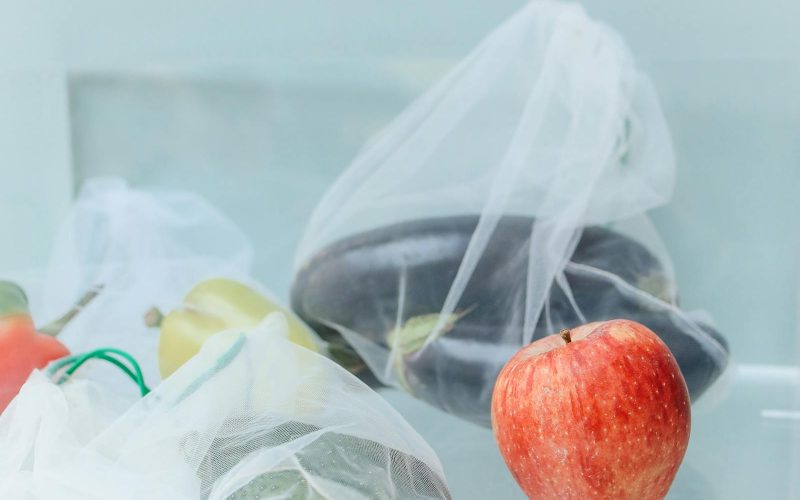
Bring a few cotton mesh bags, paper mushroom bags, or simply nothing at all, apples roll around in a trolley just fine. Consumer Reports on cutting food waste and cost A reader called Priya wrote in to say she bought one set of mesh bags four years ago and they’ve survived every wash. They cost her £6 and have replaced, by her count, around 800 plastic bags. That’s a fair return on six quid.
The harder loose items are berries, salad leaves and herbs. These are genuinely difficult to buy without plastic in a supermarket, and trying to do so will make you sad. Aim for the bigger items, root veg, tomatoes, onions, citrus, and accept the rest.
Dairy and the yoghurt question
Yoghurt pots are one of the most common household plastic items. Three ways to reduce them:
- Buy the biggest tub you can finish. A 1kg tub is one pot for the same amount of yoghurt that would otherwise be in eight individual pots.
- Make your own. It’s easier than people think, a litre of milk, a spoonful of live yoghurt as a starter, a warm spot for eight hours. There’s a learning curve, but the learning is two attempts.
- Switch some yoghurt occasions for other things. Stewed apple with cinnamon, porridge, fruit and nuts. Not as a sacrifice, just as variation.
Milk in glass bottles still exists in some areas via doorstep delivery. If you’re lucky enough to live in a milk-round area, the bottles get reused around 25 times each, which is impressive however you measure it.
The bottled drinks question
Bottled water in a country with safe tap water is one of the easier wins. A jug filter on the side of the sink and a reusable bottle covers most of the use case for a few pounds a month. If the tap water in your area genuinely doesn’t taste good, the jug filter helps. If you genuinely need carbonated water, a soda stream pays for itself in roughly four months.
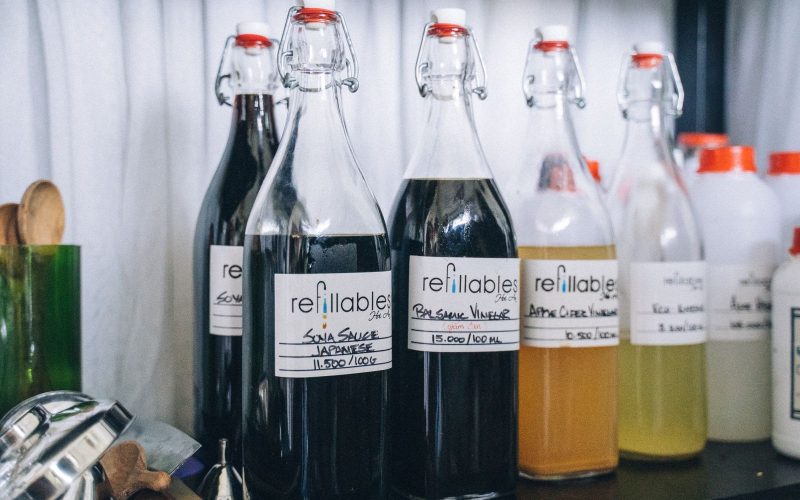
Squash and fizzy drinks are harder because the format itself is the appeal. Concentrated cordials in larger glass bottles, cans (which recycle far better than plastic), or just less consumption are the options. None of these is exciting advice. All of them work.
The deli, the fish counter, the cheese counter
If your supermarket has a staffed counter, and many of the larger ones still do, they will usually put cheese, meat or fish straight into a container you bring. The first time you ask is the awkward time. After that it’s ordinary.
The script is: “Can you put this straight into my container? I’ll weigh it after.” The staff member weighs the empty box, fills it, prints a sticker. Done. Some supermarkets are better than others at this; if yours refuses, the manager has the discretion to allow it, and a polite ask up the chain often helps.
Snacks, biscuits and the lunchbox dilemma
Multi-pack snacks are convenient. They are also one of the largest sources of household plastic. The compromise that works for most families is to buy a big bag or box of one item, say, oat biscuits, and decant into reusable lunchbox-size pots at home. You’ve replaced 30 little wrappers with one bigger one.
Homemade flapjack is the patron saint of this approach. One tin of oats, syrup, butter, into a tray. Cut into squares. Wrap each in beeswax cloth or a small reusable container. Done for the week.
What about bread?
Sliced supermarket bread in a plastic bag is the default for a reason, it’s cheap and lasts. If you have a bakery counter in your supermarket, you can put a loose loaf into a cotton bread bag. If you don’t, the next-best step is to choose paper-wrapped bread or to buy from a bakery once a week and freeze half the loaf. Frozen bread defrosts fine in a few hours, and toasts straight from frozen.
The realism check
You will still leave the supermarket with some plastic. The point isn’t purity. The point is making the easy reductions stick, so you’re not generating the same volume of waste week after week without noticing. Pick three changes, do them for a month, and then add one more. Within six months the bin tells a different story, and you didn’t have to become a different person to get there.
Frequently Asked Questions
Can I bring my own containers to a supermarket deli counter?
In most cases yes, especially in larger stores with staffed counters. Some chains have specific policies; if the first staff member says no, a quick ask to the supervisor often unlocks it.
What's the biggest plastic item I should tackle first?
Whatever you buy most. For most households it's bagged produce, yoghurt pots or bottled drinks. Look in your bin for a week and the answer will be obvious.
Is glass always better than plastic?
Not always. Glass is heavier to transport and uses more energy to make and recycle. It's genuinely better when reused many times, less so when used once and binned.
Are mesh produce bags worth buying?
Yes, if you'll actually use them. A £6 set lasts years and replaces hundreds of plastic bags. Keep them with your shopping bags, not in a drawer.
How do I deal with snacks for kids without multi-pack plastic?
Buy in larger formats and decant into reusable lunchbox pots. Homemade flapjack or oat bites cover a week of lunches at a fraction of the wrapping.
Will I save money by reducing supermarket plastic?
Often yes, especially with loose produce and larger formats. Some plastic-free swaps cost more (refill brands, specialty bread). On average, it tends to break even or come out slightly ahead.