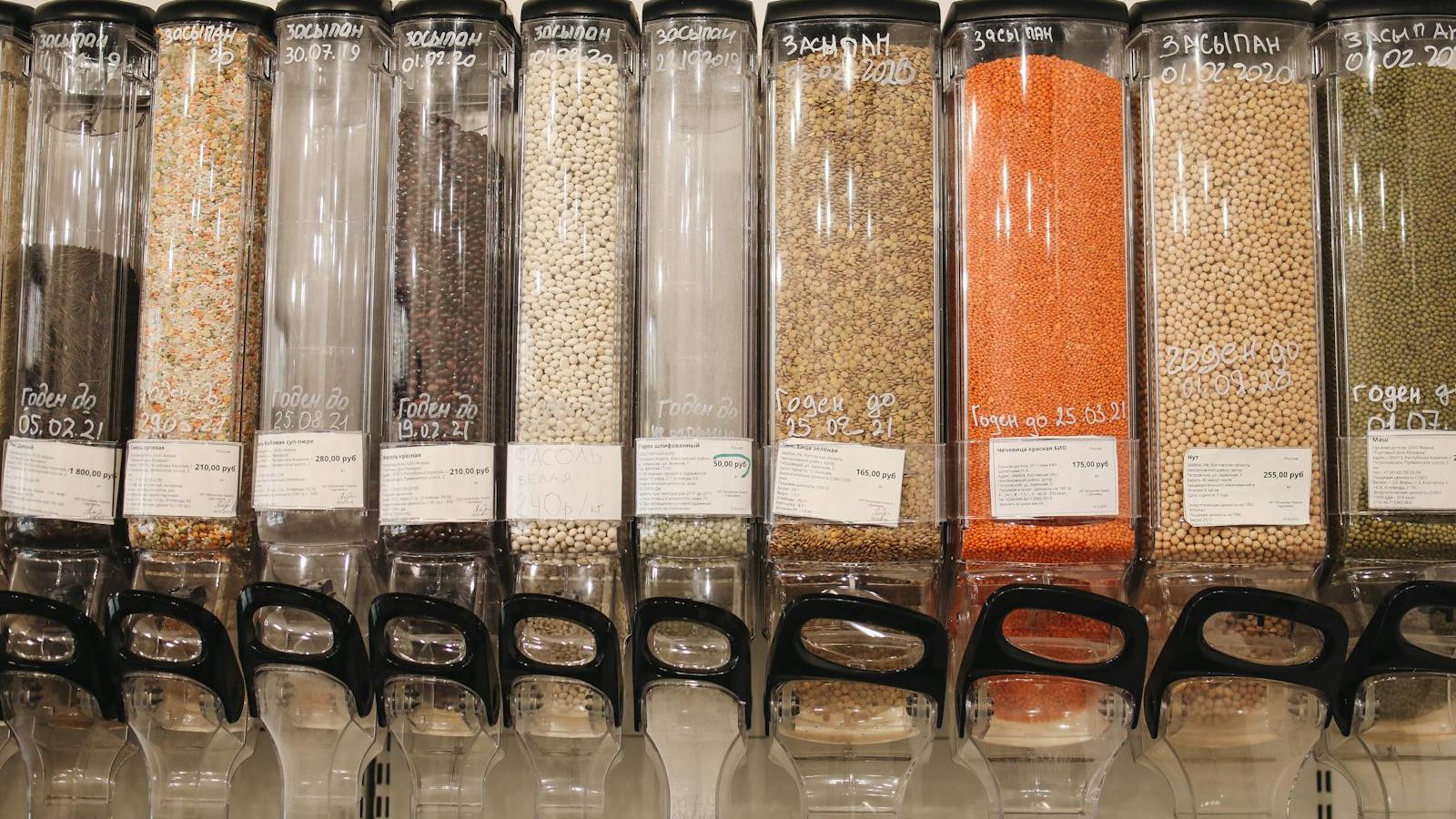
“It looks like a chemistry lab in there,” a friend told me before her first visit to a refill shop, and she wasn’t entirely wrong. There are taps and pumps and bottles in rows, and a sense that you’re meant to know what to do. You aren’t. Nobody is, the first time. The shops know this, and the staff are generally lovely about it.
A refill shop is, at its simplest, a place where you bring your own bottle and fill it with what you need, washing-up liquid, laundry detergent, shampoo, conditioner, hand soap, sometimes pasta and rice and oil as well. You pay for the weight or volume of product, not the bottle. The bottle is yours; you brought it.
Why these shops exist
Most household cleaning and personal care products are sold in plastic bottles that are used once, recycled if you’re lucky, and replaced. US PIRG’s reports on consumer waste Even where recycling works well, manufacturing a new bottle takes more energy than refilling an old one. Refill shops are an attempt to put that loop back together.
They also tend to stock smaller, often regional brands you won’t find in a supermarket. Some of these are excellent. Some are not. As with anywhere, you find your favourites by trying.
What to bring on your first visit
You need clean, dry, empty bottles. That’s really the whole list. But within that, there are some sensible choices.
- An old shampoo bottle for shampoo, an old washing-up liquid bottle for washing-up liquid, and so on. The pumps and squeeze tops are already built in.
- Wide-mouth jars or tubs for thick products like body butter or solid soaps.
- A larger 1-litre or 5-litre container for laundry detergent, if you can manage the weight on the way home.
- A reusable bag with a flat bottom. Glass bottles in a thin carrier are a nervous walk home.
If you don’t have empties, most shops sell second-hand bottles for 50p to a couple of pounds. You can also ask. Many shops have a “free bottle” shelf of donated ones.
The tare weight ritual
When you arrive, take your empty containers to the counter or scale. The shop will weigh each one and write the empty weight (the “tare”) on a sticker or on the bottle itself. This is so they can deduct it from the full weight when you check out. You only pay for what’s inside.
Some shops use a sticky label. Some use a chinagraph pencil that wipes off. A few have a digital system that remembers your bottles. None of this is complicated, but the first time it can feel like there’s a hidden procedure. There isn’t. Just say, “It’s my first time, can you tare these for me?” and you’ll be guided through.
How the dispensers work
Liquid products come from one of three types of dispenser, and they each have a knack.
Tap dispensers
A large container above with a tap below. You hold your bottle under and turn the tap. They flow faster than you think for the first second, then settle. Start slowly.
Pump dispensers
You push a lever to dose out measured amounts. Slow but accurate. Good for thick products like conditioner.
Gravity bottles
Stylish glass containers with a small tap at the bottom. These are usually for delicate products like face oils. Tiny dose, tiny price tag per millilitre.
What works well from refill, and what doesn’t
Some products are a clear win at a refill shop:
- Washing-up liquid, cheap, used in volume, easy to refill.
- Laundry detergent, significant plastic saving over time.
- Hand soap, small bottle, fast turnover.
- Shampoo and conditioner, if you find a brand that suits your hair.
Some are honestly fiddly:
- Toothpaste, which often comes in tablets or jars and needs adjusting to.
- Deodorant, where the format change can take some getting used to.
- Sunscreen, where formulation is genuinely tricky.
If you try a refill product and don’t like it, that’s fine. You haven’t failed. You’ve just learned which products work for your skin or routine.
The cost picture
Refill is sometimes cheaper than supermarket, sometimes about the same, occasionally more. It depends on the brand and the shop. As a rough rule, big own-brand supermarket products will be cheaper than refill, mid-range branded products will be similar, and premium products are often cheaper at the refill shop than in the bottle equivalent.
The harder thing to price is the avoided bottle. A 750ml shampoo bottle costs roughly nothing to manufacture, but the environmental cost over time of buying a new one every two months is real. Worth thinking about, even when it’s not on the till receipt.
A small etiquette note
Don’t turn up with a bottle that smells like the last thing it held if you’re filling it with something else. Rinse it. A laundry detergent bottle that just held bleach is going to spoil whatever you put in next, and the staff will quietly note it. The shop is, in part, looking after the products you take home, they can’t do that if your bottle is contaminated.
Also, don’t double-dip. Use the shop’s funnel if they have one, or pour carefully. If you spill, tell someone, they’d rather clean it now than have someone slip later.
The first ten minutes
When you walk in for the first time, give yourself ten minutes to just look. Read the labels. Smell the testers if there are any. Most shops have small sample bottles or scratch-and-sniff cards near the dispensers, because nobody wants to take home a litre of something that smells like cough syrup.
Ask which products are local, which are most popular, which are the staff’s personal favourites. Refill shop staff tend to love this question, and it gets you to the good stuff faster than any algorithm. After two or three visits, you’ll have your own set of favourites, and the whole place will feel as ordinary as a corner shop.
Frequently Asked Questions
Can I bring any kind of bottle to a refill shop?
Most shops accept any clean, dry container that doesn't leak. Old shampoo or detergent bottles are ideal because the pumps and lids already work for that type of product.
What is tare weight?
It's the empty weight of your bottle, which the shop notes so they can subtract it from the full weight at checkout. You only pay for the product inside.
Will refill shop products work as well as supermarket brands?
Often yes, sometimes no. Refill brands vary, like any product range. Try small amounts first and you'll quickly find what suits you.
Are refill shops more expensive than supermarkets?
It varies. Big supermarket own-brand products tend to be cheaper, but mid-range and premium products are often similar or better priced at refill shops.
What if I don't have any empty bottles?
Most shops sell or give away second-hand bottles. You can start with one or two and build up your collection from your normal household empties.
Is it hygienic?
Yes, when you bring clean containers. Shop dispensers are typically sealed at the top and refilled in bulk, similar to how a pub keg works.