The compost bin came with a sticker that said “Ready compost in 12 weeks!” The exclamation mark should have been the warning. Twelve weeks later I lifted the lid expecting something dark and crumbly. What I found looked broadly like the same heap of peelings I had put in, only slightly browner and with several confident woodlice walking across the surface. It took another nine months for that bin to produce anything I would have called compost.
The “weeks to ready” promise on bin packaging is not a lie exactly. It is the best-case scenario from a heap that meets every condition perfectly. Most of us run heaps that meet some of the conditions some of the time, and our compost takes correspondingly longer. Here is what actually drives the timescale.
The five things that decide the speed
Almost every variation in “how long does compost take” comes down to five factors. The further you are from optimal on any of them, the longer it takes.
Temperature. Microbial activity roughly doubles for every ten degree rise in temperature, up to around 60 degrees centigrade. A heap running at 50 degrees works five times as fast as one running at 10. This is why summer compost is fast and winter compost is glacial.
Carbon-to-nitrogen ratio. The microbes that drive composting need browns (carbon) and greens (nitrogen) in roughly 2:1 to 3:1 by volume. USDA composting overview Too much green and the pile gets wet and anaerobic. Too much brown and there isn’t enough food for the bacteria.
Surface area. Chopped scraps decompose far faster than whole ones. A whole apple core takes weeks; a chopped apple core takes days. Shredded card breaks down in two months; whole boxes in two years.
Moisture. A heap should feel like a wrung-out sponge. Too dry and microbes can’t move. Too wet and air can’t circulate.
Oxygen. Aerobic decomposition is much faster than anaerobic. Turning the heap, or building it with air channels, accelerates things significantly.
Realistic timings by method
Approximate timings, assuming reasonable but not perfect management:
| Method | Time to usable compost | Time to fine compost |
|---|---|---|
| Hot heap, turned weekly | 3 to 4 months | 4 to 5 months |
| Insulated hot composter (commercial unit) | 3 to 6 months | 5 to 8 months |
| Tumbler, regularly turned | 2 to 3 months | 4 to 5 months |
| Cold heap, occasionally turned | 9 to 12 months | 12 to 18 months |
| Cold heap, never turned | 12 to 18 months | 18 to 24 months |
| Daleks (plastic compost bin) | 9 to 15 months | 15 to 24 months |
| Worm bin (vermicomposting) | 3 to 6 months for first harvest | Continuous after that |
| Bokashi (pre-fermentation only) | 2 weeks fermentation, then 2 to 4 weeks in soil | 4 to 6 weeks total |
| Industrial in-vessel composting | 3 to 6 weeks | Not applicable |
What “ready” really means
There is a confusing question hiding here, which is what counts as ready. Compost passes through several stages.
Stage one is recognisable material slowly disappearing. You can still see banana skins, paper, eggshells. This is composting in progress, not finished.
Stage two is dark, fibrous matter with some recognisable bits, twigs, larger pieces of card, the odd avocado stone. This is “rough compost” and is fine as a thick mulch around fruit bushes or under hedges.
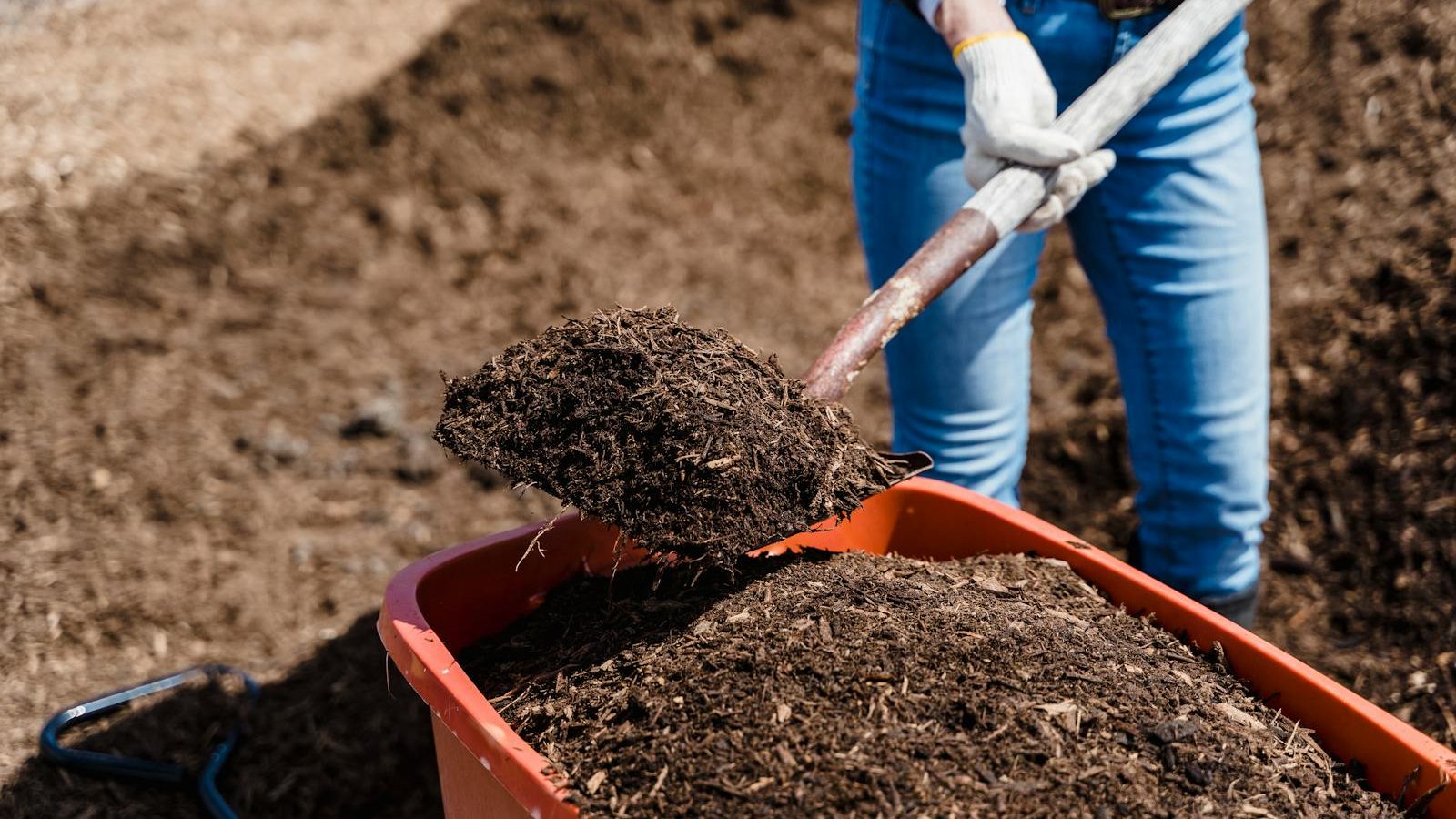
Stage three is uniformly dark, crumbly, smells of forest floor, no individual bits recognisable. This is “fine compost” and is the stage at which you can mix it into potting compost or top-dress raised beds.
Stage four is mature compost, looks like stage three but has been sitting for another two or three months. This is what professional growers want for seed sowing and demanding crops. Most home use only really needs stage three.
When packaging promises compost “in twelve weeks”, it usually means rough stage two if you treat the bin perfectly. Stage three takes longer.
What slows things down
Common reasons your heap is taking longer than expected.
- Adding bit by bit rather than building in one go. A heap built in a single afternoon, with all materials mixed, heats up properly. A heap added to weekly cycles through cool spells every time you add fresh material.
- Whole prunings and uncut card. Anything bigger than a hand’s span will still be visible at the end.
- Winter. Heaps slow dramatically below 10 degrees and effectively stop below freezing. A summer heap that would compost in three months might need six over a winter.
- Plastic bins (the classic “dalek” cones). These provide poor airflow and modest insulation, and they tend to run cold. Compost in them is reliably slow.
- Too much of one thing. A bin filled with autumn leaves alone takes two years. The same leaves mixed with grass clippings and kitchen scraps would take five months.
What speeds things up
Equally clear list. If you want faster compost, do some or all of:
- Chop or shred everything. A garden shredder, a strimmer in a dustbin, a pair of secateurs and patience, anything that reduces particle size.
- Build the heap in one go. Save up materials in separate piles (greens, browns) and combine them in a single building day.
- Turn the heap. Once a week for hot heaps; once a fortnight is also useful; once a month does something.
- Insulate. Old carpet, hessian sacks, straw bales around the sides, anything that keeps heat in.
- Check moisture. A handful from the centre should feel damp, not wet, not dry. Adjust by adding water or dry brown material.
The pattern of a typical year
A real, slightly imperfect garden heap in temperate Britain runs roughly like this. You build the bay in March from saved cardboard, the previous autumn’s leaves, and the first kitchen scraps of spring. By May the centre is warm. By July it has settled to about half its starting volume. By September it has stopped shrinking and looks dark in the middle. By November it is rough compost. The following March, a year on, you dig out finished compost from underneath, and start a new build on top of what remains.
That is the rhythm. Not twelve weeks. Twelve months. And actually that is what most gardeners want anyway, a steady annual supply rather than a frantic three-month sprint. The slow heap fits the seasons.
Frequently Asked Questions
Why is my compost taking so long?
Almost always one of: too much brown material (too dry, not enough nitrogen), too much green material (too wet, anaerobic), pieces too large to break down, no turning, or cold weather. Check moisture (wrung-out sponge), check balance, chop bigger pieces, and turn it.
Can compost be ready in just a few weeks?
Only in very specific conditions — a hot heap of a cubic metre, perfect carbon-to-nitrogen ratio, finely chopped, turned weekly. Even then "ready" usually means rough compost. Fine, mature compost takes longer.
Does adding compost activator really speed things up?
Commercial activators are mostly nitrogen plus some microbes. If your heap is already balanced and warm, they make little difference. If it is stalled because it is too brown and dry, an activator (or a generous handful of grass clippings) can wake it up.
How do I know when compost is ready to use?
It is dark brown to black, crumbly, smells of woodland or fresh earth, and you cannot recognise individual ingredients except perhaps the odd eggshell or avocado stone. If you can still see banana skins, it is not ready.
Why does compost slow down in winter?
Microbial activity drops sharply below 10 degrees centigrade and effectively stops below freezing. A heap that ran fast in summer will idle through winter. Insulating the heap with old carpet or straw helps; a large mass holds heat longer than a small one.
Should I sieve my finished compost?
Optional. Sieving gives you a finer product for seed sowing and pot mixing, with the larger bits (twigs, eggshells, avocado stones) returned to the next batch as starter material. For mulching, sieving is not necessary.