At 7:14 on a Tuesday morning, your wheelie bin is tipped into the lorry. The doors slam. The bin gets returned to its spot, slightly tilted. The lorry rolls on, picking up the next house, then the next. By 9:30 the lorry is full and heading for the depot. By 11, the contents have been weighed and unloaded onto the tipping floor of a Materials Recovery Facility, or MRF, pronounced “merf” by everyone who works in one. Your recycling has officially entered the system. From here, depending on what was in your bin, the journey takes anywhere from three weeks to six months to complete.
Most householders never see what happens between the kerb and the new product. The mystery is unhelpful, because it makes recycling feel a bit like a black box you put things into and hope for the best. The reality is genuinely interesting, and once you’ve seen the broad shape of it, the daily decisions in the kitchen start to make more sense. Every item you put in a bin is bound for one of half a dozen specific destinations, and each destination has its own quirks.
The tipping floor
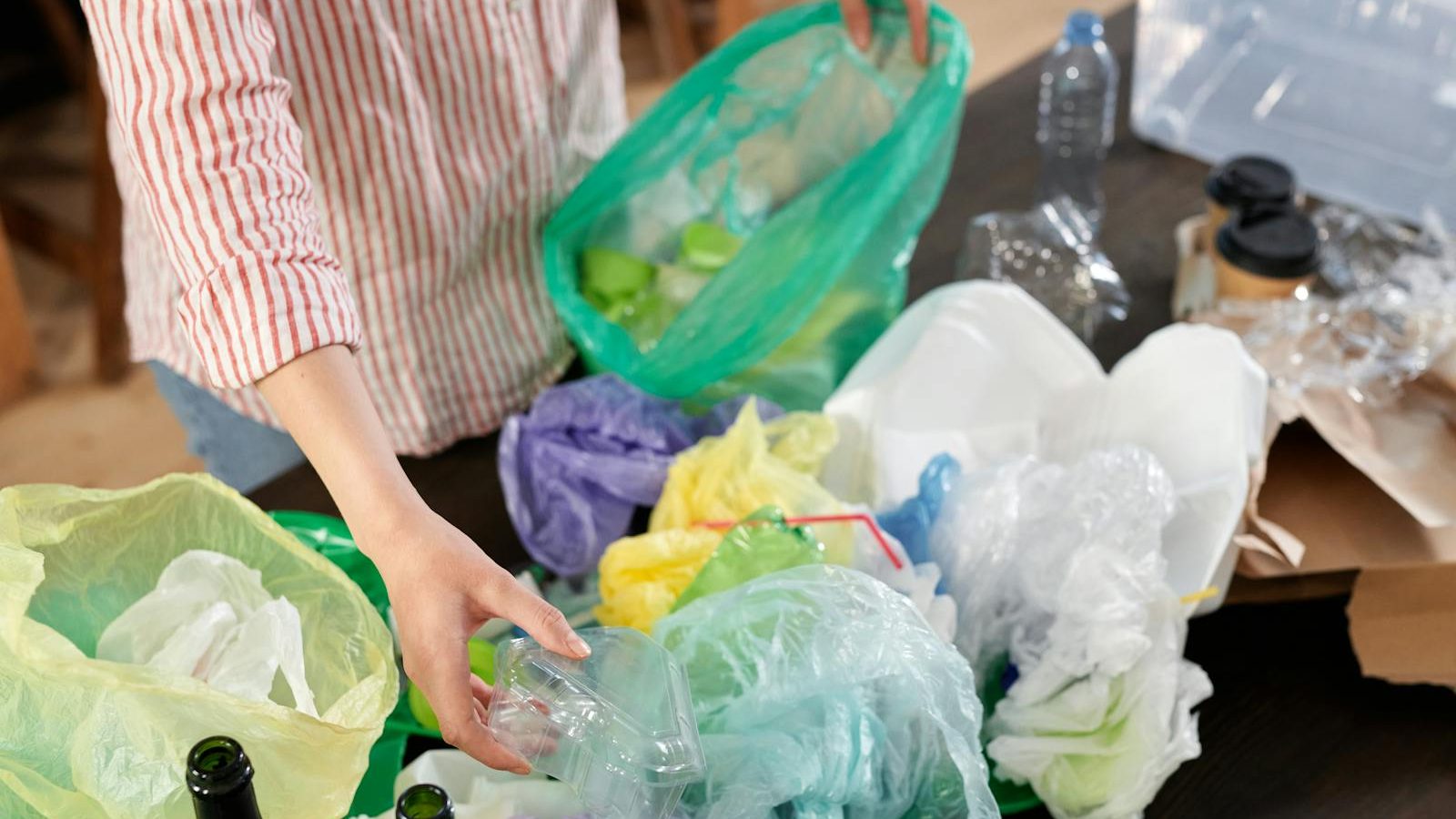
The first stop at the MRF is a vast concrete floor, two storeys high, where lorries reverse in and dump their loads. Within minutes, a front-loader bucket pushes the pile onto an inclined conveyor and the sorting line begins. the EPA’s recycling FAQ The first job is the worst: hand-picking large contaminants. A team of workers stands beside the conveyor, pulling off bags of nappies, garden waste, tangled clothing, the occasional dead animal, anything obviously not recyclable. This is the dirtiest job in the building and one of the most dangerous.
The cleaner the input, the easier this stage. A bin that has been carefully sorted by the household reaches the line as a flow of items that the machines can handle. A bin full of bagged misclassified material slows everything down.
The trommel
After hand-picking, the conveyor feeds a long rotating drum called a trommel. The trommel has holes of increasing size as you move along it. Small items, broken glass, bottle caps, food scraps, fall through the early holes. Medium items, cans, plastic bottles, fall through middle sections. Large items, cardboard, big plastic, anything else, exit at the end.
The trommel sorts mostly by size. After this point, every stream goes to its own further sorting. The smaller streams head for additional density and magnetic separations; the larger streams head for hand-pick stations and optical sorters.
Magnets and eddy currents
Steel cans are pulled from the line by an overhead electromagnet. They drop into a separate hopper, get baled, and head for steel recycling. Aluminium cans are next, captured by an eddy-current separator that uses a rapidly rotating magnetic field to launch aluminium off the conveyor at a specific angle. The two non-ferrous metal streams diverge, each bound for a specialist mill.
Why metals are the easy case
Steel and aluminium have markets that have been stable for decades. The recycled material is essentially interchangeable with virgin metal, no degradation in quality, no contamination from labels or food residue that survives the furnace. A new tin can may contain 30 to 60 percent recycled steel without anyone noticing.
Optical sorters for plastic
Plastic is the most complex stream because it isn’t one material, it’s seven or more resins, each requiring its own market. Optical sorters use near-infrared light to identify each item’s resin type as it passes underneath. A blast of compressed air kicks selected items into one of several bins. PET, HDPE, PP, each gets its own pile. The sorting is fast, accurate, and largely automatic.
The downsides: optical sorters can’t see black plastic, and they struggle with very small items or mixed laminates. This is where most of the residue stream comes from, items the optical sorter couldn’t classify, which then go to landfill or incineration.
The paper line
Paper and cardboard are sorted with a combination of size screens and air classifiers, heavy items fall, light items rise. Cardboard, being denser and stiffer than office paper, separates naturally. The two streams are baled separately because they go to different mills.
Mixed paper goes to mills that turn it into newsprint, packaging, or tissue products. Cardboard goes to mills that re-pulp it for new cardboard. The energy savings are substantial, recycled paper uses about 40 percent less energy than virgin pulp.
Glass, the local exception
Glass is sometimes sorted separately at the MRF, sometimes collected via bottle banks and processed at dedicated facilities. After sorting, glass is crushed into “cullet”, small fragments, and shipped to a glass works. The cullet is mixed with sand, soda ash, and limestone, melted at around 1,500 degrees Celsius, and reformed into new bottles and jars.
The whole cycle from bottle bank to new bottle takes around six to eight weeks. Glass recycling is one of the genuinely closed loops in the system, bottle to bottle, indefinitely.
Where things go wrong
The two most common problems on the line are bags and tanglers. Bags get caught around rotating shafts. Tanglers, old wires, garden hose, Christmas lights, ribbons, wrap around anything that spins. Both cause line stoppages. A typical UK MRF has multiple stoppages per shift, and the cost is significant, both in maintenance and in lost capacity.
This is why facilities ask householders not to bag and not to include tanglers. It’s not pedantry. It’s the difference between a smooth shift and a chaotic one.
Baling and shipping
Once sorted, each material is baled, compressed into cuboid blocks weighing several hundred kilograms each. The bales are stacked, weighed, and sold to mills. Many UK bales travel domestically to mills in the Midlands and the North. Some travel further, to Continental Europe, occasionally Turkey, increasingly less to South-East Asia after several Asian countries tightened import rules.
The mill remelts, repulps, or otherwise reprocesses the material into a new feedstock. The feedstock goes to a manufacturer. The manufacturer makes a new product. The new product goes on a shelf. The whole loop, for an aluminium can, takes about six weeks.
The residue stream
Not everything that arrives at the MRF gets recycled. The residue, items that couldn’t be classified, items that were too contaminated, items that fell through the wrong slot, heads for either landfill or incineration with energy recovery. A typical UK MRF has a residue rate between 10 and 25 percent, depending on local contamination habits.
This is the number that household actions can move most directly. Cleaner input means lower residue. Lower residue means more material recovered.
An MRF visit
I toured an MRF in Hertfordshire two years ago and what stayed with me wasn’t the technology, though the technology is impressive, but the noise. A line of 30 metres of rolling, sorting, banging, hissing machinery, with workers in earmuffs and high-vis stationed at strategic points. And the speed: items go past so quickly that the optical sorters operate in milliseconds, and the air jets click constantly. It’s a lot for what arrives as a quiet bin at the kerb.
The supervisor told me their biggest frustration was the slow trickle of household items that never quite belonged: kids’ toys, garden tools, the occasional Christmas tree. Each one slowed the line. “If householders just stuck to the list,” he said, “we’d run smoothly. The list is short. It’s clear. But every bin has a surprise.”
The longer journey home
The aluminium can you tossed in your bin on Tuesday morning will likely be back on a shelf by mid-summer. The cardboard box from your latest delivery will probably be a new box by autumn. The plastic milk bottle has a less certain future, it might become a new bottle, or it might become a drainpipe, or, if markets are bad, it might travel further and stay in storage longer than you’d like. Recycling isn’t magic, but it isn’t a black hole either. It’s a slow, mechanical, increasingly automated process that turns kerbside material into manufacturer-grade input. The journey works as long as the input is clean.
Next time you tip a tin into the bin, picture it bouncing down the trommel three days later. The image is more useful than any sticker.
Frequently Asked Questions
What is a MRF?
A Materials Recovery Facility — the sorting plant your kerbside recycling goes to. Pronounced "merf" by those who work in them. They use a combination of hand-picking, mechanical sorting, and optical scanning to separate materials.
How long does recycling take to become a new product?
Varies by material. Aluminium cans return as new cans in about six weeks. Glass bottles in six to eight weeks. Paper in a few months. Plastic varies widely depending on the market.
Does my recycling go abroad?
Some of it. Most UK bales are processed domestically, but some travel to Continental Europe or further. Stricter import rules in Asia have reduced overseas exports significantly in recent years.
What is the residue stream?
The portion of recycling that couldn't be processed — too contaminated, unsortable, or mixed. It typically ends up in landfill or incineration. Reducing residue is the most impactful thing households can do.
Why does the MRF prefer no bags?
Bags jam sorting machinery and cover items from optical sorters. They're the single biggest source of mechanical stoppages on the line. Loose items flow correctly; bagged items get routed to general waste.
Can I visit my local MRF?
Most UK facilities offer public tours, often free for small groups. Contact your council or the facility directly. It's an excellent way to understand what happens after pickup.