
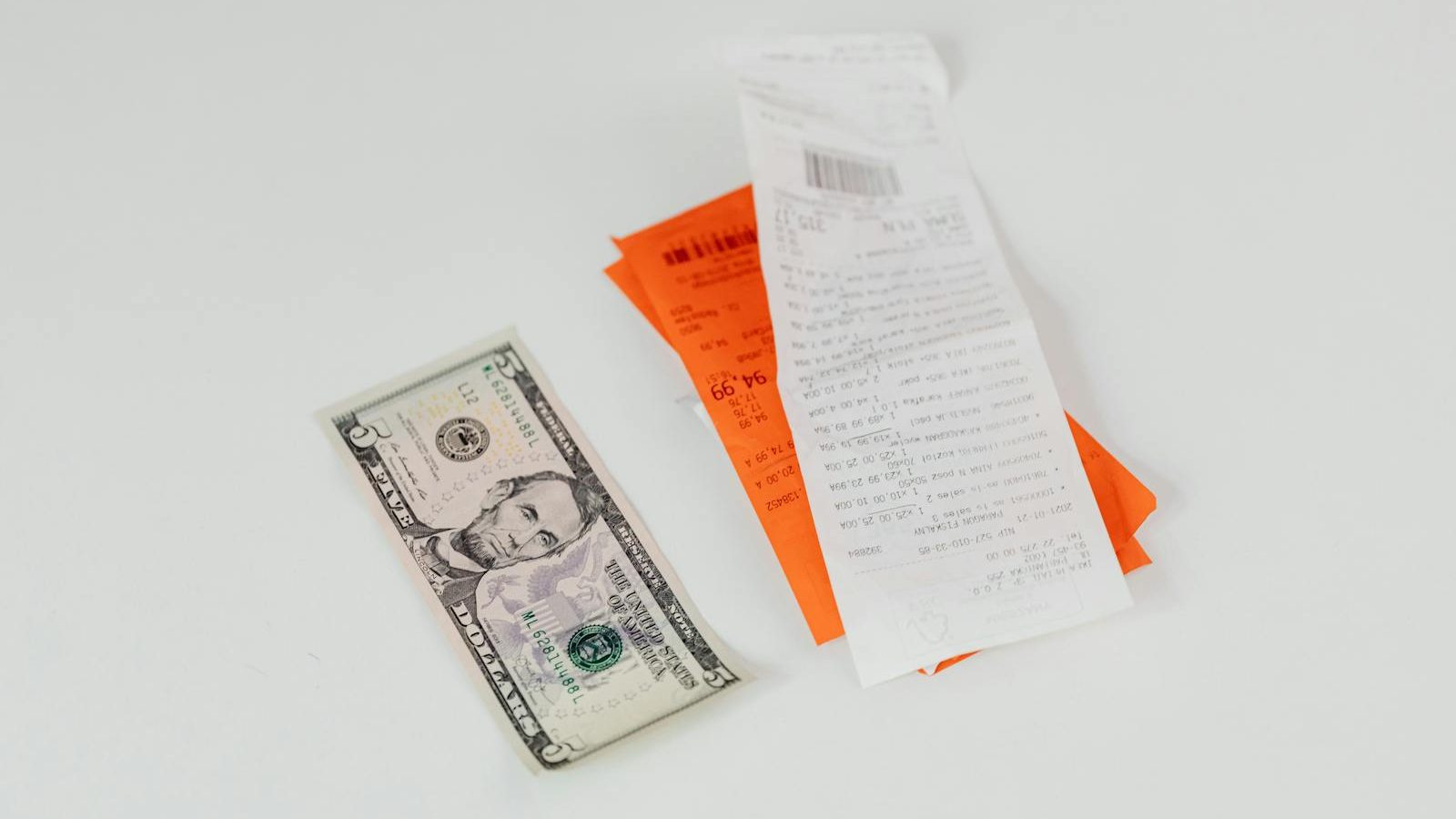
Paper feels like the easy win of recycling. A newspaper goes in, a sheet of office paper goes in, a cardboard box gets flattened and joins them. The fibres get pulped, washed, and made into new paper. Everyone’s clear on the basic case. The trouble starts at the edges, the receipts that stack up in your wallet, the brown envelopes with plastic windows, the padded mailers with bubble-wrap interiors, the tissues, the wrapping paper, the wax-coated takeaway sleeves. Each one is partly paper and partly something else, and each one has a different right answer.
This article is a working guide to the awkward cases. The clean stuff doesn’t need an article. The grey-area paper is where most household mistakes happen, and where a few rules clear up most of the confusion.
Thermal receipts
Receipts from card machines are not standard paper. They’re thermal paper, coated with a chemical layer that darkens when heated. The coating contains BPA or BPS, bisphenols that are present in low concentrations but persistent. Thermal paper can’t be recycled with normal paper because the bisphenols contaminate the pulp and end up in new products, including potentially food-contact ones.
The fix: thermal receipts go in general waste. You can identify them by the slightly shiny finish and the way they darken when you scratch them with a fingernail. Standard receipts, printed with normal ink on standard paper, are recyclable. Recycle Now’s how-to guide (UK) The receipts from most card terminals, ATMs, and supermarket tills are thermal. WRAP UK on recycling action
Going paperless
Many UK retailers now offer digital receipts by default or on request. Choosing this option avoids the recycling question altogether, plus removes a small but real source of bisphenol exposure. Some banks now exclude thermal receipts from their ATM offerings.
Envelopes, what to do with the windows
Standard brown envelopes are fine for the paper recycling. So are white envelopes. The complication is the plastic window. Modern facilities can handle small plastic film amounts in paper bales, the pulping process screens out non-fibre material, but if your envelope has a particularly large window, or several, you can remove it. It’s not strictly necessary, but it helps the mill marginally.
- Brown manila envelope, recycle as is
- White envelope with small plastic window, recycle as is
- Big-window window envelope (large plastic panel), remove window or general waste
- Jiffy bag with bubble wrap inside, see below
- Padded paper envelope (no bubble), recycle as is
Padded envelopes
The classic Jiffy bag, manila paper outside, bubble wrap inside, is a mixed-material item that doesn’t recycle well in either stream. You have two options. One is to tear the bag open and separate the layers: the paper outer goes to recycling, the bubble wrap to the supermarket soft plastic bin. The other is to reuse the bag, which is by far the easiest option since these things travel through the post in pristine condition.
Newer padded envelopes are sometimes paper-padded with shredded paper or honeycomb cardboard inside, and these are fully recyclable. Check by squeezing, if it crumples like paper, it’s recyclable; if it crackles like plastic, it’s mixed.
Wrapping paper
Christmas brings a particular question every year: can I recycle wrapping paper? The answer depends on the type. Plain paper wrapping with printed designs is recyclable. Foiled, glittered, plastic-coated, or laminated wrapping is not, the metallic or plastic layer can’t be pulped.
The “scrunch test” applies here too. Crumple a piece of wrapping paper in your hand. If it stays crumpled, it’s probably recyclable paper. If it springs back, there’s a plastic or foil layer and it’s general waste. Most printed brown kraft paper passes; most shiny metallic wrap does not.
| Wrapping | Recyclable? | Notes |
|---|---|---|
| Plain kraft brown paper | Yes | The ideal wrap |
| Printed paper (no shine) | Usually yes | Scrunch test confirms |
| Foil wrap | No | General waste |
| Glitter wrap | No | General waste |
| Velvet or fabric wrap | No (but reusable) | Furoshiki-style |
| Cellophane | No | General waste |
| Ribbon | No (but reusable) | Save for next year |
Tissues, paper towels, kitchen roll
Tissues, paper towels, and kitchen roll are made of short fibres that have already been recycled once or twice, the fibre is too weak to recycle further. They also typically carry food, body fluids, or cleaning chemicals. None of them go in the paper bin.
The right home is the food waste caddy (for kitchen roll used to wipe up food spills), the general waste (for tissues from a cold), or the home compost (for unbleached kitchen towel without harsh chemicals). They compost well.
Wax-coated and laminated paper
Takeaway sleeves for sandwiches, wax wrappers from bakeries, magazine inserts with shiny finishes, all of these have a layer that prevents paper recycling. The tear test helps. If the item tears cleanly like paper, recycle. If it stretches or peels into two layers, it’s laminated or coated and belongs in general waste.
Some bakery wraps are now compostable, marked as such. Check the label. Home compostable means home compost heap; industrially compostable means food waste caddy if your council takes them.
Shredded paper
Shredded paper is technically recyclable, but the small fragments often fall through sorting machinery and end up in residue rather than the paper bale. The advice varies by council. Some accept it in a sealed paper envelope; some ask you to compost it instead; some say general waste.
If you compost at home, shredded paper is excellent “brown” material, it balances the wet “green” material like vegetable peelings. A handful or two per compost bin per week works well. If you don’t compost, check your council’s policy.
Books and magazines
Books are mostly paper, but the binding glue and the cover material can complicate things. Soft paperback covers are fine; hardback covers usually need to be torn off and binned, with the inner pages going to paper recycling. Or, the much better option, take the book to a charity shop or local Buy Nothing group, books retain their use almost indefinitely.
Magazines are recyclable, including the glossy ones. The clay coating that makes them shiny was a problem decades ago but is no longer, modern facilities handle it without trouble.
A reader’s receipt audit
Cath in Edinburgh wrote about clearing out a kitchen drawer of receipts she’d been saving for tax purposes. She had hundreds. About 95 percent were thermal, she’d been recycling them for years, not realising. “I felt a bit embarrassed,” she wrote, “but mostly relieved. It was a quick fix, and I switched to digital receipts from then on. The drawer stays empty now.”
The clear-paper rule
If you remember nothing else: paper that tears cleanly, with no shine or stretch, is almost always recyclable. Paper that resists tearing, stretches, peels into layers, or has a metallic finish is almost always not. The scrunch and tear tests, between them, decide nine out of ten edge cases. The rest you can look up once and remember.
Paper recycling is one of the oldest streams in the system and one of the most reliable. The awkward cases exist because we’ve added coatings, films, and laminates to make paper more useful, but the trade-off shows up at end of life. Keep it simple, keep it clean, and the bin behaves.
Frequently Asked Questions
Why can't I recycle till receipts?
They're thermal paper coated with bisphenols, which contaminate the recycling pulp. Even small amounts can affect food-grade paper products downstream. They belong in general waste, or skip the paper and go digital.
Do I need to remove envelope windows?
Not strictly. Modern facilities can handle small plastic windows in paper bales. Removing them helps the mill marginally, but it's not essential for most envelopes.
Is wrapping paper recyclable?
Plain printed wrapping paper, yes. Foil, glitter, or plastic-coated wrap, no. The scrunch test decides — if it springs back, it has a non-paper layer.
What about tissues and paper towels?
They have short fibres and usually carry food or fluids, so they don't go in paper recycling. Use food waste caddy or home compost for clean ones, general waste for tissues.
Are padded envelopes recyclable?
Bubble-wrap jiffies need separating — paper outside goes to recycling, bubble wrap to supermarket soft plastic. Paper-padded ones, with shredded paper or honeycomb inside, are fully recyclable as paper.
What's the best test for tricky paper?
Tear it. Clean tear, like a sheet of office paper, means recyclable. Stretchy or peels into layers, means coated or laminated. Most edge cases get decided in five seconds.