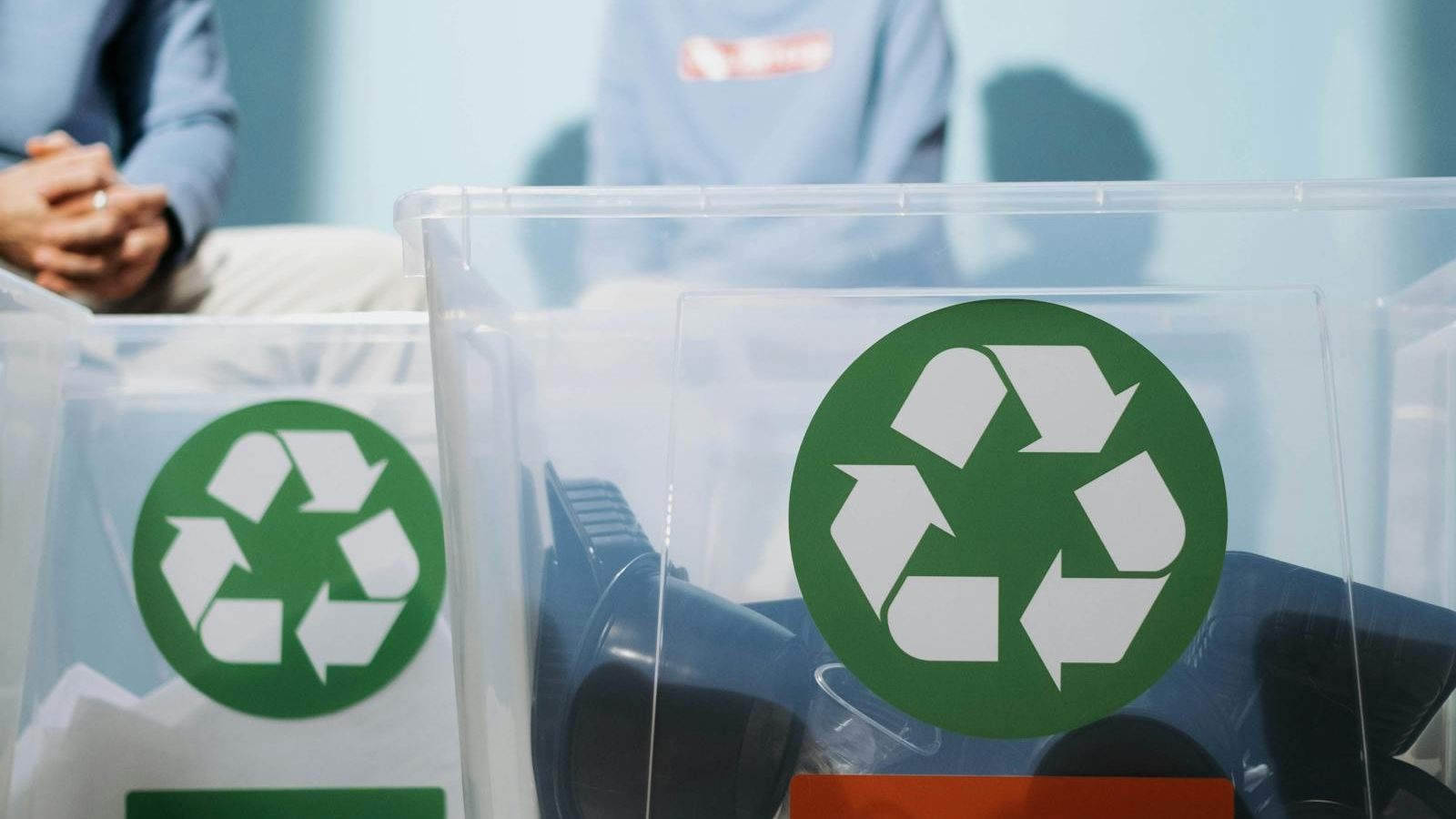
“It might be recyclable, so I’ll put it in and let them sort it out.” If you’ve ever said this to yourself while holding a polystyrene tray, congratulations, you’ve participated in what waste managers call wishful recycling. It’s extremely common, almost universal, and probably the single biggest source of household contamination in kerbside loads. It also feels virtuous, which is why nobody wants to talk about it.
The basic problem is that recycling is not a forgiving system. A bale of paper with a few bits of plastic film in it can be downgraded to mixed waste. A bale of plastic bottles with a takeaway tray mixed in can be rejected outright. the EPA’s guidance on recycling contamination Modern sorting facilities have improved enormously, but they still rely on each household putting in the right material in roughly the right state. Hopeful items, no matter how well intentioned, tip the balance the wrong way.
What gets misplaced most often
Anyone who works at a Materials Recovery Facility, the place your bin goes after pickup, can recite the list. The same items show up again and again, in the wrong bin, across the country.
- Disposable coffee cups (laminated, very few are kerbside recyclable)
- Plastic film and carrier bags (clogs the sorting line)
- Black plastic trays (optical sorters can’t see them)
- Greasy food packaging (contaminates paper bales)
- Old VHS tapes, garden hose, Christmas lights (the dreaded “tanglers”)
- Nappies (yes, really, with depressing frequency)
- Crockery and Pyrex (different glass formulation from bottles)
- Electronics, especially cables and chargers
The interesting thing about this list is that almost everything on it is recyclable somewhere. WRAP UK on recycling action The coffee cup has a dedicated stream at certain chains. The plastic film has a supermarket bin. The electronics belong at a household waste centre. None of them belong in the kerbside box, but most have a proper home if you know where to look.
Why does wishful recycling persist?
Three reasons, mostly. First, recycling rules are confusing and inconsistent between councils, so people give up trying to learn the specifics and default to optimism. Second, the symbols on packaging are designed to encourage recycling, not discourage it, a vague Mobius loop reads as a green light. Third, there’s a deeply human impulse to feel like one is doing the right thing, and chucking something into the blue bin feels better than chucking it into the black.
“I always thought putting it in was at least giving it a chance,” wrote Helen in Sheffield in an email last year. “It honestly hadn’t occurred to me that it might make things worse.” It’s a sentiment shared by millions.
The chain of consequences
Imagine your perfectly clean cardboard going into a bale. The bale is mostly cardboard, but it contains a few stray crisp packets and a takeaway box. The bale gets shipped. The receiving mill tests it. The contamination is too high. The bale is rejected. Either the broker absorbs the loss, finds a less fussy buyer, or sends it for incineration. In the worst case, an entire lorry-load of “recycling” ends up burnt for energy. Your good cardboard went up in smoke.
Multiply this across thousands of households and you can see why councils get nervous about contamination rates above five or ten percent. It’s not pedantry. It’s the difference between a load that works and a load that doesn’t.
The “if in doubt, throw it out” rule
This sounds like the opposite of green behaviour. It’s actually how the system was designed to work. The kerbside scheme can’t handle ambiguity well. By keeping it clean, you make recycling more efficient, more economical, and more likely to produce something useful at the other end. The flip side: the items you remove can usually be diverted elsewhere if you’re willing to spend an extra few minutes.
How to retrain the habit
If you’re trying to break a wishful-recycling streak, the most useful intervention is to write down, on a slip of paper inside a kitchen cupboard, the four or five items you’re unsure about most often. For each one, decide its proper home once. Then commit. Over a few weeks, the decisions stop being decisions, they become automatic.
Common items and their proper homes:
| Item | Common wrong home | Better home |
|---|---|---|
| Disposable coffee cup | Mixed recycling | Costa or Pret in-store bin, or general waste |
| Crisp packet | Mixed recycling | Supermarket soft-plastic bin |
| Aerosol can (empty) | General waste | Metal recycling, with cap removed |
| Bubble wrap | Mixed recycling | Supermarket soft-plastic bin |
| Drinking glass | Glass bottle bank | Charity shop or general waste |
| Pyrex dish | Glass bottle bank | General waste, different melting point |
What feedback can look like
Some councils have started running campaigns where they tag bins with stickers reading “we found wishful items in here” and listing the offenders. It’s blunt, but it works. Wishful recycling thrives in silence, and the moment people get a polite nudge, behaviour improves measurably. If your council does this, don’t be embarrassed, the sticker is a free education.
A different way to feel virtuous
Once you start binning the right things in the right places, the slight loss of “putting something in the blue bin” feeling is replaced by a quieter satisfaction. You know your cardboard load is clean. You know the soft plastic you carried to the supermarket is actually going to a remelt facility. The act becomes more accurate, and accuracy is what the system needs.
The five-minute weekly audit
One useful habit, if you’re trying to retrain old reflexes, is a Sunday evening audit. Stand at your kerbside bin the night before pickup. Look down into it. Pull out anything that obviously doesn’t belong. Move misplaced items to the right home. The whole exercise takes five minutes and trains your eye to see the bin the way a sorting worker would.
Over a few weeks, the items you have to pull out drop to near zero. The habit transfers backwards, you stop putting wrong items in to begin with. The audit becomes unnecessary.
What good looks like
A perfect bin, by sorting facility standards, contains rinsed bottles and tins, flattened cardboard, paper without contamination, and that’s it. No bags, no film, no coffee cups, no broken glass, no food residue. The contents are loose, not bagged. Items are dry enough not to drip but not necessarily bone-dry.
Most households can reach this standard with about fifteen minutes of attention spread across a week. It’s not arduous. It just requires replacing the impulse “I hope this is recyclable” with the rule “I know where this goes.”
Recycling is one of the few household activities where being optimistic is actively counterproductive. The bin doesn’t reward effort; it rewards precision. Once that clicks, the kitchen-sink moment becomes much less stressful. You stop hoping and start sorting.
Frequently Asked Questions
What exactly is wishful recycling?
It's putting items in the recycling bin in the hope that they might be recyclable, when you're not sure. The intention is good, but the effect is to contaminate loads and risk whole batches being downgraded.
How much contamination is too much?
Most UK councils aim for contamination rates below ten percent in mixed recycling. Above that, the load can be rejected at the mill. A few wishful items per household add up surprisingly quickly.
Won't the sorting facility just pull out the wrong items?
They try, but they can't catch everything. Optical sorters miss black plastic. Hand pickers can't process every item. The fewer mistakes coming in, the better the result coming out.
If I don't know, should I always bin it as general waste?
Yes — that's the safer default. A correctly binned item in general waste is better than an incorrect one in recycling. Once you've looked up the right home, you can correct course next time.
Are pizza boxes wishful recycling?
Sometimes, depending on grease level and council. A lightly soiled box is usually fine; a soaked one is wishful. Tear the lid off and treat the two halves separately.
Does wishful recycling really make a difference?
Across millions of households, it makes an enormous difference. A few percent contamination can mean the difference between a usable bale and a rejected one. The cumulative effect is significant.