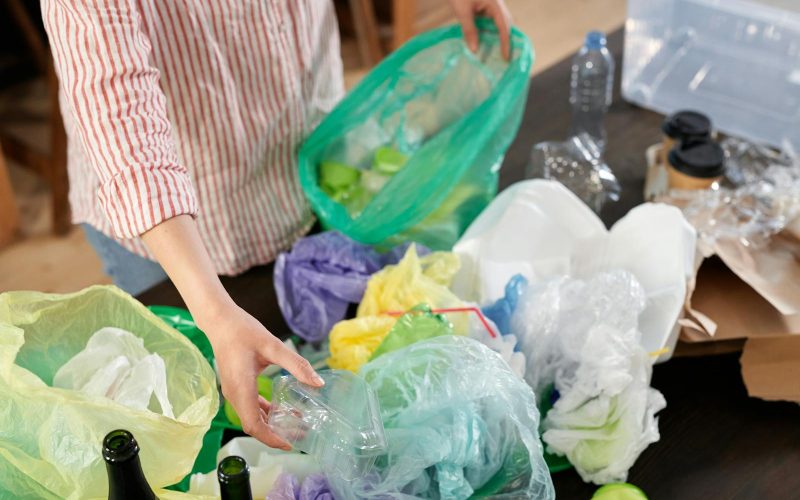

The phrase “recycling station” conjures a particular image, and it’s usually not a flattering one. A row of colour-coded bins by the back door. Big plastic labels. A handwritten sign with arrows. Functional, fine, but rarely a feature of the room. For most households, the result is that recycling lives in the ugliest corner of the kitchen and everyone tolerates it. It doesn’t have to be like that. With a few hours of planning and a small budget, the station can become almost invisible, and ironically, that often makes it work better, because nobody is tempted to ignore it.
The starting point is what your household actually generates and where it makes sense to handle it. Most homes don’t need an industrial setup. They need three or four containers, sensibly placed, in materials that suit the room. Once you stop thinking of recycling as a separate “zone” and start thinking of it as a kitchen function like the cutlery drawer, the design problem solves itself. the EPA’s recycling FAQ
Step one: assess the flow
Walk through a normal evening in the kitchen. the EPA’s guidance on recycling contamination You finish a tin of soup. Where does the tin go? You drink a bottle of wine; where does the empty go? You open a parcel; where does the cardboard go? You make a coffee with a foil-sealed pouch; where does the foil go?
Now overlay this with what your council collects. If it’s a single co-mingled stream, you need one bin. If it’s a partial split, two. Plus a food caddy. That’s usually it. The “many bins” approach is what you do if your council insists on it, not what design wisdom suggests.
Step two: pick the location
The best spot is usually under the sink or in the cupboard immediately next to it. This puts the bin within arm’s reach of where most rinsing happens. It also keeps the bin hidden behind a door, which is the single biggest aesthetic upgrade.
Under-sink solutions:
- Pull-out wire baskets fitted to the cupboard door, Ikea Variera, B&Q similar lines
- Internal swing-lid bins, 20-30 litres, free-standing
- Pull-out drawer systems with two compartments, retrofittable
If under-sink isn’t available, the next-best is a side cupboard with a hinged or pull-out solution. Failing that, a corner with a tall narrow bin that you accept as visible.
Step three: pick the bins
Stainless steel pedal bins look smart but show every fingerprint. Brushed steel hides marks better. Coloured plastic in muted tones, sage, dove grey, cream, disappears into most kitchens. Wooden lids on plastic carcasses split the difference between practical and design-conscious. Avoid bright reds, blues, and greens unless your kitchen actively wants them; they’re visually loud.
Pedal-operated lids are worth the extra few pounds because they let you operate one-handed when your other hand is holding something dripping. Step-touch lids fail more often than swing lids. Soft-close is a nice extra but not essential.
Sizing
For a household of two adults, a 20-litre recycling bin emptied every five days works. For a family of four, 30 litres emptied every three days. Going bigger means fewer trips but more chance of forgetting items at the bottom that need rinsing.
Step four: labelling, done elegantly
Forget plastic labels with cartoon icons. A small piece of card with the word “Recycling” or “Food” written in a clean font, slipped into a small picture frame or laminated, sits at the front of the bin and tells anyone who arrives at your kitchen what goes where. Or a vinyl decal stuck to the inside of the cupboard door, listing what your council accepts.
The label doesn’t need to shout. It needs to inform, briefly, at point of decision. The best label is the one you forget is there but a guest can find in two seconds.
The food caddy problem
The council-issued green or brown caddy is the ugliest part of any recycling setup. It’s plastic, it’s a colour that doesn’t match any kitchen, and it announces “food waste” in large letters. The good news: most councils don’t require you to use their specific caddy as long as you produce the bag at kerbside in the right way.
Replacement options:
- A small enamel bin (around 5 litres) with a lid, Falcon, Ikea Kondensera
- A ceramic compost crock, looks like a kitchen jar
- A bamboo caddy with a charcoal filter, cleaner aesthetic
- An Ikea fillable bag with handle, fits inside any cupboard
Line with the council’s compostable liner regardless of what container you use. The line bag is what goes into the outdoor caddy, so the inner container stays clean.
Soft plastics tote
For the supermarket-bound soft plastics, a small canvas tote hanging on a hook inside the cupboard works well. When full, you take it on a shopping run, empty it into the soft plastics bin at the store entrance, and bring it back. The tote becomes part of the bag-for-life rotation; nobody questions it.
If hooks aren’t an option, a basket on a low shelf, or a fabric bin sized for the spot, performs the same role.
The visible parts: making them earn their space
If something has to live on the worktop, the food caddy, a battery jar, a small tote, make it look intentional. A linen-lined basket. A pottery jar in a deliberate colour. A magnetic strip on the wall holding a tray for batteries and bulbs. Anything that suggests “this is on purpose” rather than “this is a default.”
| Item | Hidden option | Visible option |
|---|---|---|
| Mixed recycling | Pull-out under sink | Tall pedal bin in corner |
| Food waste | Inside cupboard with lid | Enamel compost crock |
| Soft plastics | Tote on cupboard hook | Linen-lined basket on shelf |
| Batteries | Jar inside drawer | Small ceramic dish on hallway shelf |
| Bottle bank-bound glass | Tote near back door | Wire basket on landing |
| Small electricals | Cardboard box in porch | Wooden tray on a low shelf |
One reader’s redesign
Hugo in Brighton wrote about a 2023 kitchen refit. Old setup: three colour-coded bins outside the back door, food caddy on the worktop. New setup: one 30-litre pull-out under the sink for mixed recycling, one for general waste, an enamel crock for food on the counter, and a small canvas tote in the cupboard for soft plastics. Total cost of new bins and accessories: around £180. “The kitchen looks finished now,” he wrote. “Nobody walking in would know there’s a recycling station. But we recycle more, not less.”
That last point is the key one. A well-designed station gets used more, because the friction of “where does this go” disappears. It’s not just an aesthetic upgrade; it’s a behavioural one.
Letting go of the colour scheme
The historical assumption that recycling bins must be coloured by stream, blue for paper, green for glass, yellow for plastic, comes from public space design, not household needs. Your kitchen knows what’s in your bin without colour-coding. You can use any colour you like. The colour scheme of the bins should match the kitchen, not advertise the function. The label, slim and unobtrusive, does the work the colour was doing.
Once you accept that, a whole world of nicer-looking bins opens up. The aesthetic constraint disappears, and you can choose by quality, durability, and looks rather than by which official colour someone decided was “recycling blue” thirty years ago.
A quieter kitchen
The recycling station that works best is the one that recedes. Doors close on it. Labels whisper. Bins match. The food caddy is something a guest might mistake for a coffee canister. The space is reclaimed for cooking and conversation. The recycling still gets done, and arguably more reliably, because it stops being a chore and starts being a function.
Frequently Asked Questions
How many bins do I actually need?
For most UK households, one for mixed recycling, one for general waste, and a food caddy. Some areas need a split for paper, making it two recycling bins. The five-bin model is rarely required.
Where's the best place to put a recycling bin?
Under the sink or in the adjacent cupboard, where rinsing happens. This keeps it hidden and near the point of use. Pull-out wire baskets retrofit into most existing cupboards.
Do I have to use the council's food caddy?
No — you only need to produce the right kind of bag for kerbside collection. You can keep a nicer-looking container in the kitchen and transfer to the council's outdoor caddy.
What's the best way to label bins?
A small card or vinyl decal with the council's accepted items, placed inside the cupboard door. Avoid loud plastic labels — they look messy and don't add useful information.
Are pedal bins better than swing lids?
For hands-free use, yes — especially when you're holding something messy. Pedal mechanisms last longer than touch-to-open. Soft-close is a nice extra but not essential.
How much should I spend on a recycling station?
Realistically, between £80 and £200 for a complete setup including bins, caddy, and totes. Spending more rarely improves function — it just buys nicer materials.