
“Widely recycled.” “Check locally.” “Recycle at large stores.” “Industrially compostable.” If you flip a packet of crisps and a yogurt pot over, you can find half a dozen different symbols staring back at you, and none of them are the famous chasing arrows you learned about at school. Packaging labelling has multiplied in the last decade, partly because consumers asked for clarity and partly because brands wanted to look responsible. The result, ironically, is more confusion.
The good news is that the British system has settled on a fairly coherent scheme called the On-Pack Recycling Label, or OPRL. WRAP UK on recycling action Once you know the four or five main symbols, most packs become legible at a glance. The bad news is that imports and older stock often carry symbols from other systems, German Grüne Punkt, European Mobius loops, the Forestry Stewardship Council tick, and these have their own meanings that don’t map directly onto British bins.
The OPRL system, in plain terms
OPRL replaced a chaotic patchwork in the early 2010s with three blunt categories.
- Recycle, collected by at least 75 percent of UK councils. Safe to put in your recycling bin almost anywhere.
- Don’t Recycle, go to general waste. Not collected widely enough, or not at all.
- Recycle with bags at large supermarket, for soft plastic films, often labelled with a little carrier-bag icon.
The “Check Locally” middle option was retired a few years ago because it was generating more confusion than clarity. People stared at it, decided to be hopeful, and stuck it in the recycling. Now items either qualify nationally or they don’t.
The Mobius loop, the original symbol
The chasing arrows in a triangle, known as a Mobius loop, is the granddaddy of recycling symbols. It dates back to 1970 and an Earth Day design competition. Strictly speaking, the Mobius loop on its own means “this item can in theory be recycled.” On its own, without a percentage or qualifier, it tells you very little about whether yours will be.
If you see a Mobius loop with a percentage in the middle, that’s a recycled-content claim. For example, “30%” inside the loop means 30 percent of the material came from recycled sources. This is different from whether the pack can be recycled again at end of life.
The Green Dot, not what it looks like
This one trips up almost everyone. The Green Dot, two intertwined green arrows in a circle, is widespread on European packaging. It does not mean the pack is recyclable. It means the producer has paid into a continental recycling scheme. The symbol indicates financial contribution, not material destiny. You can absolutely throw an item bearing the Green Dot in the wrong bin and it will not magically be recycled because of the logo.
Compostable, biodegradable, plant-based
These three words mean three different things, and brands love to blur them.
| Label | What it means | What to do |
|---|---|---|
| Industrially compostable | Breaks down at high heat in a commercial facility | Council food waste only if accepted; otherwise general waste |
| Home compostable | Breaks down in a domestic compost heap over months | Compost bin at home |
| Biodegradable | Will degrade eventually under unspecified conditions | Treat as general waste, vague claim with no time limit |
| Plant-based / bio-derived | Made from plant material but may not break down | Check the recycling symbol; treat like the equivalent plastic |
The most misleading is “biodegradable” without further context. Technically, almost everything degrades given long enough. The label tells you nothing useful unless it states a time frame and conditions.
Paper marks worth knowing
You’ll often see a small “FSC” logo with a tree on cardboard and paper packaging. That stands for Forestry Stewardship Council. It indicates the pulp came from responsibly managed forests. It says nothing about whether the finished product can be recycled, although in practice most FSC paper is recyclable.
Then there’s the simple chasing arrows around a P for paper. That’s usually fine to recycle in your paper bin. The exception is paper that has been laminated, waxed, or coated, which behaves more like plastic.
Tetra Pak and the cartons
Liquid cartons, for juice, soup, plant milks, are typically a sandwich of paperboard, polyethylene, and a thin layer of aluminium. They carry their own symbols and often a website or postcode-finder for collection points. Most UK councils now accept them at the kerb, but a sizable minority still don’t, and ask you to take them to a supermarket bin or a designated drop-off.
The aluminium ALU mark
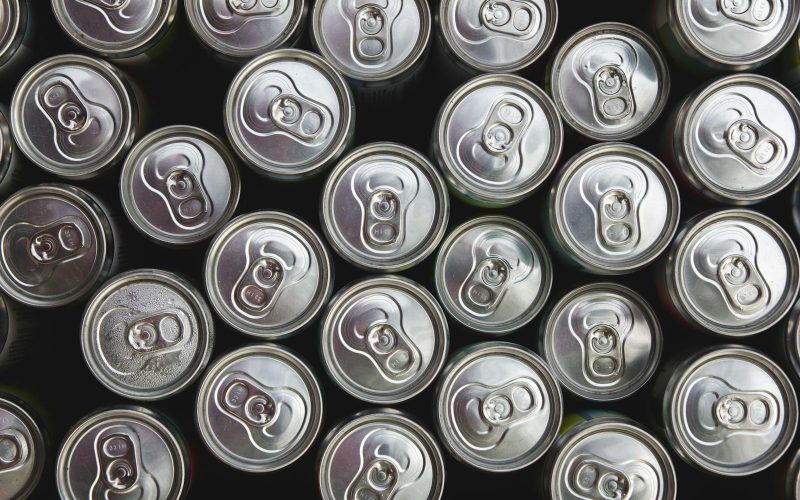
The two letters “ALU” in a square indicate aluminium, the most reliably recyclable consumer material on the planet. Cans, foil, takeaway containers, lids on yogurt pots. If it’s clean and clearly metal, it goes in the recycling. Crinkle aluminium foil into a ball roughly the size of a small fist so it doesn’t blow through the sorting line as small flakes.
A scene from a Tuesday morning
I was in a friend’s kitchen recently and watched her pick up an empty crisp packet, peer at it suspiciously, and ask the room: does this go anywhere? The packet had four symbols on the back. Three of them were country-specific. One said “store drop-off” with a tiny bag icon. The answer turned out to be the soft-plastic bin at the supermarket, which she only knew because her neighbour had mentioned it the week before. Symbols help, but the system still relies on word of mouth.
When in doubt
The honest rule is that if you can’t read a symbol within ten seconds, it’s probably not designed to help you. Either default to your council’s list or, for soft plastics, default to a supermarket bin. The worst outcome of guessing right is correct recycling. The worst outcome of guessing wrong is contamination, which can spoil an entire load.
You don’t need to memorise every logo. Five or six of them cover ninety percent of household items. The rest you can look up once and remember when you next see them.
Frequently Asked Questions
What does the Green Dot symbol mean?
It means the producer has paid into a continental recycling scheme. It is not a guarantee that the pack is recyclable in your area. Treat it as background information, not a sorting instruction.
Is "biodegradable" the same as "compostable"?
No. Biodegradable just means it will break down eventually under unspecified conditions, which is true of nearly anything. Compostable carries a defined timescale and environment, either home or industrial.
Should I recycle paper that has a shiny coating?
Usually not in the kerbside paper stream. Shiny coatings often mean a plastic or wax layer that contaminates pulp. Check the specific label — some glossy magazines are fine, others are not.
Does a Mobius loop mean the item is recyclable?
It means it can theoretically be recycled, which isn't the same as being collected by your council. A loop with a percentage inside refers to recycled content, not recyclability.
Where can I take soft plastic films?
Most large UK supermarkets now have a soft-plastic bin near the entrance. They take bread bags, frozen-veg bags, crisp packets, film wrap, and similar. Your kerbside scheme almost certainly does not.
Do FSC and recycling symbols mean the same thing?
No. FSC indicates the paper or wood came from responsibly managed forests. It says nothing about end-of-life recyclability, although most FSC paper is in fact recyclable.