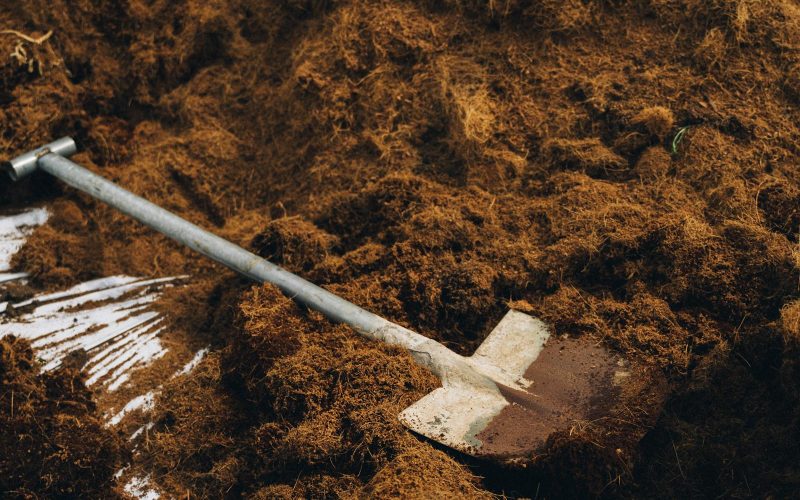

My neighbour Pat sniffs her compost bin every Sunday morning. She is sixty-two, has been composting since 1987, and treats her heap like an ailing relative. “Smells off this week,” she’ll say, and turn it. Or “Smells beautiful, smell that.” Whichever way it goes, Pat reads her compost through her nose, which is a skill worth learning, because a compost heap that is going wrong almost always announces it by smell first, well before anything visible has happened.
A healthy heap should smell of damp woodland, mushrooms, leaf mould, something earthy and slightly sweet. Cornell Waste Management Institute Anything else is a message. Here is what each common smell means and what to do.
Ammonia, sharp and stinging
The smell is unmistakable, like fresh cat litter, or the corner of an old shed. You get an actual sting at the back of the nose if you lean over the heap.
The cause is too much nitrogen, almost always too many fresh grass clippings or food scraps without enough carbon to balance them. The bacteria are producing nitrogen as a byproduct faster than the carbon-based microbes can use it. It is also a sign of anaerobic conditions, when air can’t move through, nitrogen escapes as ammonia rather than being incorporated into bacterial bodies.
The fix is straightforward. the EPA’s home-composting guide Add a generous amount of brown material, shredded cardboard, torn newspaper, dry leaves, wood chip in small amounts. Mix it through. Stop adding fresh green material for at least a week. If the heap is sodden, fork it up to introduce air. Within a few days the smell should fade.
Rotten eggs, sulphurous
The smell is the worst on this list, proper sulphur, like a stagnant pond or a poorly maintained drain. You can usually catch it from a few metres away.
The cause is anaerobic decomposition. Without oxygen, certain bacteria produce hydrogen sulphide. Almost always this means a heap that is too wet, too compacted, or sometimes too rich in particular materials (large quantities of brassica leaves, for instance, are notorious).
The fix is air. Fork the heap from the top, breaking it up. If the bottom is sodden, you may need to empty it and rebuild, mixing in dry brown material as you go. A heap with a proper structure of bulky brown material rarely goes anaerobic; a heap of pure kitchen scraps almost always does.
Vinegar or sour
The smell is sharper and more acidic than ammonia, closer to a wine vinegar or sour cider. Less alarming than rotten eggs, more focused than just “off”.
The cause is partial anaerobic fermentation, particularly when fruit-heavy scraps go down without enough air. The lactic acid bacteria that normally play a small role start to dominate, just as they do in bokashi. In a backyard heap this is not what you want, it means decomposition has stalled at the wrong stage.
The fix is similar to the rotten egg fix but milder. Fork the heap to add air, mix in brown material, possibly add a thin layer of finished compost or garden soil to reintroduce the right bacteria. Avoid adding more wet fruit for a week or two.
Mouldy, mushroomy
The smell is fungal, like damp basement, or old books, or a cellar after rain. White or grey mould may also be visible on the surface.
This one is usually not a problem. Fungal decomposition is part of healthy composting, especially in autumn and winter, and especially in heaps rich in brown materials like leaves and card. The smell is the heap doing its job through fungi rather than bacteria.
The fix is no fix. Carry on. If you want to push the heap back towards bacterial decomposition (faster, hotter), add some green material and turn.
Slightly sweet, fermented, beery
The smell is interesting rather than offensive, a hint of cider, perhaps fresh malt, sometimes a touch of soy sauce.
The cause is, again, mild anaerobic activity, often in a bin with a too-tight lid. Bokashi buckets smell exactly like this when working properly; backyard heaps shouldn’t. It is a signal the heap needs more air.
The fix is to open the lid (if it has one), fork the top, and consider whether the structure has too many fine wet materials packed tightly together. Coarser browns help.
Putrid, like dead animal
The smell is severe, clearly decomposing flesh, attracting flies and possibly larger visitors.
The cause is almost always that meat, fish, or large amounts of cooked food have gone into the heap, and they are decomposing aerobically (and slowly) at the surface. This is exactly what backyard heaps should not be doing.
The fix is to remove the offending material if you can find it. Dig it out, bury it deep in the centre of the heap under at least thirty centimetres of mixed brown and green material, or move it to a bokashi bucket or council caddy. Then turn the heap thoroughly. Going forward, keep meat and cooked food out of the open heap.
Cat or fox urine
The smell is unmistakable, sharp, pungent, definitely animal-derived.
The cause is rarely the heap itself producing this. It is almost always an animal that has discovered the heap and decided it is a useful place to scent-mark, or that has been digging in it for food scraps. Cats and foxes both find unsealed compost heaps interesting.
The fix is to add a cover. A piece of old carpet, a tarp weighted down, or a proper bin lid almost always stops the visiting. If you have been adding food scraps that smell to passing animals (cooked food, fish), this is also the time to stop.
Quick diagnostic table
| Smell | Likely cause | Quick fix |
|---|---|---|
| Ammonia, sharp | Too much nitrogen, not enough air | Add browns, turn the heap |
| Rotten eggs | Anaerobic, too wet | Fork up, add browns, rebuild if severe |
| Vinegar, sour | Partial fermentation | Aerate, add browns, pause fruit |
| Mushroomy | Fungal decomposition | Usually no action needed |
| Cider, beery | Mild anaerobic, tight lid | Open, aerate, coarser browns |
| Putrid, dead animal | Meat or cooked food | Remove or bury deep, change inputs |
| Cat or fox urine | Animal visitor | Cover the heap |
What a happy heap smells of
The benchmark is the floor of a deciduous wood in October. Slightly sweet, distinctly earthy, with a hint of mushroom and damp leaves. When you turn it, there is a small puff of warmth and that woodland smell intensifies briefly. There is no sting, no rot, no fermentation, only the smell of organic matter breaking down patiently in good conditions.
If your heap smells like that, leave it alone. Pat would approve.
If it smells like anything from the list above, the heap is not broken. It is mid-conversation. The fix is almost always more air, more browns, and a fork in your hand for ten minutes on a Saturday. The smell tells you what to do, if you stop and listen for a moment.
Frequently Asked Questions
My new compost bin smells faintly off — is it ruined?
Almost certainly not. A new bin often goes through a smelly settling phase as the microbial population establishes. Add brown material, give it air, and the smell usually resolves within a week or two. Genuine ruin is rare.
Will compost smell attract rats?
A properly run heap of plant scraps smells of nothing to rats — there is no meal in it for them. Rats are attracted by cooked food, meat, fish, dairy, bread and pet food. Keep those out, and rats will ignore the heap.
How often should I turn the heap to avoid smell problems?
For a hot heap, once a week during the active phase. For a cold heap, once a fortnight if you can manage it, less often is fine. If you smell a problem, turn it then rather than waiting for the schedule.
Can I save a heap that has gone really sour?
Usually yes. Empty it, layer fresh brown material with the old contents in a new heap, water lightly if dry, leave for two weeks. Most heaps recover. Only severely contaminated or animal-attractant heaps need to be binned.
My bin smells fine but flies are everywhere — is something wrong?
Fruit flies indicate fresh scraps exposed at the surface. Bury new food under existing material or under a layer of brown. House flies indicate something fattier or animal-derived; check what is going in and rebalance.
Should compost ever smell strongly?
No. A healthy heap smells faintly of forest floor and not much else. Any strong smell — sweet, sour, sharp, putrid — is a signal. The point of smell is information; act on what you smell and the problem usually clears within days.