The first time someone explained “browns and greens” to me, they pointed at a heap that was mostly grey and asked me to identify the proportions. The grass clippings counted as green. The eggshells counted as brown. The coffee grounds counted as green even though they were brown. The autumn leaves counted as brown even though they had been green four weeks before. I went home and made a chart.
The naming is unhelpful. The concept underneath is brilliantly useful. If you understand it, you can run a working compost heap without ever consulting another guide. So here is the concept, with the colours set aside. USDA composting overview
What “browns” and “greens” actually mean
Forget the colours for a moment. The categories are about chemistry.
“Greens” are materials high in nitrogen and usually high in moisture. They’re the food for the bacteria that drive composting. They tend to be soft, wet, fresh.
“Browns” are materials high in carbon and usually low in moisture. They’re the bulk and the structure of the heap. They tend to be dry, woody, fibrous.
A working heap needs both. Greens alone go anaerobic, smell, and decompose into slime. Browns alone don’t have enough nitrogen for bacterial activity and just sit there for years. Mix them in roughly the right proportions and the bacteria thrive, the heap heats, and the whole mass breaks down.
The colour names are a rough guide because nitrogen-rich materials are often green in life (grass, weeds, fresh leaves) and carbon-rich materials are often brown (dead leaves, paper, card, straw). But the colours are correlation, not the rule. The rule is about chemistry.
Examples that follow the colour rule
Most things in a garden or kitchen do follow the colour pattern.
Greens (nitrogen-rich, often green):
- Fresh grass clippings.
- Green plant trimmings, soft prunings, deadheaded flowers.
- Vegetable peelings, fruit cores, salad waste.
- Manure from herbivores (horse, cow, rabbit, chicken, yes, even the dry pellets count as green in this system).
- Weeds that haven’t set seed.
Browns (carbon-rich, often brown):
- Dead leaves, especially oak and beech.
- Straw, hay (if seed-free).
- Sawdust from untreated wood.
- Wood chip and bark chip (very slow but counts).
- Cardboard, paper, the brown card from egg boxes.
- Dry plant stems from last season.
Examples that look one colour but count as the other
This is where the system trips people up.
Used coffee grounds. Look brown. Count as green. The roasting process doesn’t change the nitrogen content much, and used grounds are still chemically a “green” with a C:N ratio around 20:1.
Manure. Sometimes brown (well-rotted horse manure looks like dark soil), sometimes black (fresh chicken manure). Always counts as green because of the high nitrogen content.
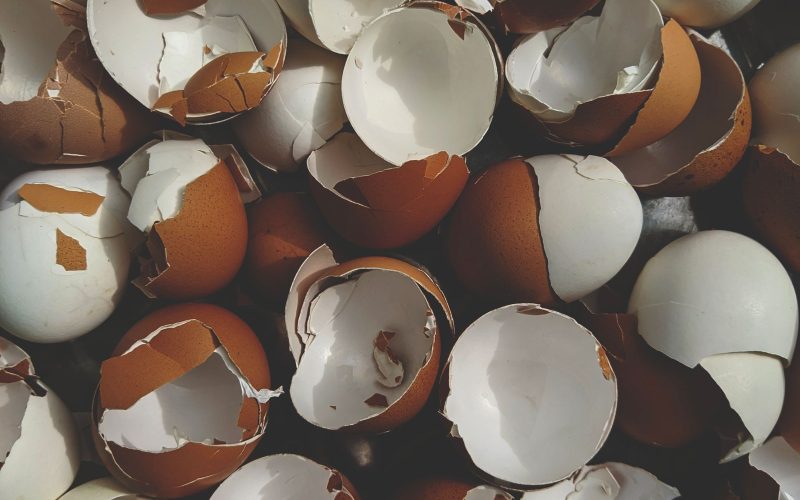
Eggshells. Look white. Count as neither, they’re structurally a brown but contribute essentially no carbon. Just add them; don’t worry about which side of the ledger.
Fresh seaweed. Looks green. Counts as green. (This one does follow the rule, but it surprises people.)
Tea leaves. Often look brown when used. Count as green.
Dried grass clippings. Look brown after a week in the sun. Still count as green, drying changes the moisture but not the nitrogen content much.
The pattern: living and recently-living plant matter tends to be a green; dead, woody, or paper-based matter tends to be a brown.
The ratio that matters
The number you’ll see quoted is “30:1”, the ideal carbon-to-nitrogen ratio for hot composting. This is the ratio in the bacteria, which need 30 atoms of carbon for every atom of nitrogen they incorporate. A heap with this ratio supports rapid bacterial growth.
In practice you can’t measure C:N at home and you don’t need to. The rule of thumb that works is “two parts brown to one part green by volume”. Sometimes higher (three browns to one green if the greens are very wet, like fresh grass). Sometimes lower (one and a half browns to one green if the browns are very dry).
| Material | Approximate C:N ratio | Category |
|---|---|---|
| Sawdust | 400:1 | Brown (very high) |
| Cardboard | 350:1 | Brown |
| Dead leaves | 60:1 | Brown |
| Straw | 80:1 | Brown |
| Fresh leaves | 30:1 | Balanced, but treat as green |
| Fruit and vegetable peelings | 25:1 | Green |
| Coffee grounds (used) | 20:1 | Green |
| Grass clippings (fresh) | 15:1 | Green |
| Manure (horse, well-rotted) | 20:1 | Green |
| Chicken manure (fresh) | 10:1 | Green (very high N) |
How to tell if your ratio is off
The heap will tell you, usually within a fortnight.
Too much green (not enough brown) and the heap goes wet, smells of ammonia or rotting, slumps into a slimy mass, and may attract flies. The fix is to mix in browns, shredded card, dry leaves, torn paper. A lot of browns. Don’t be shy.
Too much brown (not enough green) and the heap doesn’t heat, doesn’t shrink, sits there looking dry, and effectively does nothing. The fix is to add greens, kitchen scraps, fresh grass, manure if you can get it. Water lightly while you’re at it; dry heaps need both nitrogen and moisture.
If you can’t tell which way the heap is off, try this: dig down a foot, take a handful, squeeze it. If water drips out and the smell is sharp, too green. If it crumbles dry and the smell is nothing much, too brown. If it sticks together gently and smells faintly of forest, you’re in the right zone.
What to do about seasonal swings
The amount of green and brown material around varies wildly through the year. Spring and summer bring a flood of greens, grass clippings, fresh kitchen waste, weeds. Autumn brings a flood of browns, leaves, dead stems, dried-out plants. Winter brings mostly kitchen scraps and not much else.
The fix is storage. Save autumn leaves in a wire bin or open compost bay separately from the main heap; use them through spring and summer to balance the green flood. Save shredded cardboard and torn paper in a dry bag in the shed; use it through autumn to balance the kitchen scraps that don’t stop just because the garden has.
I keep three sources around. A pile of last autumn’s leaves in a wire cage. A flattened cardboard collection in the shed. A bag of straw left over from chicken bedding. Any of these can be grabbed in a hurry when I tip a wet kitchen caddy onto a heap that’s starting to slump.
The greens look after themselves. Browns need to be kept on hand. That’s the practical version of the whole rule.
Frequently Asked Questions
What's the simplest rule for browns and greens?
Two parts brown to one part green by volume. If the heap is wet and smelly, add more browns. If it is dry and not heating, add more greens. Adjust by feel rather than measurement.
Are coffee grounds really a green even though they look brown?
Yes. The "green" classification is about nitrogen content, not colour. Used coffee grounds have a carbon-to-nitrogen ratio around 20:1, which makes them a green chemically. Same goes for tea leaves and most manures.
Can I run a heap with only kitchen scraps?
Not well. Kitchen scraps are almost all greens — high moisture, high nitrogen — and without browns to balance they go anaerobic and smell. Add shredded card or paper alongside every batch of kitchen waste.
What about autumn leaves on their own?
A pure leaf pile becomes leaf mould over about two years. It's useful (a great mulch) but it isn't compost. To make leaves compost faster, mix them with greens — kitchen scraps or fresh grass.
Is sawdust a good brown?
In moderation, yes — but it has an extremely high C:N ratio (around 400:1), so a heap with a lot of sawdust needs a lot of greens to balance. A thin scatter works well; deep layers stall the heap.
Do I need to be exact with the ratio?
No. The 30:1 figure is for hot composting at peak efficiency. Home heaps work fine across a wide range — somewhere between 20:1 and 50:1 — and adjust themselves as you add to them. Aim for the rough feel of a wrung-out sponge with both wet and dry components mixed in.