Most household waste isn’t generated at the bin. It’s generated at the till, in the moment someone decides to buy something they’re not quite sure they’ll use. The waste enters the home, sits for a while in a cupboard or a drawer, and eventually leaves as rubbish, but the decision was made months earlier, in a shop, with a thought that began “maybe I’ll…”
The “maybe I’ll use it” purchase is a specific category of mistake. It’s not the same as buying something useful that turns out to be wrong. It’s the purchase that, even in the moment, is justified by a hypothetical use rather than an actual one. “Maybe I’ll make pickles.” “Maybe I’ll start running.” “Maybe I’ll need it next winter.” “Maybe I’ll do that craft project.”
If you go through your cupboards now, you’ll find the residue of these decisions. Spice jars unopened for two years. A spiralizer used once. A pasta maker still in its box. Yarn for the cardigan you started in 2021. ReFED’s consumer-education action area The use for the hamster you didn’t end up getting.
The pattern, named
The “maybe I’ll use it” purchase tends to share a few features:
- It’s justified by a future self who is more active, more skilled, or more disciplined than the present self.
- It’s often inspired by something external, a recipe, a YouTube video, a friend’s habit.
- The price feels reasonable in isolation. You can afford it. That’s not the issue.
- You don’t have a specific occasion to use it. The use is “someday.”
- You don’t already have something similar, or if you do, you’ve forgotten.
Once you can name the pattern, you can catch it in the moment. The naming is most of the work.
The “by next Sunday” test
The single most useful question to ask when you find yourself about to buy something is: when, specifically, will I use this?
If the answer is “this Sunday for the dinner I’m hosting,” buy it. If the answer is “for tomorrow night’s pasta,” buy it. If the answer is “maybe I’ll try it sometime”, put it back.
Variations of this test:
- “What’s the next specific occasion I’ll use this?”
- “If I bought this, which day this week would I open it?”
- “Is there a real plan, or am I buying the possibility of a plan?”
The plan, in honest cases, is concrete. There’s a recipe. There’s a date. There’s a person you’re making it for. If there isn’t, you’re buying the feeling of being someone who would.
The aspirational shopping trap
Aspirational shopping is when you buy things for the version of yourself you imagine you might become. The running shoes you bought when you were “going to start running.” The fancy tea set for the morning tea ritual you were “going to start having.” The cookbook for the cuisine you were “going to start cooking.”
The trap isn’t that these aspirations are wrong. Sometimes people do start running. Sometimes they do start a morning tea ritual. The trap is that buying the thing rarely produces the behaviour. The behaviour has to come first.
A reader called Hannah told me she had three exercise bikes over six years. She did not exercise on any of them. Eventually she joined a swimming club, where she swims twice a week, and the bikes were sold. The purchase of the bike was never the limiting factor. The limiting factor was finding the activity she actually liked.
The recipe trap, specifically
One of the most common “maybe I’ll use it” categories is single-recipe ingredients. You see a recipe, it requires sumac or za’atar or pomegranate molasses or black garlic, and you buy a jar. You make the recipe once. The jar sits in the cupboard, slowly losing potency, until you throw it out three years later.
This isn’t about avoiding new ingredients. It’s about being honest with yourself about whether the new ingredient is becoming part of your cooking or just visiting it.
Three options for the recipe trap:
- Buy the smallest possible quantity, even if the per-unit price is worse. A small jar of an unusual spice used up is better value than a big jar half-thrown-out.
- Buy loose from a bulk aisle if you have one. 30g of a spice for one recipe is a real possibility.
- Decide deliberately to make the ingredient a regular feature. If you’re buying sumac, plan to use it in three dishes over the next month, not just the one that inspired the purchase.
The “list before shop” habit
The single biggest preventer of “maybe I’ll use it” purchases is making a list before you shop and sticking to it. Not because lists are virtuous, but because the impulse purchases happen when you’re wandering rather than fetching.
For groceries: meal-plan in the loosest possible way, list what you need, buy that. Allow yourself one “extra” item per trip if you must, but no more.
For other shopping: write down what you’re looking for before you go. If you’re in a shop and you’re tempted to buy something that wasn’t on the list, apply the “by next Sunday” test.
The unsubscribe pass
Many “maybe I’ll use it” purchases are triggered by exposure rather than need. The email from the kitchen shop with the spiralizer demonstration. The Instagram ad for the niche craft kit. The browser banner for the seasonal-specific gadget. Without these triggers, you wouldn’t have thought of the purchase at all.
A periodic unsubscribe pass, say, twice a year, removes most of this trigger surface. You don’t miss the emails because the products they sell aren’t things you needed in the first place.
The honest sort
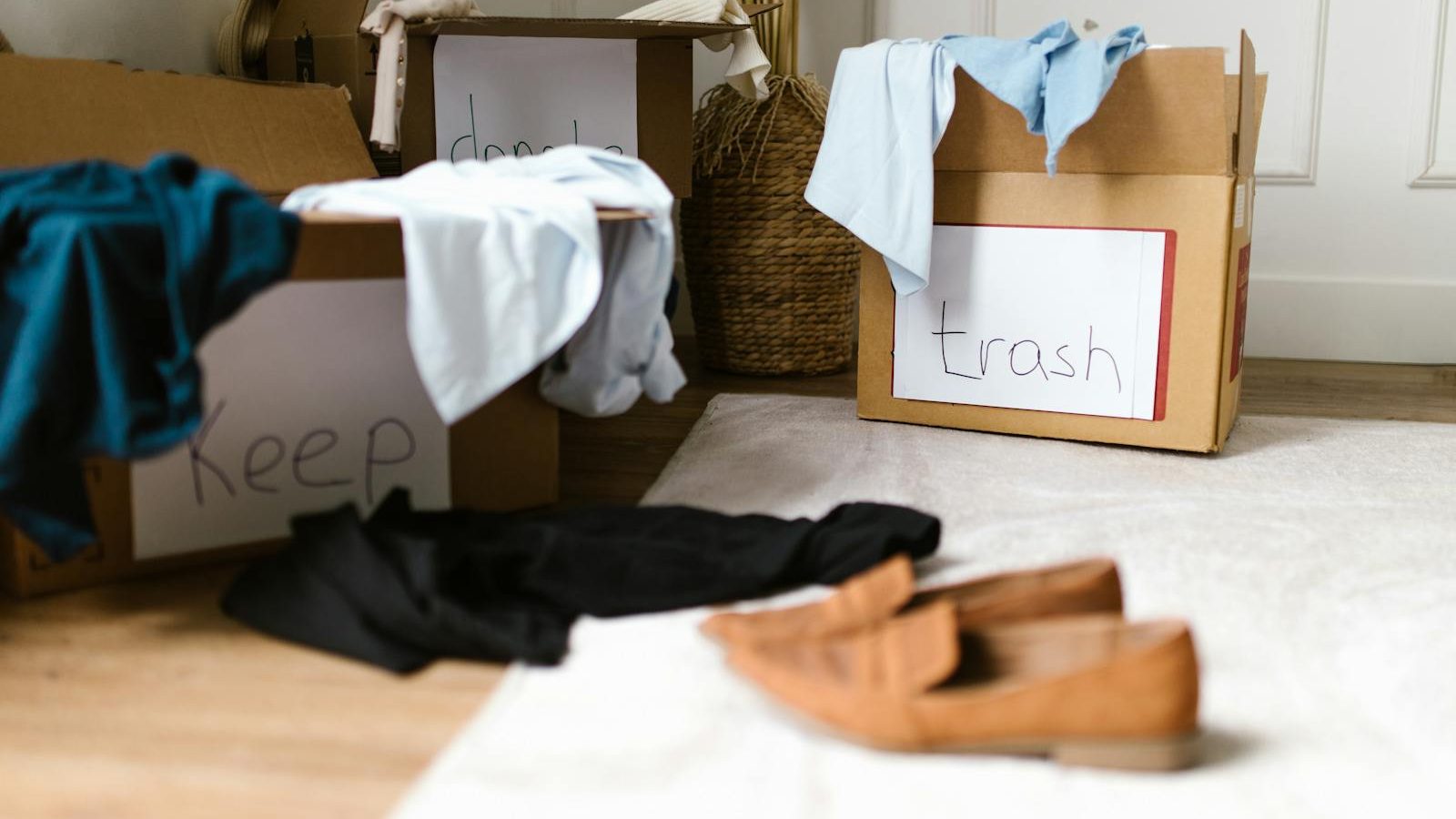
If you want to see the cost of “maybe I’ll use it” purchases in your own home, do a single afternoon’s honest sort. Pick one cupboard, the kitchen utility drawer, or the bottom shelf of the pantry, or the under-bed storage. Take everything out. Sort into three piles:
- Things you’ve used in the last six months.
- Things you’ll use in the next six months for a specific reason.
- Things you bought thinking “maybe I’ll…” and haven’t.
The third pile is your data. Add up roughly what it cost. The number is usually surprising. The number is also future you, paying attention.
The kindness in this
None of this is about beating yourself up for past purchases. Everyone has a “maybe I’ll use it” pile. The point is to stop adding to it.
The kindness in catching these purchases is that you save the money, the storage space, and the small layer of guilt that accumulates when you walk past the unused spiralizer for the hundredth time. The version of you who didn’t buy it has fewer ghosts in the cupboard. That’s a quiet but real improvement.
You don’t need to optimise every purchase. You just need to catch the ones that are about a hypothetical future, not a real present. The phrase “maybe I’ll…” in your inner monologue is the signal. Once you hear it, you can put the item back, and walk on, and the home you didn’t clutter is the one you walk into.
Frequently Asked Questions
How do I know if a purchase is a "maybe I'll use it" mistake?
Ask when, specifically, you'll use it. If the answer is a concrete occasion this week, it's probably a real purchase. If the answer is "someday" or "if I start doing X," it's a "maybe I'll" purchase.
What should I do with my existing "maybe I'll use it" pile?
Sort honestly into "will use," "won't use," and "uncertain." Donate the won't-use items quickly. For uncertain items, give yourself a deadline (six months) to use them or pass them on.
Are some "maybe" purchases worth it?
Occasionally, when the item is cheap, the use is plausible, and you have storage. But most "maybe" purchases never become "yes" purchases. Catching the pattern means most of them don't come home.
How do I shop for recipes without accumulating odd ingredients?
Buy the smallest available quantity, use bulk aisles where you can buy 30g of a spice, or plan to use the new ingredient in three dishes over the next month, not just the one that inspired the purchase.
What's the best way to avoid aspirational shopping?
Try the activity before buying the gear. If you want to start running, run in old trainers for a month first. If you want to start baking sourdough, make one loaf with what you have. Buy the equipment if the habit sticks.
Should I throw out the unused items?
Donate or sell where possible. Throwing them out doubles the waste. Charity shops, community groups, foodbanks (for unopened food), and local "buy nothing" groups are all good destinations.