
“I tried buying less for a year and I just felt miserable”, this is a phrase I have heard, in various forms, from a lot of people who tried to reduce their consumption out of guilt or anxiety and quietly gave up after three months. The advice they followed was technically correct. The advice was also missing the point.
The point isn’t to suffer. Suffering isn’t a virtue. The point is to consume less in a way that doesn’t feel like consuming less, to shift your sense of “enough” so that what you have starts to feel like plenty, and the desire to keep adding to it quietens down.
This shift is genuinely possible. It’s also gradual, and the people who do it well don’t talk about it much, because it has stopped being a project.
The hedonic treadmill, briefly
Psychologists call the way humans get used to new things “hedonic adaptation.” The new sofa is exciting for two weeks, then becomes the sofa. The new car is exciting for a month, then becomes the car. The new shirt is exciting for one wear, then becomes a shirt in the wardrobe.
This isn’t a bug. It’s how humans manage the world. The trouble starts when we keep buying new things to chase that brief excitement, not realising it always fades to the same baseline. US PIRG’s reports on consumer waste The treadmill keeps running. The bank balance gets smaller. The cupboards get fuller. The brief satisfaction never lasts longer than it did the time before.
Buying less is partly about stepping off the treadmill. Not the running of it, but the belief that another lap will get you somewhere.
The “wait three days” rule
The simplest, most effective single habit for reducing purchases is to insert time between wanting something and buying it. Three days is the common figure, though for bigger items some people use two weeks.
Here’s the rule: when you see something you want, put it in your basket or write it on a list. Then don’t buy it for 72 hours. After 72 hours, ask yourself again whether you still want it.
Roughly two-thirds of the time, you won’t. The impulse will have passed, and the item that seemed essential on Wednesday will feel optional by Saturday. The remaining third are the things you actually wanted, and you can buy them with confidence.
The “what would I have to give up” question
Another useful test, especially for larger purchases. Before buying something significant, ask: what existing thing in my life would I have to give up to make room for this?
If you’re buying new clothes, which existing item would you wear less? If you’re buying a new kitchen gadget, which existing one would you use less? If the answer is “nothing, I just want this in addition,” then you’re adding rather than choosing.
This question doesn’t mean you can’t add things. It just makes the decision conscious. Sometimes the answer is “yes, I want this and I’m happy to add it.” Often, the answer reveals that you don’t really want the new thing, you wanted the feeling of buying it.
The wardrobe parallel
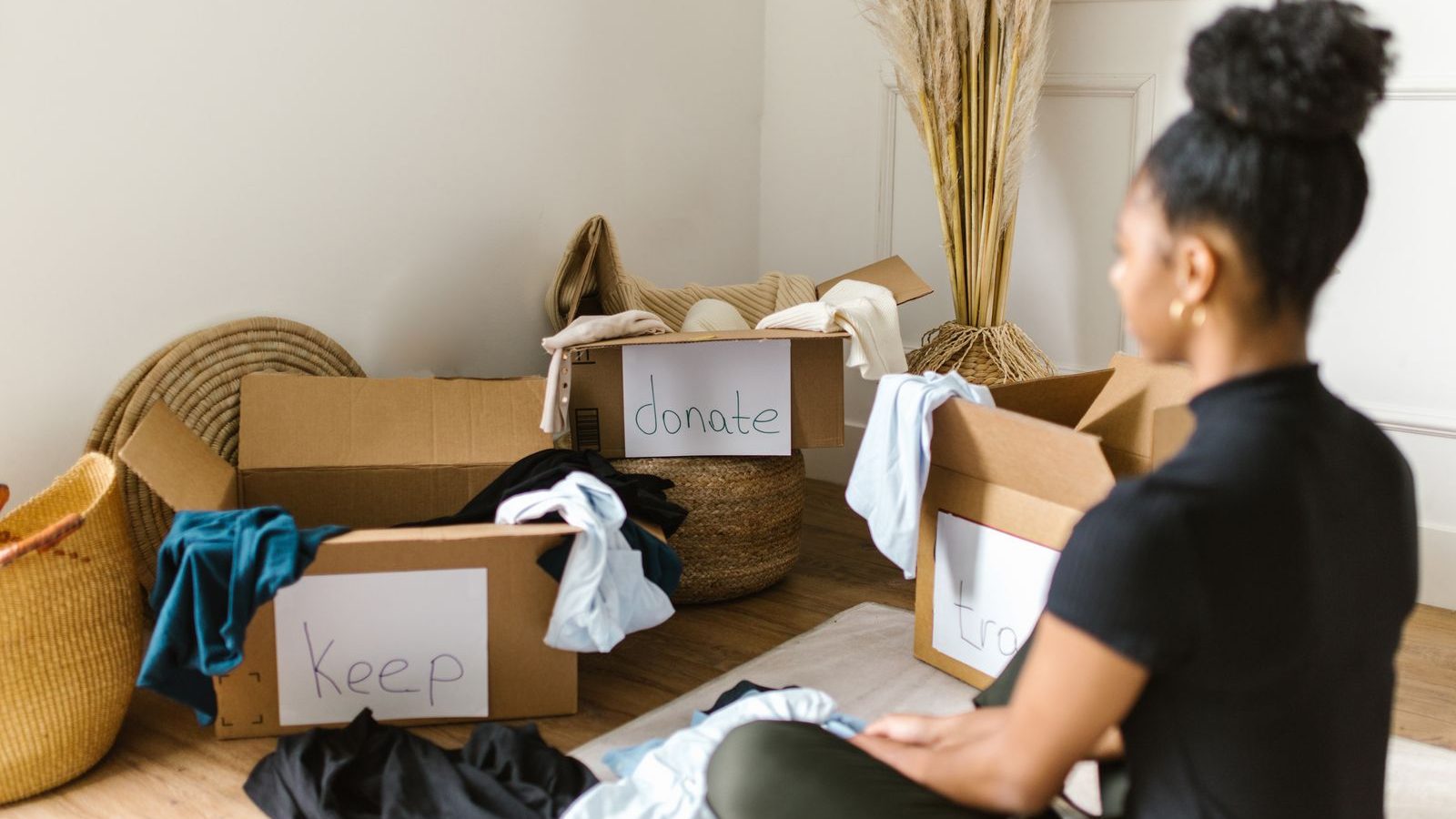
Clothes are where this plays out most visibly. The typical UK adult buys 26 to 30 items of clothing per year. Most of them are worn fewer than ten times before they sit unused or end up donated. The cost, financial and environmental, is significant, and most of it produces no lasting satisfaction.
What people who buy fewer clothes tend to do:
- They figure out what they actually wear, which is usually 20-30% of their wardrobe.
- They buy items that fit into that core, rather than aspirational items that don’t.
- They buy slightly better quality and significantly fewer items.
- They don’t mistake the wardrobe rotation for a life upgrade.
This isn’t austerity. People who do this often look better, because they wear clothes that suit them rather than trends that don’t. It’s not “less clothes”, it’s “the clothes you actually wear.”
The library and tool-share habit
One of the most underused buying-less strategies is simply borrowing things. Books, tools, garden equipment, occasional kitchen gadgets, board games, costumes, these can all be borrowed instead of owned for many people.
Libraries lend more than books. Many local libraries now lend tools, sewing machines, baking tins, even instruments. Tool libraries and “library of things” services exist in many cities. Most neighbours will happily lend a stepladder, a power drill, or a fondue set.
The mental shift here is from “I might need this someday so I should own it” to “I’ll borrow this when I need it.” The first leads to a garage full of stuff used twice. The second leads to a garage with space in it.
The “I have enough” mindset
This is the harder, deeper shift. At some point, buying less stops being about willpower and starts being about a quiet sense that you have enough already.
This sense doesn’t arrive by force. It arrives gradually, usually through:
- Decluttering, noticing how much you already have makes adding more feel less appealing.
- Using what you have, fully using the things you own, rather than buying replacements before things wear out, creates a sense of stewardship.
- Spending money on experiences, time or quality, rather than quantity.
- Spending less time exposed to advertising and shopping environments.
This isn’t about becoming an ascetic. It’s about recalibrating what “enough” means in your particular life.
What you spend the money on instead
One of the unspoken benefits of buying less is that the money goes somewhere else. People who shift this habit often report:
- Saving more, which reduces financial anxiety.
- Spending more on experiences (meals out, travel, learning) which tend to give longer-lasting satisfaction.
- Spending more per item on fewer items, which tends to mean better quality.
- Working less, eventually, because you don’t need to fund as much consumption.
None of these is automatic. They depend on you redirecting the savings rather than letting them disappear into miscellaneous purchases. But the redirection is straightforward once you notice the spare money exists.
The honest endpoint
Buying less doesn’t mean buying nothing. It doesn’t mean denying yourself things you want. It doesn’t mean making your home look like a monastery. It means consuming with attention rather than habit, buying because you want a specific thing, not because you wandered into a shop.
The deprivation people fear from “buying less” mostly doesn’t materialise. What materialises instead is a quieter sense of having what you need, more money in the bank, and a home that feels more like your own. None of which is austere. None of which is sad. It’s just a calmer relationship with stuff.
Frequently Asked Questions
How do I stop impulse buying without feeling deprived?
Insert time between wanting and buying. The "wait three days" rule eliminates roughly two-thirds of impulse purchases, and the third that survive are the things you actually wanted.
Does buying less mean making sacrifices?
Usually not in any meaningful way. Most people who buy less report feeling about the same or better — same standard of living, more money, less clutter, less decision fatigue.
How long does it take to feel comfortable with buying less?
About three to six months for the habit to stop feeling like effort. The hedonic adaptation works both ways — you get used to consuming less just as readily as you got used to consuming more.
What's the easiest first step?
Unsubscribe from retail emails. Most "wants" are responses to marketing you didn't ask for. Remove the prompts and the urge fades.
Can I still treat myself if I'm buying less?
Yes, and arguably more. People who buy less tend to spend deliberately on better-quality items or experiences, rather than constantly purchasing small things.
What do I do with all the stuff I already own?
Use it. The fastest way to feel "settled" with what you have is to use the things in your home fully, rather than leaving them in cupboards while buying replacements.