The wobbly chair in the corner of every rented flat is a kind of fixture. Tenants inherit it from previous tenants, wobble through their tenancy with it, and pass it on. Three out of four of these chairs need a screw tightened. The fourth needs a five-minute glue repair. Nothing in this category requires a workshop, a power tool, or your landlord’s permission.
Renters often assume furniture repair is a homeowner activity. It is not. It is one of the few categories of DIY that works better in a rental, because the alternative is putting up with the wobble, and the wobble usually wins. TerraCycle’s specialty recycling programs
What you can actually do
Tightening every screw on every piece of furniture you own
This single hour pays dividends for years. Most flat-pack furniture loosens within a year because the chipboard expands slightly with humidity, then contracts. Repair Café International A Phillips screwdriver, a quiet afternoon, and you will find that the bed has six loose screws, the bookcase has four, the dining chairs have two each. Once tightened, most stay tight for another two or three years.
For chipboard that has stripped, a matchstick or wooden cocktail stick snapped off in the hole gives the screw new wood to bite into. Glue is optional but helps. The repair lasts longer than the furniture usually does.
Re-gluing loose chair joints
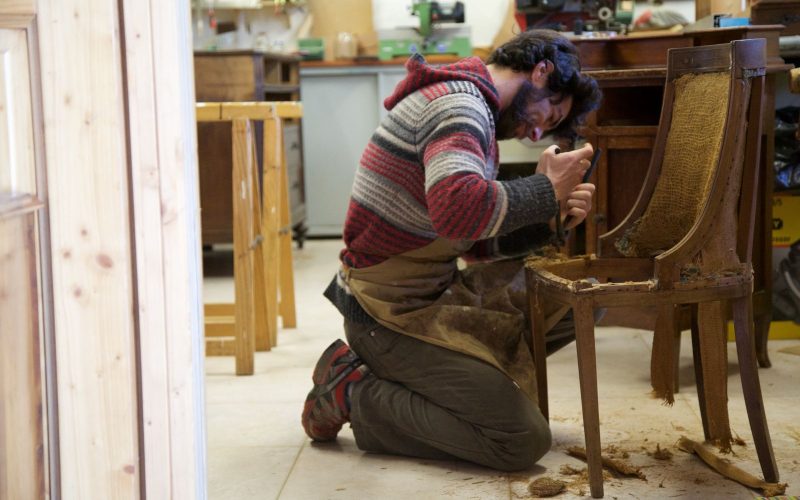
Wooden dining chairs come apart at the joints. The classic symptom is the seat that wobbles side to side. The fix is straightforward:
- Turn the chair upside down on a table.
- Identify which joints are loose. They will move when you twist them.
- If they come apart, clean the old glue out with a scraper or sandpaper.
- Apply wood glue (PVA wood glue, around three pounds a bottle) into the joints.
- Reassemble, wipe excess glue with a damp cloth, and clamp or weigh down for twenty-four hours.
If the joints will not separate but are merely loose, drill a small angled hole into the joint, syringe wood glue in (a kitchen baster works), and clamp. This is called blind gluing and saves chairs that otherwise look hopeless.
Replacing drawer runners
Stuck drawers are usually one of three things: warped wood, broken runners, or accumulated grime. The grime is the most common. Empty the drawer, vacuum the runner channel, rub a candle along the wooden runner if it is wood, and 90% of stuck drawers run sweetly again.
If the metal runner has bent or snapped, a replacement set costs around eight pounds and screws in with the existing holes. Renters are rarely banned from this. The new ones look identical when you leave.
Sticky or squeaking doors
A drop of cooking oil on a cotton bud, worked into each hinge, silences a squeaking door in seconds. A door that catches at the bottom usually has a hinge screw that has worked loose; tighten the screws on the top hinge first. Almost every “the doors are wrong” complaint is actually a five-minute fix.
Polishing scratches out of wood
Light scratches in wooden furniture often disappear with a walnut. Rub a fresh walnut along the scratch, then buff with a soft cloth. The nut oil and pigment fill the scratch. For deeper marks, a wax stick (around four pounds) in a matching shade works for years.
What to leave alone
Some repairs are not the renter’s job. Knowing the line saves grief.
- Anything structural in the building (skirting boards, fitted cupboards, doors on hinges that are part of the rental fabric)
- Reupholstering a sofa belonging to the landlord
- Refinishing or sanding any wooden surface that came with the flat
- Repairs that require drilling into walls or fixed cabinetry
For all of these, report the problem to the landlord and let them sort it. Repairs you carry out on landlord-owned furniture without permission can theoretically come out of your deposit, however well intentioned.
The tools that actually justify themselves
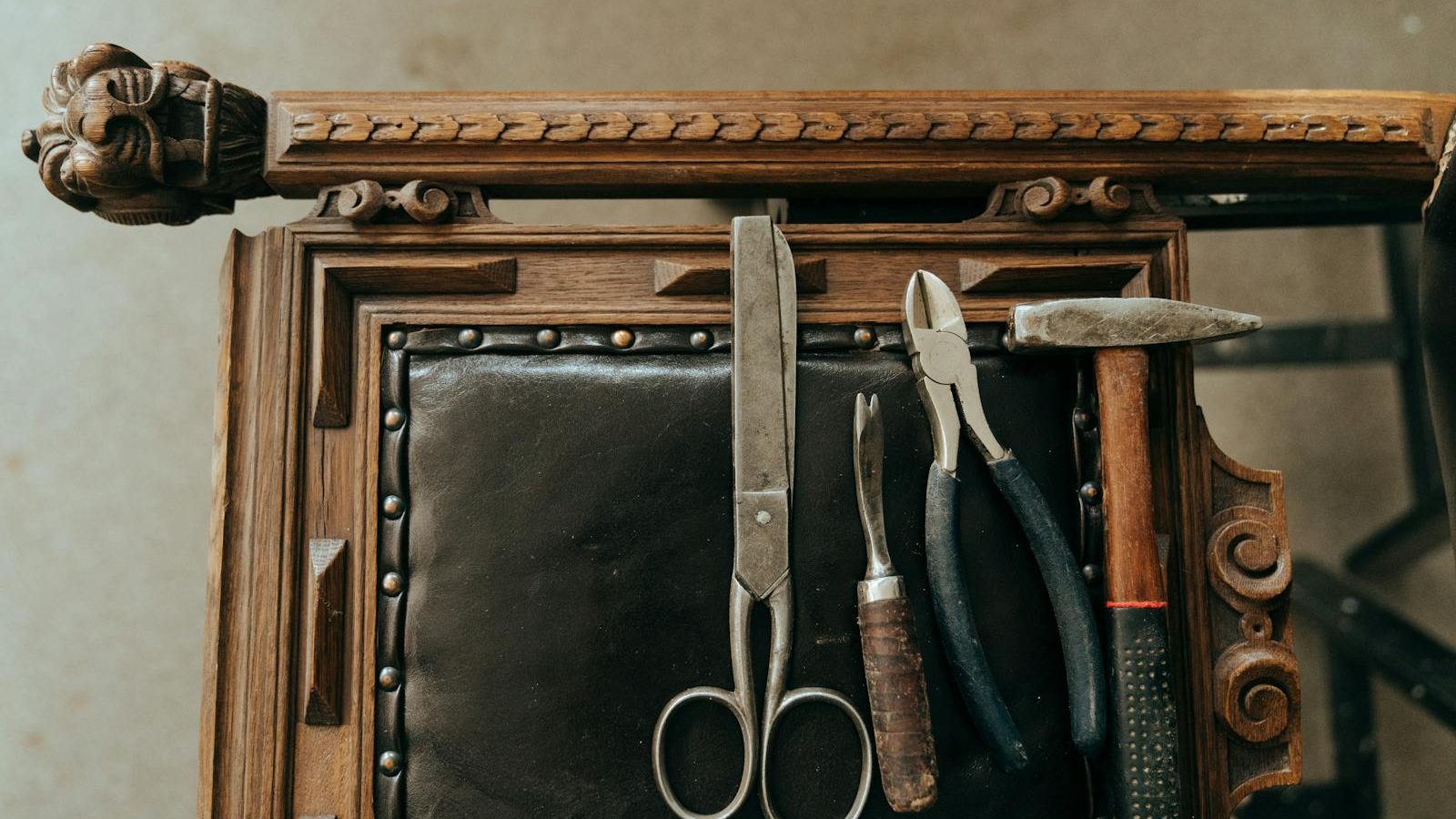
A rental furniture toolkit costs around forty pounds and covers most jobs for a decade:
- A Phillips and a flathead screwdriver
- A small adjustable spanner
- A roll of gaffer tape
- A bottle of wood glue
- A pack of mixed screws
- A wax filler stick
- A small clamp or two
Anything beyond this, sanders, drills, mitre saws, is hobby territory. It is fine if you want to go there. It is not necessary for normal living.
Where to find pieces worth repairing
Renters often inherit poor furniture because good furniture costs money. The fix is not to buy new but to source second-hand. The repairable furniture that has fallen out of fashion, solid oak nests of tables, mid-century dining chairs, sturdy chests of drawers, is everywhere on second-hand sites for fifty to a hundred pounds. A pair of dining chairs from the seventies will outlast three sets of flat-pack and only ever needs the occasional re-glue.
The rule of thumb: anything made of solid wood with proper joints is repairable. Anything made of chipboard with screws into the side grain is replaceable only.
The deposit question
Many renters worry about doing any repair in case it counts against them at the end of the tenancy. The honest position is that fixing a wobbly chair, oiling a hinge, or filling a small scratch with wax is the opposite of damage. It is keeping the flat in better shape than you found it. Photograph any repair you do, keep a note of what was wrong and what you did, and you are protected.
Damage is breaking things. Repair is the opposite of damage. The landlord is on your side here, because the alternative is them paying someone forty pounds to do what you did in ten minutes for free.
The slow effect
The reason all this matters is that the rental furniture cycle currently throws away enormous amounts of repairable stuff. A wobbly chair, an unbearable squeak, a stuck drawer, and the chair goes to the kerb, the drawer gets binned. None of those problems was terminal. All of them were five-minute jobs. Knowing this, and acting on it, quietly extends the life of half the furniture in your flat by a decade.
The same skills travel with you. The first time you fix a chair, the second time is half the work. By the time you eventually own a home, you have already learned what most homeowners pay someone else to do.
Frequently Asked Questions
Can I do furniture repairs on landlord-owned items?
Small fixes like tightening loose screws or oiling hinges are usually fine and welcomed. Larger jobs, anything involving drilling, sanding, or changing the appearance, should be cleared with the landlord first.
What is the best wood glue for furniture?
A standard PVA wood glue works for almost everything. Polyurethane glues are stronger but messier. For most chair and drawer repairs, PVA is what you want.
How long does a re-glued chair joint last?
A properly cleaned and re-glued joint, clamped overnight, often outlasts the original. Many chairs glued at home last another twenty or thirty years.
Is it worth saving cheap flat-pack furniture?
Sometimes. Tightening screws and filling chipboard with a matchstick can give it another few years. Once the chipboard itself is crumbling, replacement is usually the answer.
Do I need special tools for furniture repair?
A basic kit of screwdrivers, glue, and clamps covers ninety percent of jobs. The forty-pound kit lasts a decade.
What about scratches on a rental dining table?
Light scratches lift with a wax stick in a matching shade. Deeper damage is worth disclosing to the landlord, since trying to refinish a tabletop can make things worse.