
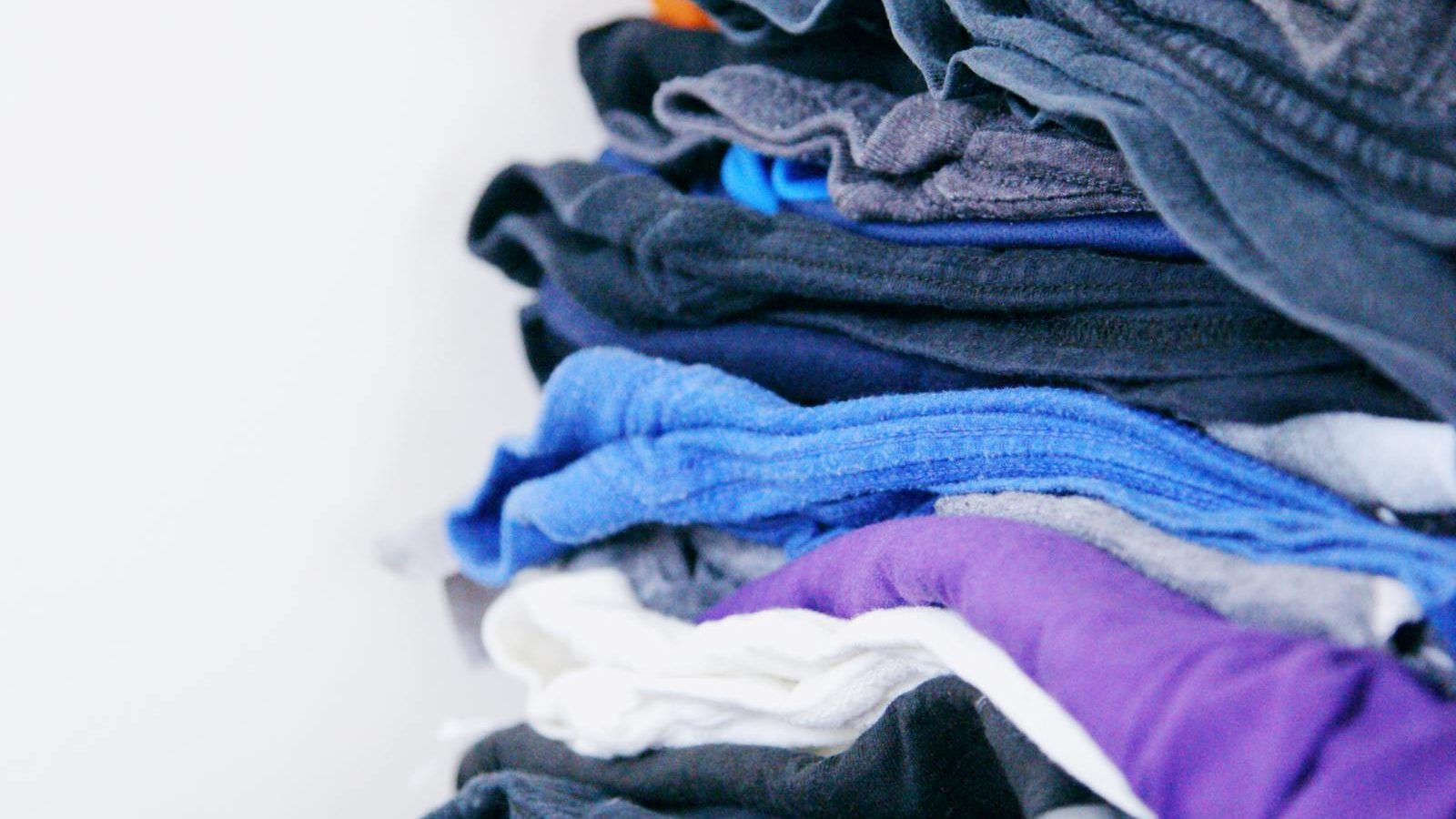
Search “T-shirt reuse” online and you will find instructions for making a hammock out of one. The hammock idea is charming. It is also, on reflection, not how anyone has ever actually used an old T-shirt.
The realistic uses are smaller and more useful. They are also the ones the internet rarely discusses because they are too dull to photograph.
The honest hierarchy of T-shirt reuse
Old T-shirts roughly fall into three categories based on what state they are in when you decide they are done.
Category one: still wearable, just not by you
If the shirt fits, holds its shape, and has no stains, it belongs in a charity shop or a clothes-swap pile. It does not become a rag. A T-shirt in good shape has years of life left in it for someone else, and turning it into a rag is destroying value for nothing. Repair Café International
Test this by being honest. Would a friend wear it if you offered? If yes, donate. If no, move down the list.
Category two: stained, stretched, or worn but intact
This is the genuine reuse category. the EPA’s reducing and reusing basics The shirt is still mostly fabric, the cotton is sound, but it is not something anyone would want as a shirt. These become rags and cleaning cloths. They also become the best of all small projects.
Category three: ripped, holed, threadbare
If the fabric is failing, thin patches, holes, frayed edges, it is past usefulness. Cotton in this state can usually go into a textile recycling bank, where it is shredded and used as insulation or industrial wipes. Check with your local council. What it should not do is sit in a drawer pretending to have a future.
Making rags that actually work
The single most useful T-shirt reuse is turning shirts into kitchen rags. This is so much better than paper towels that, once you have a system, you stop buying paper towels altogether.
- Lay the shirt flat. Cut along both side seams and across the shoulders.
- You now have a front and a back panel. Cut each into roughly six pieces, around twenty centimetres square.
- You will get about a dozen rags from a single adult T-shirt.
- Hem the edges if you like. It is not necessary. Cotton jersey does not fray badly.
- Store in a drawstring bag or open basket under the sink.
Used rags go in a separate bag, a small mesh laundry bag works, and get washed with towels at sixty degrees. They air-dry in a couple of hours.
One adult T-shirt cut up gives you roughly the equivalent of two large rolls of kitchen paper, with the difference that you can wash them and use them for years. A household that switches fully will save about thirty pounds a year and roughly forty rolls of paper.
The other genuine uses
Tied dog toys
Three strips of T-shirt cotton, plaited together, tied at both ends, makes a dog toy that lasts longer than half the rubber toys in a pet shop. Wash it occasionally. Bin it when it shreds.
Hair ties for thick hair
A horizontal strip cut from a soft T-shirt, around two centimetres wide, makes a hair tie that does not snap thick hair. The cotton stretches just enough.
Plant ties for the garden
Strips of T-shirt are soft enough not to cut into a climbing tomato or a young branch. Better than wire, gentler than twine.
Bag for produce or bread
A T-shirt with the bottom stitched closed and the neck tied as a drawstring becomes a no-sew or low-sew tote in fifteen minutes. The fabric is breathable, which suits bread and root vegetables better than plastic.
The bad ideas, said plainly
Most viral T-shirt projects exist because they look good on a thumbnail. In practice they fall apart quickly or look so amateur you would rather not be seen with them.
- T-shirt rugs that unravel within months
- Halter tops that work in photos and not in life
- “Necklaces” cut from collars that look like exactly what they are
- Pillow covers that bobble after one wash
- Reusable shopping bags that stretch into uselessness once full
None of these are forbidden. They just rarely earn their keep, and they consume time that could have produced a dozen working rags instead.
When the shirt is too far gone
A T-shirt past the rag stage, thin, transparent, full of small holes, should not be hidden in the back of a drawer in case it comes in useful. It will not. The most respectful end for a worn-out cotton shirt is a textile recycling bin. Many supermarkets now host these. Some councils collect textiles separately. A clothes bank outside a charity shop accepts unwearable textiles for industrial recycling as long as they are clean.
The one place a finished T-shirt should not go is the general bin. Cotton, once buried in landfill, produces methane as it breaks down. In the right recycling stream, it has a useful second life.
The slow drift
Most households accumulate roughly ten redundant T-shirts a year, the freebies from charity runs, the ones that no longer fit, the ones that went strange in the wash. If half of those become rags and half go to a clothes bank, the cumulative effect on a single drawer over five years is substantial.
The other quiet effect is on incoming clothes. Once you have a system for what happens to old T-shirts, you become more thoughtful about new ones. The cheap promotional shirt that arrives in the post is no longer free; it carries an obligation. Either you wear it, in which case it earned its place, or you sort it within a week into the rag pile, the donation bag, or recycling. That small mental shift slows the accumulation of new shirts in the first place.
None of this is dramatic. It is just paying attention to what comes in, what goes out, and what cotton is good for at each stage of its life. The drawer stays tidy, the kitchen runs without paper towels, and the dog gets a new toy occasionally. That is most of what reuse looks like in practice.
Frequently Asked Questions
Do T-shirt rags really work as well as paper towels?
For most jobs they work better, because cotton is more absorbent than paper. Paper towels are only genuinely better for cleaning up raw meat juices or anything you want to throw immediately.
How do I wash T-shirt rags hygienically?
Wash with towels at sixty degrees with normal detergent. That kills bacteria and removes most stains. Particularly soiled rags can soak in a sink of hot water with a splash of white vinegar first.
What do I do with charity-run freebie shirts?
If they are good quality and have an unobtrusive logo, donate. If the logo is large or the shirt is poor quality, cut for rags.
Can I compost old T-shirts?
Pure cotton, with no synthetic blend and no plastic print, will compost slowly. In practice, recycling is faster and easier for most.
Are polyester shirts useful for anything?
Less so. They do not absorb well, so they are poor rags. Some can be donated or rehomed; otherwise look for synthetic textile recycling, which is more limited but exists.
How long should rags last?
Two to four years of regular use is normal. They go in the recycling once they start to disintegrate in the wash.