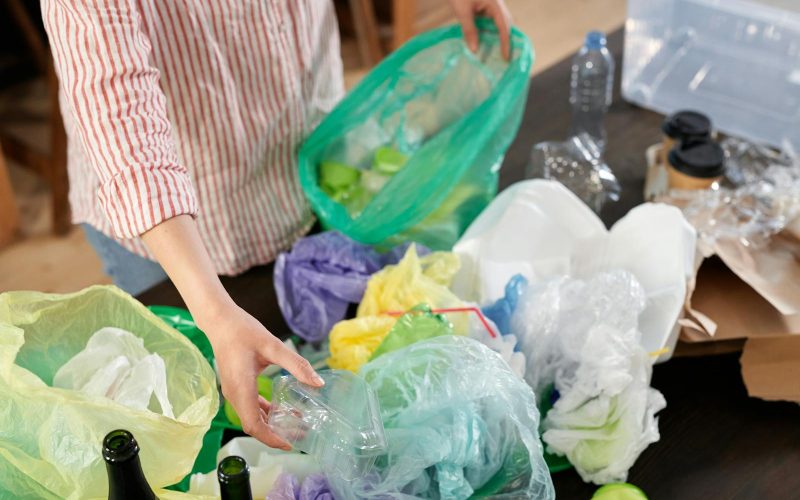
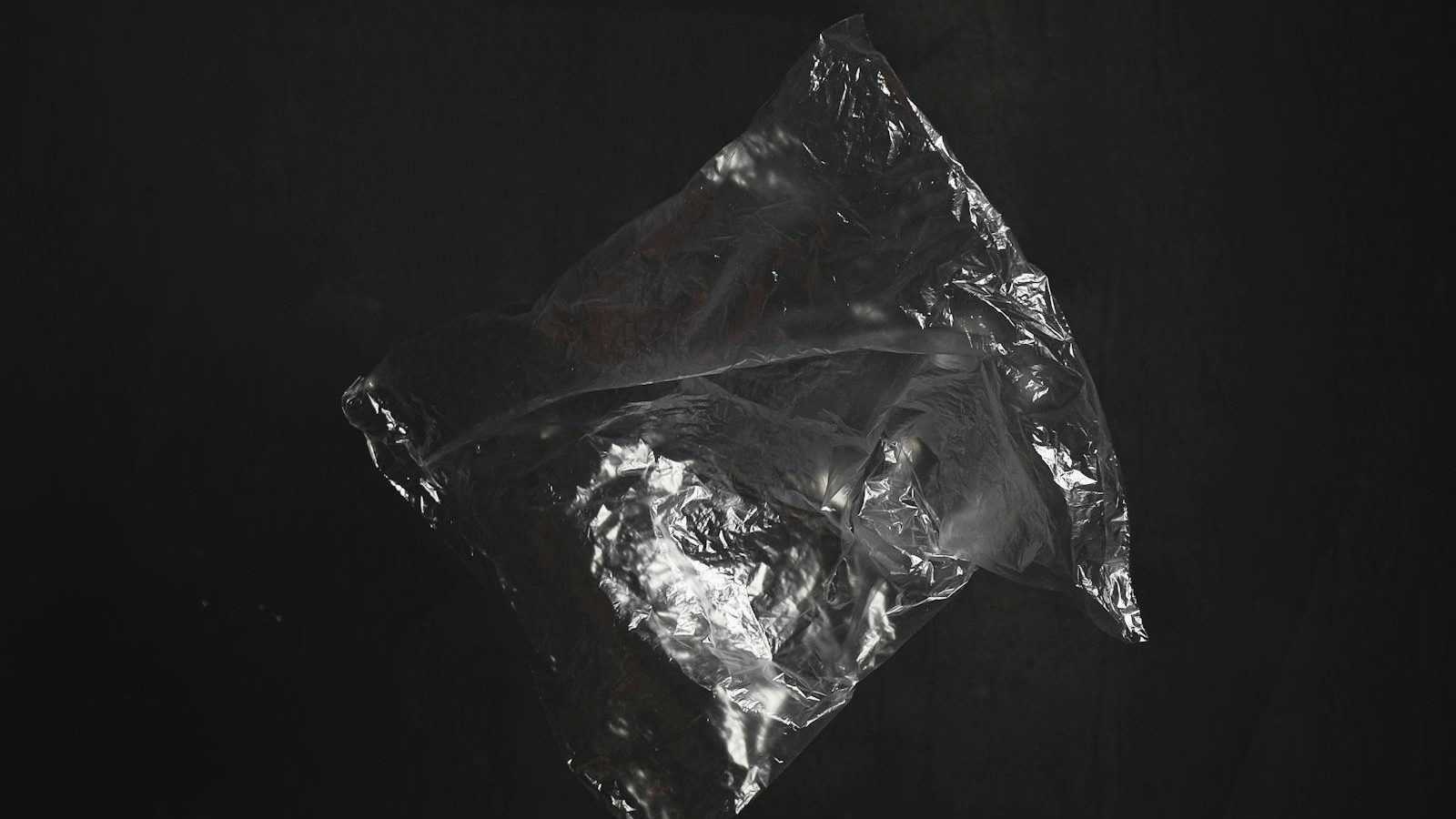
Stand at the kerbside of any street on bin day and you’ll see at least one bag stuffed with recyclables, tied at the top, sitting in or beside a recycling bin. It’s the most universal recycling mistake in the UK. People naturally use bags to contain things. The bag is plastic. The recyclables inside are plastic. Surely it all goes together. And yet, no, the bag is the single most disruptive item you can put in a kerbside collection, and the reason is mechanical, not philosophical.
The sorting facility your kerbside bin travels to is a building full of rotating drums, conveyors, optical sorters, and air jets. The items inside need to flow as separate pieces, a tin, a bottle, a flat piece of card. They get sorted by shape, by density, by light reflection, by magnetism. A plastic bag breaks every step. It catches on rollers, it wraps around spindles, it covers other items from the sorting cameras. the EPA’s recycling FAQ A single bag can shut down a machine for an hour while a worker climbs in to cut it loose.
The drum sorter and the bag
Most UK facilities start with a rotating drum that has holes of various sizes. Small items fall through early holes; larger items continue along. The drum spins constantly, separating by size as the load tumbles. A flat plastic bag flattens against the drum wall, blocks the holes, and acts as a sieve in reverse, it catches everything that should have fallen through. The result is a misclassified mess.
Further down the line are eddy-current separators for non-ferrous metals, magnetic drums for steel, and optical sorters that fire near-infrared light at each item to identify the resin. Bags interfere with all of them. The optical sorter, in particular, can’t see through a film draped over a target.
The spinning shaft problem
The worst case is when a bag wraps around a moving shaft. The shaft heats up from friction. The motor strains. Eventually it stops, and the operator has to shut the entire line down to climb in and cut the bag out with a knife. This happens dozens of times a day at busy facilities. Each incident costs around fifteen minutes of downtime, and the total adds up to hours of lost capacity, every shift, just from bags.
“We have a bag knife,” said one supervisor I spoke to last year. “It’s exactly what it sounds like. A long-handled blade for cutting bags off shafts. We use it constantly.”
Where bags belong
The good news is that the soft plastic stream has expanded enormously in the past few years. Most major UK supermarkets now have a soft plastic bin near the entrance, Tesco, Sainsbury’s, Waitrose, Co-op, Morrisons, Asda. The accepted items include:
- Carrier bags and bags-for-life
- Bread bags
- Frozen veg bags (including rice and pulses)
- Cheese and meat film
- Salad bags
- Cereal box inner bags
- Crisp packets
- Pet food film
- Magazine wrappers
- Bubble wrap and air pillows
The supermarket schemes feed a parallel stream that processes soft plastic separately, usually shredding and remelting it into pellets used for outdoor furniture, drainage pipes, and new bags. It works because the items arrive grouped, not mixed in with cans and bottles.
The household tote system
The practical home setup is a single reusable tote bag kept near the kitchen door or under the sink. Every time you finish a piece of soft plastic, it goes in the tote. When the tote is half-full, usually every two or three weeks, you take it on your next supermarket run and empty it into the soft plastic bin at the entrance.
This routine adds about one minute a fortnight to your shopping trip. In return, you keep dozens of items out of the kerbside contamination stream.
What counts as soft
The rough rule is: if you can rip it with your bare hands, it’s soft plastic. This catches almost every film, bag, and pouch. It excludes rigid plastics like yogurt pots, bottle caps, and trays. Some grey areas:
| Item | Soft? | Where |
|---|---|---|
| Bread bag | Yes | Supermarket soft plastic |
| Crisp packet | Yes (metallised film) | Supermarket soft plastic |
| Plastic wrap from a 12-pack | Yes | Supermarket soft plastic |
| Yogurt pot | No, rigid | Kerbside |
| Pringles tube | Mixed material | General waste, sadly |
| Cling film at home | Yes | Soft plastic if clean enough |
| Cellophane (paper-feel) | No | General waste, different polymer |
Why bags became a public mistake
Bags moved from being individually pocketable to being free-issue at every checkout in the late 20th century. They were both ubiquitous and made of recognisably “plastic” plastic. People naturally assumed they belonged in the recycling. Most council messaging didn’t catch up until well into the 2010s, by which time the habit had calcified. We still see householders today, decades into kerbside recycling, who genuinely don’t know the bag rule.
The 5p, then 10p charge on bags has reduced their volume enormously, by something like 90 percent at the major retailers, but it hasn’t solved the recycling problem. Bags from packaging, films from frozen veg, and crisp packets continue at similar volumes regardless of the carrier-bag charge.
What about home compostable bags?
Some bags are now labelled “compostable” or “home compostable.” These are usually made of polylactic acid (PLA) or similar bioplastics. They don’t belong in either the kerbside recycling or the soft plastics bin. They belong in a home compost heap, or sometimes in the food waste caddy if your council accepts compostable liners. Don’t put them in the supermarket soft plastic bin, they contaminate the polyethylene stream.
A reader’s changeover
Steph in Manchester emailed last spring describing the moment she switched from putting bags in the kerbside to using a tote. “I put a small tote on the back of the under-sink cupboard door, with the words SOFT PLASTIC in marker. After two weeks it was full. I dropped it at Tesco. I felt a bit smug. It was the easiest habit change I’ve ever made.” The setup cost was zero.
The bigger picture
The soft plastic stream isn’t perfect. The end markets for film are smaller than for bottles or cans. Some of what gets collected still ends up in lower-grade applications or, in tight markets, gets stockpiled. But it’s rapidly improving, and it’s vastly better than the alternative, sending bags to kerbside, where they shut down machines, ruin loads, and end up either burnt for energy or landfilled.
The bag, in the end, is the symbol of what makes recycling harder than it should be. A small piece of plastic doing one job perfectly, carrying your shopping, and one job appallingly, wrapping itself around a sorter’s spindle. Once you split the two, the rest of your bin gets easier.
Frequently Asked Questions
Why can't I put plastic bags in the kerbside bin?
They jam the sorting machinery. A single bag can wrap around a rotating shaft and force the entire line to stop for repair. They also block optical sorters and end up in the residue stream.
Where do supermarket soft plastic bins go?
To a parallel processing stream that shreds and remelts film into pellets for new products. The setup is separate from the bottle and can stream and avoids the machinery problems.
Can I put bags inside other recycling, like cans?
No. Even items contained in a bag get treated as a bagged unit and routed to general waste. Tip recyclables in loose.
What about biodegradable plastic bags?
They don't belong in either the kerbside or the soft plastic stream. They contaminate the polyethylene flow at supermarket schemes. Home composting or food waste caddy is usually the right home, depending on your council.
Is the scrunch test reliable?
Yes for most household items. If it scrunches and stays scrunched, it's soft plastic and belongs at the supermarket. If it springs back to shape, it's rigid plastic for kerbside.
Will my council ever collect bags at the kerb?
Possibly, eventually. Some councils are piloting separate film collections at the kerb. The infrastructure is being built, but for now supermarket bins are the answer.